Freshly chipped branches can become a useful resource after planned tree work. If you have garden beds to cover, keeping suitable woodchips may save you from sourcing mulch elsewhere. However, fresh chips are not the same as compost or uniform, aged garden mulch and not every batch is appropriate for immediate use.
Before asking to keep the material, consider where you will spread it, what the source tree contains and how much you can realistically handle. North Shore Tree Services discusses mulch retention as part of planned tree work in Sydney, helping homeowners consider if the resulting material suits their gardens. For properties with limited access or small planting areas, planning can make the difference between a useful resource and a clean-up task.
Fresh tree chips are a slowly decomposing surface covering, not finished compost. They can protect exposed soil, reduce moisture loss and limit weed growth, but they should not be treated as a ready-made planting medium or an immediate source of balanced nutrition.
Their usefulness depends partly on what comes out of the chipper. Unlike a consistently screened commercial product, material from tree work reflects the branches, foliage and other suitable plant material processed during that job.
Mulch from tree pruning may contain coarse wood fragments, strips of bark, shredded leaves and small twigs. A leafy batch can look and behave quite differently from one made mainly from woody branches. Particle sizes also vary, so the finished surface may be rougher and less uniform than expected.
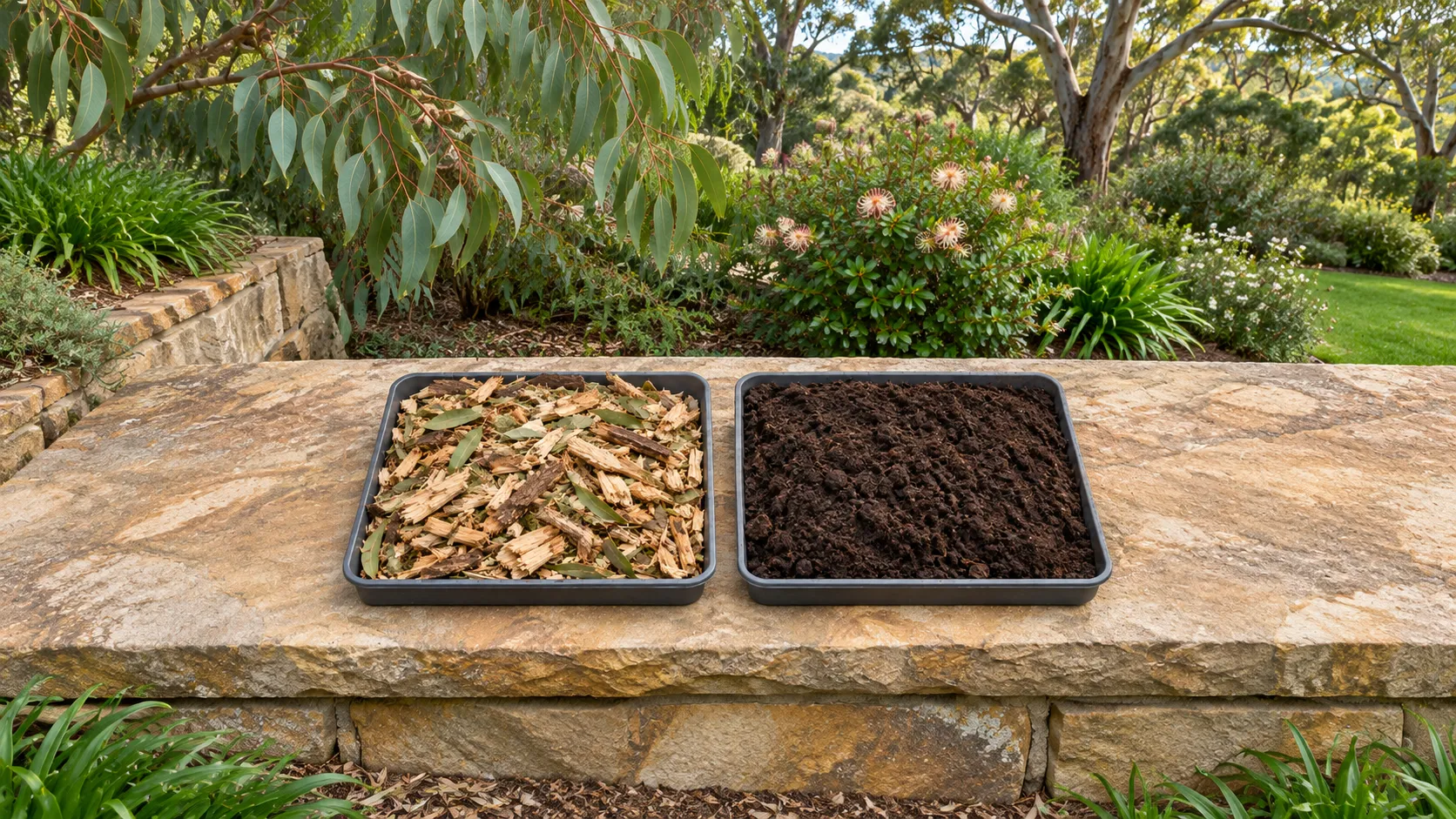
Those ingredients break down at different rates. Leaves and fine fragments decompose more quickly, while larger woody pieces remain visible for longer. The layer will settle and change in appearance as decomposition progresses.
Compost, by contrast, has already undergone substantial decomposition. Mature compost is more stable and finer textured, making it more suitable for improving soil structure when incorporated appropriately. Fresh chips do not become equivalent to compost simply because they have turned brown or spent a few weeks in a pile.
The distinction is important when preparing a new garden bed. Material that works well as a protective covering around established plants may be unsuitable as the bulk of the soil in which new roots must grow.
The most useful distinction is between laying chips on top of the soil and digging them through it. On the surface, woody material forms a separate layer that decomposes where it meets the soil.
Mixing substantial amounts of undecomposed wood into planting soil changes the situation. Microorganisms breaking it down use nitrogen, which can temporarily reduce the nitrogen available to nearby plants. Woody fragments can also make a planting mix uneven and difficult to manage.
This does not mean fertiliser should automatically be added whenever fresh woodchip mulch is used. Fertiliser decisions should reflect the plants, soil conditions and any signs of nutrient deficiency rather than the presence of surface chips alone.
If a bed needs soil improvement, address that separately from its mulch covering. Keep fresh chips out of planting holes and avoid cultivating the mulch layer into the soil during later planting. Pull it aside, work with the soil beneath and replace an appropriate surface covering once the plant is in position.
Fresh chips from suitable source material can often be used around established trees and shrubs without a long waiting period. The conditions are adequate space, sensible placement and a layer that does not interfere with watering or bury living plant tissue.
Assess the garden bed before spreading anything. A broad shrub bed with exposed soil offers a different opportunity from a tightly planted border where stems, crowns and small plants leave little room for coarse material.
Start by checking the soil beneath the proposed mulch layer. If it is dry, water it as appropriate before covering it. Mulch can slow moisture loss, but it does not reliably correct dry soil simply by sitting above it. Remove unwanted weeds first rather than expecting chips to suppress every established weed.
For many established garden beds, a surface layer of approximately 50-75 mm provides a useful starting point. However, the appropriate depth depends on particle size, drainage, existing mulch and the plants themselves. A fine, leafy batch may settle into a denser layer than coarse chips, while poorly drained beds may require a thinner covering.
Spread the material across exposed soil without building mounds against trunks or stems. Keep the trunk base, root flare and plant crowns visible, leaving an open gap around them. Constant contact with damp organic material can create unfavourable conditions around these sensitive areas.
Avoid simply adding a fresh layer over a deep existing covering. Check what is already there, then add only what the bed can accommodate. After watering or rain, inspect the soil beneath rather than judging moisture from the appearance of the chips alone.
Mulch also needs checking as the garden changes. The year-round tree care checklist provides broader context for making tree and garden observations part of a regular maintenance routine.
Young seedlings have small root systems and delicate stems that can easily disappear beneath coarse chips. Large fragments may obstruct emerging growth, while finer material can collect around low crowns. Keep seed-sowing areas free of coarse fresh mulch until plants are established enough for suitable placement.
Small containers present another limitation. They have restricted space, and a bulky chip layer can make it harder to see if water is reaching the potting mix. Fresh chips should not replace potting mix or be stirred through it as a filler.
If a garden consists mainly of seedlings, small pots or densely planted groundcovers, there may be very little immediate use for a fresh batch. Identify those limitations before requesting retention rather than trying to fit the material around plants that cannot comfortably accommodate it.
Ageing can be useful when a batch is very leafy, actively heating or not yet needed in the garden. It gives the material time to settle and begin decomposing but requires suitable storage space and does not turn an unsuitable batch into a safe one.
Not every batch needs to age before surface use. The decision should reflect its condition, source and intended application rather than a fixed waiting period.
Microbial activity can generate heat inside a fresh pile, specifically when there is plenty of moist, leafy material. The surface may look ordinary while the interior is noticeably warmer. That warmth indicates active decomposition, not proof that the material has been properly composted.
Do not place hot material directly around plant stems or over sensitive roots. Allow actively heating chips to cool before using them near plants, and seek advice if the pile’s condition is uncertain.
If you need to store a batch, choose a location with suitable drainage and enough room to access and inspect the material. Avoid tightly compacting the pile, as restricted airflow can encourage poorly aerated conditions. A manageable pile with some air circulation is easier to monitor than a large, densely packed heap.
Keep stored material away from buildings, fences, tree trunks and ignition sources. If your property is in a bushfire-prone area, keep chip piles well away from the house, as the NSW Rural Fire Service identifies garden mulch and woodpiles as potential bush fire fuel. Large organic stockpiles can present fire risks during hot, dry weather, so avoid leaving substantial piles unattended or allowing them to accumulate excessive heat. Children and pets should not play in or tunnel into stored chips.
A strong sour smell can indicate that conditions within a pile have become poorly aerated. Do not assume the material is ready for garden use simply because it has been stored for a while. If it smells unpleasant or behaves unexpectedly, pause and seek advice before spreading it around valued plants.
Ageing also takes space away from other uses. If there is no appropriate storage area, retaining a batch for later may be less practical than arranging for it to leave with the tree work.
There is no universal waiting period after which all fresh chips become suitable for every garden. Moisture, particle size, pile dimensions and the mix of woody and leafy material all influence how decomposition progresses.
Ordinary ageing does not reliably eliminate pests, plant pathogens or viable seeds. A garden stockpile is not a controlled composting process with verified temperatures throughout the material. Even if one part heats up, other parts may remain much cooler.
If the source tree has a suspected disease or pest problem, ask the tree professional about retaining the chips before they are produced. Storage should not be used as a substitute for assessing the source material.
When checking aged material for use, look beyond its colour. Consider whether it is cool, whether its texture suits the intended bed and whether its source was acceptable in the first place. Material that still contains large woody pieces remains a surface mulch rather than finished compost.
Knowing where the chips came from is as important as knowing how fresh they are. Material from a healthy tree may be straightforward to assess, while a tree with a suspected disease, heavy seed load or unwanted regenerative growth needs closer consideration.
Ask about suitability before requesting that material remain on site. Once different branches and foliage have been processed into the same load, separating a questionable component may no longer be practical.
Not every damaged or declining tree produces unsuitable mulch. A broken branch, for example, does not by itself establish that the wood carries a disease that could affect the garden. Equally, a tree that looks mostly healthy may still have a problem requiring more careful handling.
The relevant questions are what the suspected problem is, which plant parts are affected and whether the resulting material could create an issue where it will be placed. These questions need a specific assessment rather than a blanket rule that all chips are safe or all chips from an unhealthy tree must be discarded.
Tell the experts if you have noticed unusual dieback, fungal growth, persistent leaf damage or other changes. Describe what you have seen without trying to diagnose it yourself. If further assessment is needed, the retention decision can wait until there is clearer advice.
Where a pest or disease concern has been identified, do not move the chips to another part of the property or offer them elsewhere without checking the recommended handling approach. Moving material can change the risk even if it is not being used immediately.
Fresh chips can include seeds, fruit and fragments of plants that you would rather not spread through the garden. Chipping does not guarantee that every seed or regenerative piece has been rendered non-viable.
This matters if the source plant has already been producing unwanted seedlings or regrowth on the property. Keeping its chipped material could introduce more follow-up work in beds that were previously easier to maintain.
Ask whether seed-bearing material or problematic plant parts are likely to enter the chipper and whether separation is practical. Do not assume that visible fruit can simply be picked out after processing, especially when the finished material contains many small fragments.
If you retain an acceptable batch, watch the mulched area for unexpected seedlings as part of normal garden maintenance. Where there is a known concern about the source plant, seek advice before retention rather than relying on later weeding to manage an avoidable problem.
A tree canopy can produce more chipped material than expected, and the available garden area is often smaller than it first appears. Retaining tree chips works best when there is a defined use for them, not just somewhere a pile might temporarily fit.
Before the job, identify suitable beds and consider how the material will reach them. A useful pile near the work area can become a demanding project if every load must travel through a narrow passage or up steps.
Measure or roughly map the areas you genuinely intend to mulch. Exclude lawns, paved areas, seed beds and spaces where chips cannot be kept clear of plant bases. Also account for existing mulch rather than treating every garden bed as empty.
A simple calculation can help estimate how much material is needed:
Garden coverage = mulch volume ÷ desired depth
For example, one cubic metre of mulch spread at a depth of 50 mm can theoretically cover approximately 20 square metres. At 75 mm, the same volume covers around 13 square metres. Actual coverage will vary because of particle size, settling and uneven ground.
Ask the tree professional for an indication of the likely quantity, while recognising that the final amount may be difficult to predict precisely. The tree's size alone is not enough to judge it. The amount of leafy growth, the work being carried out and which material is processed all affect the result.
Think in terms of usable coverage rather than the apparent size of the original branches. The goal is to have enough material for an appropriate surface layer, not so much that there is pressure to spread it too deeply.
Consider your capacity to move it as well. Wheelbarrowing, distributing and tidying chips takes time and physical effort. A plan that depends on finishing everything in one afternoon may not suit the available access, equipment or time.
If comparing quotes, make sure each supplier understands the same retention preference. Keeping chips may change handling arrangements, but it should not be assumed to produce a particular saving. The discussion of what affects tree removal costs can help frame questions about the quoted scope without relying on a simple price-per-tree comparison.
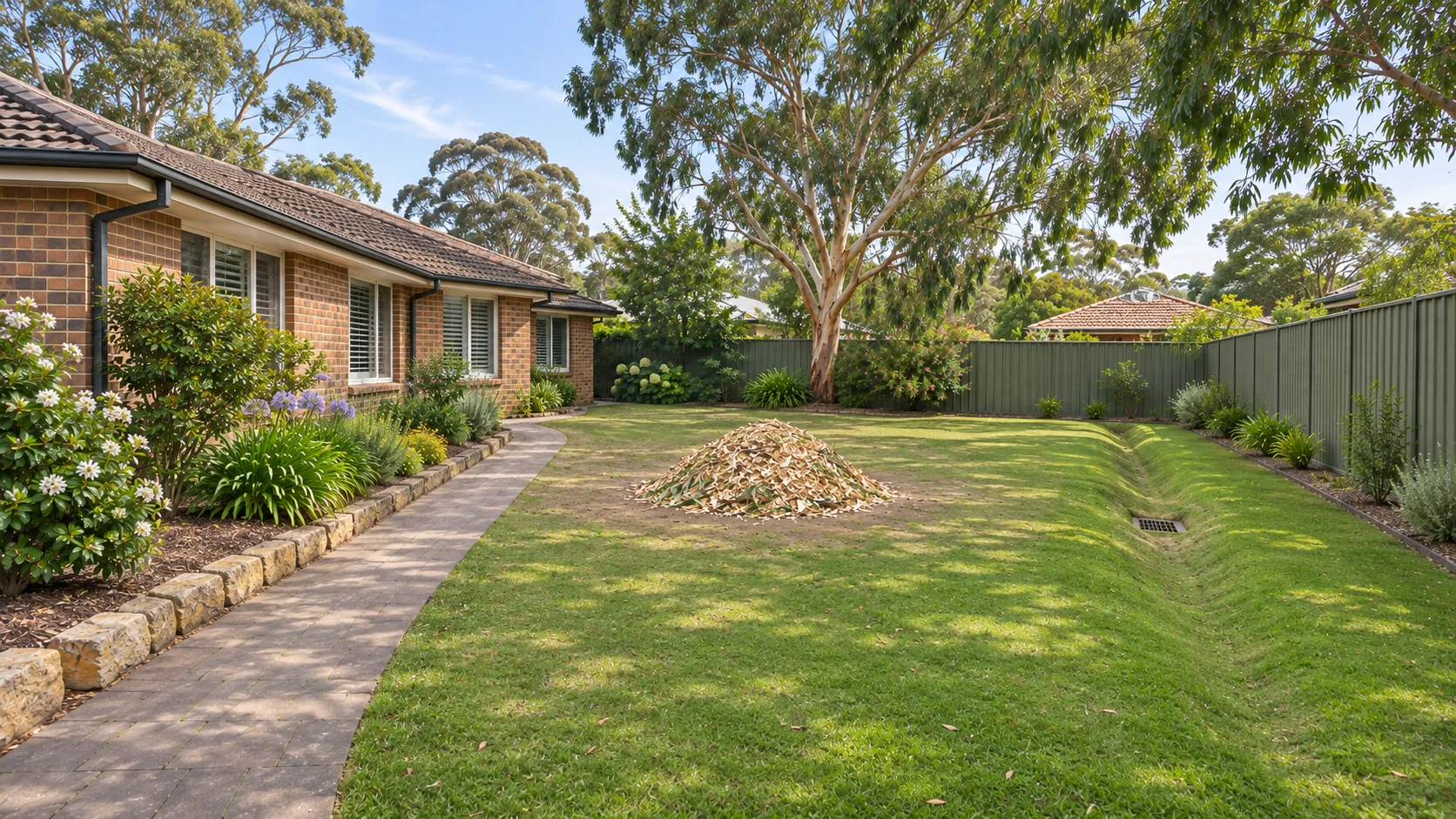
A temporary storage spot needs to be accessible for the crew's equipment and practical for later use. A location that suits unloading may not be the best place for weeks of storage, so both purposes need consideration.
Keep access routes, drainage paths and essential inspection points clear. Avoid placing a heavy pile over established garden plants or against trunks. Consider whether loose chips could wash onto paving or into drains during rain.
Protect surfaces where appropriate and clarify who will arrange any protection. Also check that the pile will not prevent doors, gates or bins from being used normally.
If there is no suitable location, discuss whether retaining a smaller amount is operationally possible. Do not assume the crew can leave an exact quantity or return to collect surplus material later unless that arrangement has been specifically agreed.
Retaining material should be part of the job discussion, not a request made after the chipper is running. The work method, equipment position and available access all influence whether useful chips can be left where they are needed.
When comparing tree services in Sydney, explain that you are considering keeping suitable chips and ask what is practical for the property. Professionals can discuss these preferences alongside the planned tree work without assuming that retention is possible on every job.
Start with the source material. Ask which parts of the tree are likely to be chipped, if there are any suitability concerns and if other material will be mixed into the same load. If certain branches or plant parts need different handling, raise that before processing begins.
Then discuss placement. Point out the preferred storage area and any obstacles between it and the work zone. Tight access, changes in level and the position of equipment can limit where material can safely and efficiently be deposited.
Do not assume that retaining chips includes spreading them across garden beds. Leaving material in an agreed pile and distributing it around plants are different tasks. The same applies to moving material after it has been unloaded.
Ask for the agreed arrangement to be reflected in the written scope where appropriate. Useful details include whether chips are staying, the intended placement area, whether separation is included and who is responsible for spreading or storing the material afterwards.
Discuss what happens if conditions change during the job. Unexpected decay, unsuitable material or an access problem may alter the original plan. A nominated contact and a clear decision point can prevent misunderstandings about what should stay on site.
Chips are only one type of material generated by tree work. Larger timber, unprocessed branches, leaves and other debris may need separate handling. Asking to keep mulch should not be interpreted as accepting everything produced by the job.
Be specific about what you want retained and what you expect removed. If the crew is taking branches, timber or surplus chips off-site, ask where they’ll take them and check that the facility can accept the material under NSW EPA guidance on garden waste disposal.
There may be room for suitable chipped branches but no use for larger wood or loose debris. Whether those materials can be separated depends on the work and site arrangements.
Check how the work area will be left once the agreed material has been placed. A retained pile will naturally occupy space, but surrounding debris removal should remain clear in the quoted scope.
Before work starts, confirm the material to be kept, its proposed location, any known limitations and responsibility for spreading or storing it afterwards. These details give both the homeowner and the crew a practical plan to work from.
Keeping freshly chipped branches can be a practical way to reuse suitable material while reducing the need to source additional garden mulch. However, the best results depend on choosing an appropriate batch, using it correctly and having enough space to store or distribute it. North Shore Tree Services clarifies which materials may be suitable for retention and how keeping them could fit into the work arrangements. A little preparation before the crew arrives helps turn tree waste into a useful garden resource without creating unnecessary storage or maintenance problems.