Tree maintenance on strata properties can become complicated when owners corporations, strata managers and individual lot owners are unsure who is responsible. Overhanging branches, invasive roots and hazardous trees can create disputes over who should arrange and pay for tree services in Sydney.
Responsibility depends on the strata plan, by-laws and whether the tree is located on common property or within an individual lot. Council requirements and NSW tree laws can also affect whether pruning or removal is permitted and which approvals are required.
North Shore Tree Services helps strata schemes manage tree-related concerns by identifying maintenance needs and recommending appropriate work. Clear responsibilities and a planned approach to tree care can help owners corporations and lot owners manage risks, avoid disputes and keep trees properly maintained.
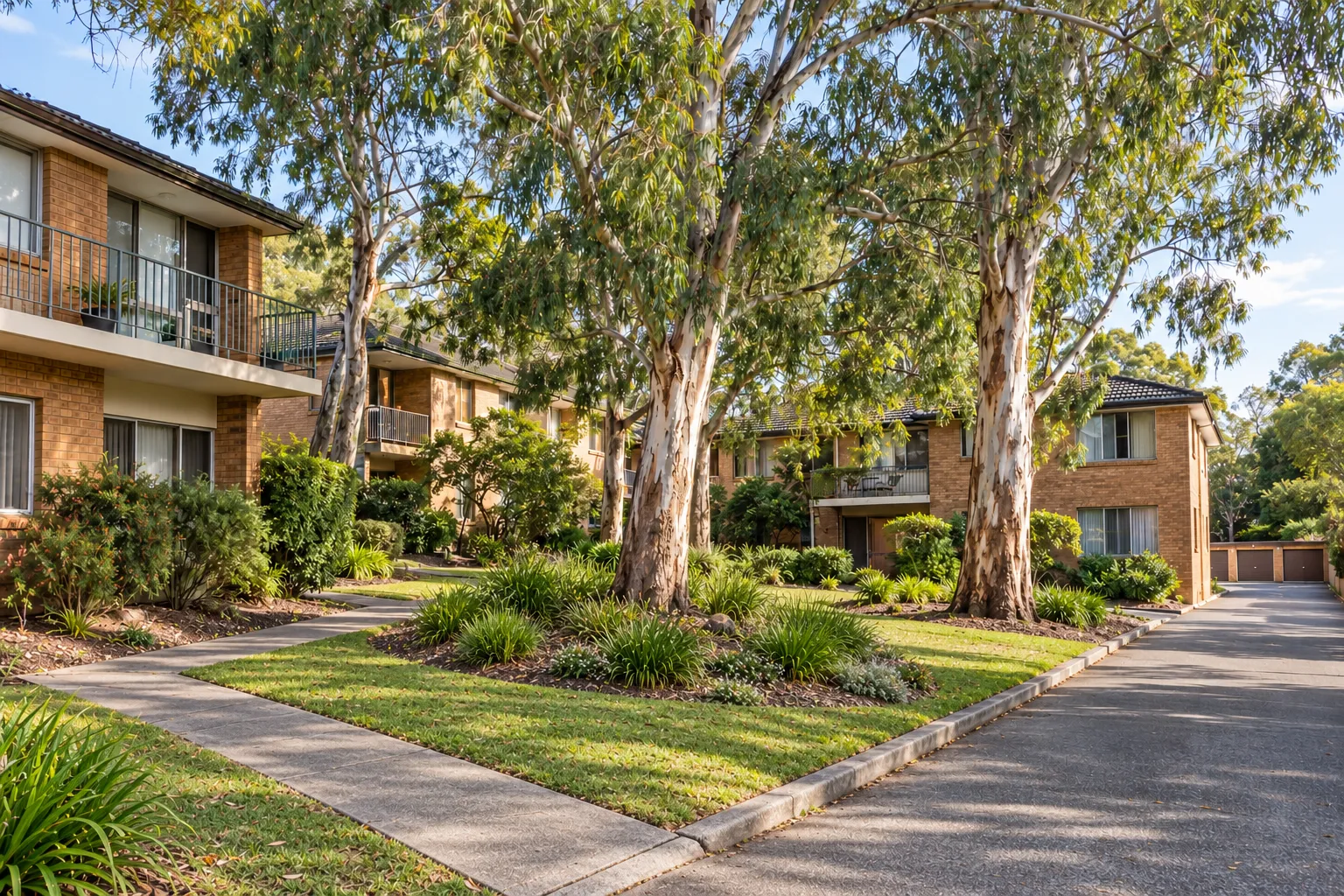
Trees growing on common property will generally fall under the owners corporation’s maintenance responsibilities. Under the Strata Schemes Management Act 2015, an owners corporation must properly maintain and keep common property in a state of good and serviceable repair, subject to relevant by-laws and other provisions of the Act.
For trees, this may include:
The registered strata plan, common property memorandum and any relevant by-laws should be checked before responsibility is assigned. Some by-laws can modify who is responsible for maintaining particular areas of common property, including areas subject to exclusive-use arrangements.
Lot owners can report concerns such as dead branches, cracking, root movement or branches interfering with buildings and services. However, a lot owner should not independently arrange proper work on a common property tree without the appropriate authority.
When a tree is located entirely within a private lot, responsibility will generally sit with the individual lot owner, although the strata plan and strata by-laws should be checked first. This is necessary where gardens, courtyards or other areas are subject to exclusive-use arrangements.
The lot owner may need to arrange routine maintenance, address safety concerns and obtain professional advice where the tree is damaged, diseased or affecting neighbouring property. The location of the tree should be confirmed against the registered strata plan rather than assumed from how the garden or courtyard appears to be used.
A tree within a private lot may still be subject to local council controls. Proper pruning or removal may require approval based on the tree, its location and the relevant council's rules. Checking these requirements before work begins can help avoid unnecessary disputes, delays or penalties.
Tree maintenance costs will follow the party responsible for the tree, although the strata plan, by-laws and circumstances surrounding the work should be considered before costs are allocated. Common property maintenance will be managed through the owners corporation, while work relating solely to a private lot will generally be the responsibility of the relevant lot owner.
Costs can also become more complicated when a tree causes damage or affects another part of the property. An arborist assessment may help establish whether pruning, removal or another form of mitigation is reasonably required and which maintenance issue needs to be addressed.
Insurance should not be assumed to cover routine pruning or preventative maintenance. Whether a policy responds to tree-related damage will depend on the circumstances and the terms of the policy, so strata schemes should not rely on insurance as a substitute for planned tree maintenance.
Work on a common property tree should be considered through the strata scheme's appropriate approval process before it is arranged. This can include pruning, root work or removal. The relevant strata plan and by-laws should be checked to determine who has authority to approve and organise the work.
Council approval may also be required depending on the local council's tree controls. Owners corporation approval does not replace a council approval requirement where one applies. Protected trees, substantial pruning and tree removal may be subject to specific local requirements.
Where a tree presents an immediate safety concern, urgent action may be appropriate. The reason for the work should be documented, with relevant photographs, arborist advice and council information retained with the strata records.
Yes, strata properties are still subject to local council tree controls. Being part of a strata scheme does not exempt an owners corporation or lot owner from requirements regulating tree pruning, removal or other work. The specific requirements vary between councils, so the relevant local rules should be checked before work is arranged.
Council approval may be required for protected trees, substantial pruning, tree removal or trees that meet size, species or location criteria. Strata by-laws do not replace council requirements, so strata and council obligations may need to be considered.
For common property trees, the owners corporation will coordinate any required council application and supporting documentation. An arborist report may be needed where the council requires information about the tree's condition or the reason for the proposed work. Emergencies may be treated differently under local council rules, but the reason for urgent work should still be properly documented.
When a tree on a strata property becomes hazardous, prompt assessment can help protect residents, buildings, vehicles and neighbouring properties. The response will base on the condition of the tree, its location and whether there is an immediate risk.
Warning signs can include:
A qualified arborist can assess these signs and recommend whether immediate make-safe work, pruning, removal or ongoing monitoring is appropriate. A written assessment can also provide useful supporting information for the owners corporation when deciding how to respond.
Where the tree is on common property, the owners corporation will need to arrange the appropriate response, subject to the strata scheme's specific responsibilities. Where a tree is within a private lot, the relevant lot owner will need to address the issue.
If there is an immediate risk to people or property, emergency tree work may be permitted under the relevant council's rules. The applicable council requirements should be checked as soon as practicable and photographs, arborist recommendations and details of the work should be retained.
A hazardous tree that does not present an immediate emergency may still require council approval before pruning or removal. Acting on an arborist's assessment and keeping clear records can help the strata scheme demonstrate why work was considered necessary.
Disputes about strata trees can involve pruning, removal, costs, property damage or concerns about safety. A practical approach is to resolve the issue in stages, starting with the strata documents and internal discussion before progressing to formal dispute resolution where necessary.
The first step is to check the strata plan, relevant by-laws and maintenance responsibilities to establish how the tree should be managed. The concern can then be raised with the strata manager, strata committee or owners corporation, preferably in writing.
Photographs, details of the problem and previous correspondence can help establish what has occurred and what action is being requested. Where appropriate, the issue can also be placed before the owners corporation for a formal decision. NSW Government guidance recommends attempting to resolve strata disputes through discussion and the owners corporation's internal processes before moving to formal mediation.
Where owners disagree about whether a tree requires pruning or removal, an independent arborist assessment can provide an objective basis for the decision. The assessment may identify structural defects, disease, deadwood, root problems or other safety concerns and recommend appropriate work.
Professional tree risk assessments can help the owners corporation understand identified hazards and make informed maintenance decisions.
A report can also help distinguish a genuine maintenance or safety issue from an amenity concern such as shade, leaf litter or blocked views. Where council approval is required, the assessment may provide supporting information for the relevant application.
If the matter cannot be resolved through discussion or the owners corporation's decision-making process, NSW Fair Trading provides a free mediation service for many strata disputes. For disputes that proceed to NCAT, mediation is compulsory before an application can be made, although exemptions apply.
Where the issue involves a qualifying dispute with a neighbouring property owner about a tree, the Trees (Disputes Between Neighbours) Act 2006 provides for proceedings in the NSW Land and Environment Court. The Act applies to qualifying tree disputes and does not remove the need to consider applicable council controls.
Keeping records of correspondence, meeting decisions, arborist reports, council approvals, photographs and completed work can help if the matter progresses further. A clear record also makes it easier to show what concern was raised, what assessment was undertaken and what action was authorised.
Responsibility for a tree affecting a neighbouring property depends on where the tree is growing and what the strata documents provide. A tree rooted on common property will be managed by the owners corporation, while a tree within an individual lot will be managed by the lot owner, subject to relevant by-laws and council requirements.
Where a tree is rooted on common property, the owners corporation will need to assess concerns raised by a neighbouring property. This may involve arranging an arborist inspection, checking council requirements and organising appropriate maintenance.
Branches extending over a neighbouring property do not automatically transfer responsibility to the adjoining owner. The condition of the tree and any potential risk should be assessed before significant work is arranged.
Where a tree is rooted entirely within an individual strata lot, the lot owner will need to address concerns affecting neighbouring properties. However, the strata plan should be checked first, where a garden or courtyard is subject to exclusive-use rights but remains common property.
Council requirements may also apply to pruning or removal. Professional assessment can help determine whether maintenance is appropriate and what work may be required.
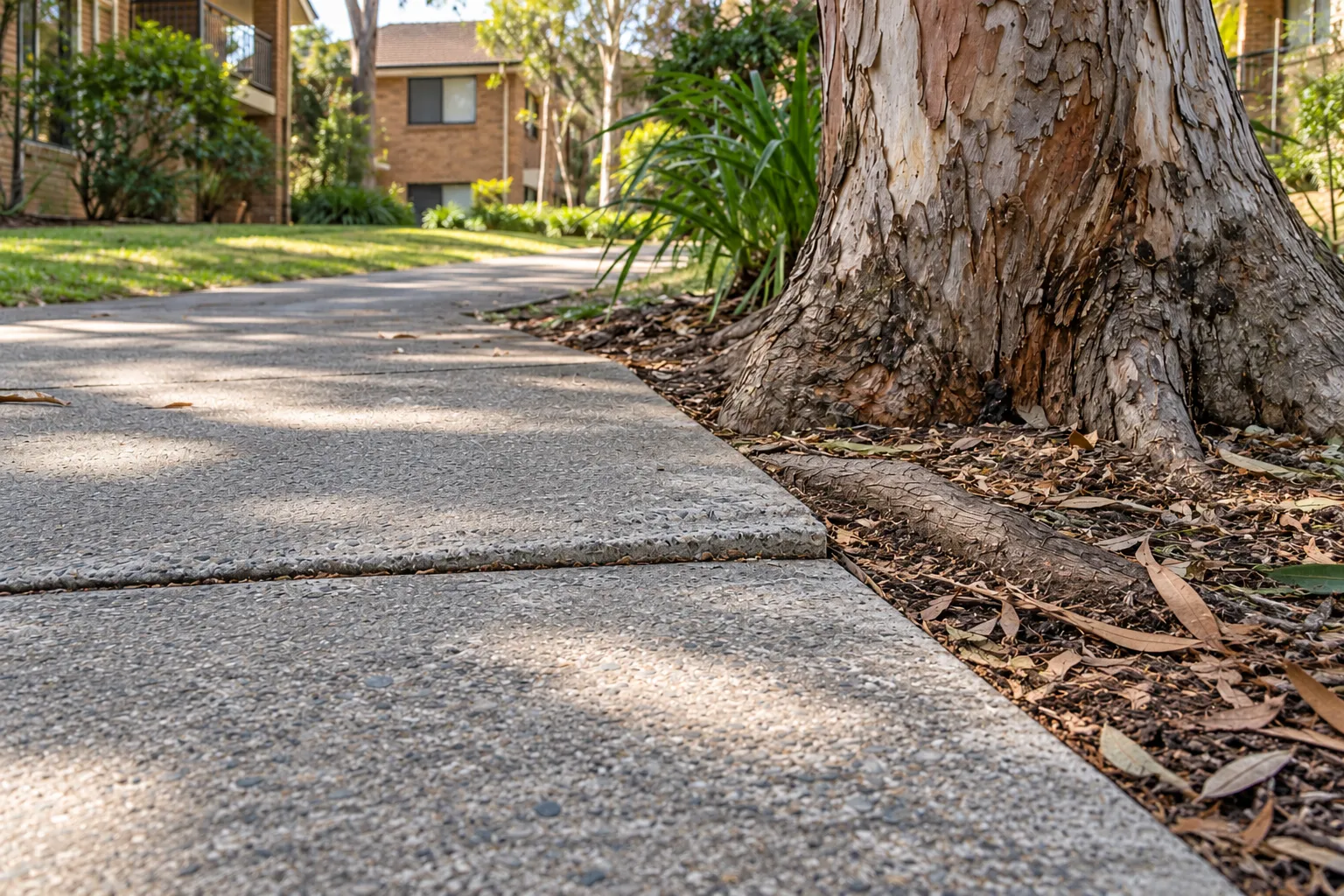
Overhanging branches and tree root damage can create disputes when they affect buildings, fences, paving, drainage or other property. In qualifying circumstances, the Trees (Disputes Between Neighbours) Act 2006 provides a legal pathway for certain tree disputes to be dealt with by the NSW Land and Environment Court.
Crossing a boundary does not automatically give the affected property owner unrestricted permission to remove or prune a tree. Council requirements may still apply where the tree is protected. The relevant parties should establish responsibility, assess the tree's condition and check applicable requirements before work is arranged.
Yes, a lot owner can request tree pruning or removal when a tree on common property is causing a safety concern, affecting their property or creating another genuine maintenance issue. The request should be made to the strata manager, strata committee or owners corporation, preferably in writing, with details of the concern and any supporting photographs.
A request does not give the lot owner permission to arrange or carry out work on a common property tree. The owners corporation should consider the issue and may arrange an arborist assessment to determine whether pruning, removal, monitoring or another solution is appropriate. Council approval may also be required before work is undertaken.
Removal is not automatically justified simply because an owner requests it. A healthy tree may be retained where appropriate maintenance can address the concern, while removal may be considered where the tree is dead, structurally unsafe, seriously diseased or causing damage that cannot reasonably be addressed through other measures.
Strata schemes should treat tree maintenance as an ongoing responsibility rather than waiting for a hazardous tree or resident complaint to trigger action. A planned approach allows the owners corporation to identify problems early, schedule necessary work and allow time for any required council approvals.
Regular inspections can help identify changes in tree condition before they become safety concerns. Inspections should consider:
Trees should also be checked after major storms where branches may have been damaged or root systems disturbed. Where a tree presents a complex structural concern, a qualified arborist can assess its condition and recommend appropriate maintenance or monitoring.
A simple tree maintenance register can record inspections, arborist reports, recommended work, completed pruning, council approvals and reported concerns. These records give the owners corporation a clear history of tree management and can help when future maintenance decisions or disputes arise.
Regular tree work should also be considered when preparing the strata maintenance budget. Allowing for inspections, pruning, specialist assessments and potential removal can make it easier to address necessary work without relying on an unexpected expense being approved at short notice. Planned maintenance provides a consistent way to manage tree health, safety and costs over time.
Tree maintenance on strata properties is easier to manage when responsibilities are clearly understood and maintenance is planned. The strata plan, by-laws and council requirements help determine how tree work should be arranged, while regular inspections, proper records and timely action can reduce safety risks and disputes.
North Shore Tree Services can help strata schemes assess tree health, identify potential hazards and arrange appropriate maintenance. A proactive approach to tree care helps owners corporations and lot owners protect people and property while keeping common areas safe and well maintained.