Preparing a tree removal application can often lead to unexpected refusal, even where concerns appear reasonable on the surface. North Shore Tree Services regularly encounters recurring issues where applications fail due to gaps in justification, supporting evidence or alignment with council criteria. Councils maintain strict controls to protect the urban canopy and even minor oversights in documentation or reasoning can result in rejection.
This article examines the most common reasons tree removal in Sydney and applications for them are refused and explains how council assessors evaluate the tree and the surrounding property. It outlines how inadequate justification, weak supporting evidence and misunderstanding of local Tree Preservation Orders contribute to unsuccessful outcomes. Key factors are also explored to provide clarity on how final decisions are made.
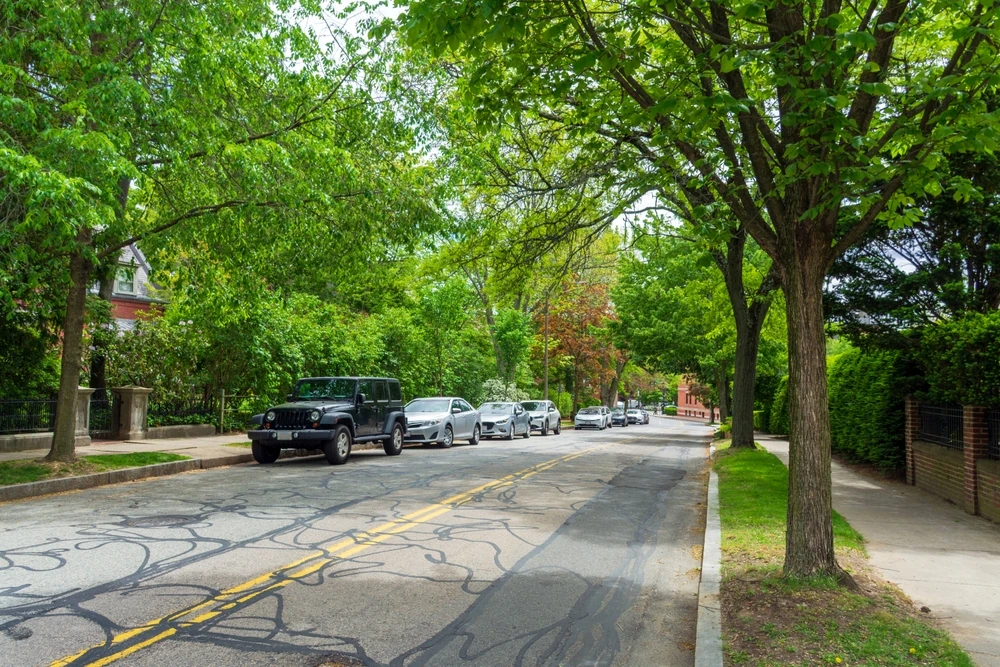
Councils across Sydney regularly refuse tree removal applications simply because the stated reason does not justify the loss of a protected tree. The application might be correctly filled out and the tree might be inconvenient, but if the justification does not meet the council’s criteria, the permit will be declined.
Most Sydney councils require a clear tree-related risk or impact that cannot be reasonably addressed through pruning or management. Vague concerns or lifestyle preferences are usually not enough. Understanding what councils view as weak reasons helps avoid wasted application fees and delays.
Leaves in the gutter, fruit drop and general mess are among the most common reasons given for removal. On their own, these are almost always rejected. Councils regard leaf litter and debris as a normal consequence of tree ownership that can be managed with maintenance.
Similarly, the following reasons rarely succeed without stronger supporting issues:
Unless the tree is causing genuine structural damage or creating an assessed safety hazard, councils will expect the owner to manage inconvenience with pruning, cleaning or design adjustments.
Overshadowing is a common complaint, particularly for solar panels, gardens and living areas. However, councils usually require evidence that the shade reduces solar performance or habitability and pruning cannot reasonably improve light levels.
Photos, time-of-day shadow diagrams or a report from a solar installer can strengthen an application. Without this type of evidence, overshadowing is often viewed as a lifestyle issue rather than a justification for complete removal.
Allergies are another frequently cited reason that often fails. Councils will generally need medical documentation linking symptoms to that specific species and confirmation that practical alternatives, such as pruning or partial replacement, are not suitable. Generic claims of hay fever or irritation with no supporting information are very unlikely to succeed.
Applications based on what a tree might do in the future are often knocked back if the concerns are not supported by an arborist’s assessment. Councils deal in current measurable risk, not speculation.
Examples that are usually too weak without evidence include:
Where there is a genuine risk, an AQF Level 5 arborist report identifying structural defects, root impacts, or foreseeable hazards can convert a weak justification into a strong one. Without such evidence, the application is generally treated as precautionary rather than necessary and is likely to be refused.
Councils rarely refuse tree removal applications without a clear reason. Most knockbacks come down to poor evidence, incomplete information or claims that are not backed by a qualified assessment. Understanding what councils regard as weak or missing evidence is critical to preparing an application that stands up to scrutiny.
In practice, this means more than just attaching a few photos or saying a tree is “dangerous”. Councils expect clear, relevant and professionally supported material that directly addresses their assessment criteria under local tree preservation orders and development control plans.
One of the most common problems is a reliance on vague statements about safety. Applications often assert that a tree is “unsafe” or “could fall” without providing objective evidence from a qualified arborist.
Weak safety evidence typically includes:
Councils look for defects such as decay, cavities, major deadwood, root plate lifting or significant lean identified within an arborist report that uses recognised risk assessment methods. When this detail is missing, safety concerns are usually dismissed as perception rather than demonstrable risk.
Claims that a tree is damaging property often fail because the link between the tree and the damage is not clearly established. Simply showing cracked paving or a misaligned fence is rarely enough.
Evidence is typically considered weak when:
Councils expect a logical connection between the tree and the damage, supported by expert opinion where structural or foundation problems are involved. Without that connection, removal is likely to be refused.
Another frequent issue is focusing only on the inconvenience of a tree while ignoring its health, species significance and contribution to the streetscape. Applications that downplay or omit these factors appear one-sided and are often rejected.
Weak or missing evidence in this area includes:
When an application fails to recognise what is being removed or to offer appropriate replanting, the justification for removal must be exceptionally strong. If not, the lack of balanced evidence becomes a key reason for refusal.
Local councils are generally reluctant to approve complete tree removal unless it is clearly the only safe and reasonable option. Applications are often knocked back because the assessing arborist or planning officer believes the issue can be addressed through pruning, risk management or design changes instead of taking the tree out entirely.
Understanding why councils lean towards retention helps in preparing an application that aligns with their priorities and avoids predictable objections.
Most councils have strict tree preservation orders and canopy targets to protect local character, biodiversity and urban cooling. These policies require council officers to consider every reasonable alternative before approving the removal of a tree.
If a tree is healthy, structurally sound and of medium to high ecological or landscape value, the default position is retention. Even where a tree is inconveniently shading solar panels or dropping leaf litter, councils usually expect the owner to explore non‑removal solutions. An application that jumps straight to removal without addressing alternatives is likely to be refused.
Where the main concern is safety, councils frequently prefer targeted pruning or risk mitigation over full removal. This often includes:
If an independent Level 5 consulting arborist report does not clearly explain why pruning cannot adequately reduce the risk, the council may conclude that the tree can be reasonably made safe and that removal is not justified. Applications that claim a tree is “dangerous” without a quantified risk assessment are usually treated as incomplete.
For development‑related applications, council planners usually expect the building or landscaping design to adapt to existing significant trees. This can include shifting a footprint, slightly altering driveway alignment or modifying retaining walls to keep critical root zones intact.
Where a tree is said to be “in the way” of proposed works, refusal is common if the plans show little attempt to design around it. Councils may also reject removal where issues can be managed by using tree‑sensitive construction methods, selecting different paving or decking systems and adjusting private open space layouts or garden design.
Councils rarely look only at nuisance or personal preference. A tree’s broader value is weighed carefully and if that value is considered significant, an application to remove or heavily prune is far more likely to be refused. Understanding how that value is assessed helps explain why some applications that feel “reasonable” to a homeowner still get knocked back.
Assessment officers refer to planning controls and tree evaluation methods that look beyond the individual property. The focus is on what the tree contributes to the street, neighbourhood and local environment as a whole.
Amenity value is often the deciding factor in built‑up suburbs. Mature trees contribute to the character of leafy streets, provide shade to footpaths and neighbouring homes and soften the visual impact of dense housing.
A tree is more likely to be protected if it:
In these situations, the loss of one tree can affect the whole streetscape. Council planners frequently argue that a single replacement sapling cannot immediately restore that character, so removal is refused, or only selective pruning is allowed.
Large mature trees often have compound value because of their age, size and cultural or heritage importance. These trees are frequently identified on Significant Tree Registers or in heritage conservation area controls.
A removal application is more likely to be rejected where a tree:
In such cases, councils generally expect applicants to explore all reasonable alternatives, such as pruning root barriers or minor design changes to proposed works. Without clear evidence that the tree is dead, dying, structurally unsound or causing unavoidable damage, an application to remove a high-value tree on the North Shore is commonly refused.
Sydney councils, particularly on the North Shore, apply strict criteria to tree removal. Many applications are rejected not because the request is unreasonable but because key information is missing, poorly presented or contradicts council controls. Avoiding a handful of common mistakes can significantly improve the chances of approval.
Most problems arise from incomplete documentation, weak justification and a failure to address local tree preservation rules. Councils expect clear evidence that removal is necessary and that alternatives have been considered.
A frequent reason for refusal is an application that is vague, inconsistent or missing required details. Councils typically require:
Providing only a handwritten sketch instead of a clear site plan is another pitfall. If the tree’s distance from the dwelling, pool or boundary fence is not obvious, the risk to structures cannot be properly assessed and the default position is to retain the tree.
Many applications fail because the stated reasons for removal do not meet council criteria. Commonly rejected justifications include:
Medical reasons, such as hay fever or asthma linked to a tree, are typically dismissed if not supported by documentation from a medical professional that clearly connects the health issue with the specific tree. Even then, removal is not guaranteed if pruning or other mitigation is possible.
Each council has its own Tree Preservation Order or Development Control Plan that sets minimum trunk sizes, exempt species and rules around heritage and streetscape character. Applications that ignore these controls are commonly refused.
Typical missteps include applying to remove:
Another recurring problem is submitting an application without a Level 5 AQF consulting arborist report, where the council clearly requires one. Basic contractor quotes framed as “arborist reports” often fail to address tree health, structure, risk rating and viable alternatives like pruning. Councils give more weight to detailed, standards-based assessments. Without this, the officer has little technical basis to support removal and will usually opt for retention.
Before submitting a fresh tree removal application, it is critical to understand exactly why the first one failed and what needs to change. Councils expect a more complete and better-supported proposal the second time, or the application is likely to be rejected again for the same reasons.
Preparation should focus on clarifying the reason for removal, backing it with objective evidence, then reshaping the request so it aligns with the specific controls in the relevant plans and orders.
Begin by carefully reading the council’s refusal letter. Identify the precise clauses and reasons cited, such as tree health species significance, contribution to streetscape or lack of supporting documents. Each point raised needs a targeted response before reapplying.
If the letter is unclear, contact the council’s tree or development officer and request clarification in writing. Ask which evidence would be needed to address the concerns. Keep the discussion factual and focused on policy criteria rather than personal preference or loss of views.
Before lodging a new application, reassess what is genuinely necessary. Councils are more receptive when an owner has clearly considered lesser interventions. It may be more realistic to apply for targeted pruning rather than complete removal, retain significant trees and remove only secondary problem trees.
Document why alternatives are not suitable if removal is still sought. For example, pruning may not resolve an escalating structural defect, or a species may have a known high limb‑drop risk in urban settings. This explanation should appear clearly in the new arborist report and in the application form.
The pattern behind refused tree removal applications is largely consistent rather than arbitrary. Councils are tasked with protecting canopy cover, local character and biodiversity, which means removal is unlikely to be approved where risk is unsubstantiated. Applications based on subjective concerns and incomplete arborist assessments are routinely declined. Stronger applications are typically those supported by detailed AQF Level 5 arborist reports, clear site documentation and evidence demonstrating measurable risk or unavoidable impact. A well-prepared submission is far more likely to achieve approval while maintaining compliance with the broader objectives of urban forest management.