Emergency Tree Services: What to Do When Storms Strike
January 12, 2026
When extreme weather hits Sydney, it can leave homes and public spaces in disarray as branches snap and trees lean or collapse without warning. At North Shore Tree Services, we’ve seen how a calm morning can quickly turn into a safety risk once strong winds and heavy rainfall sweep across leafy suburbs and semi-rural areas.
In the early aftermath of a storm, many property owners feel overwhelmed as they try to assess what’s safe and what isn’t. This is where experienced tree services in Sydney play an important role, helping to manage immediate hazards, reduce the risk of injury, and limit further property damage while emergency crews respond.
Emergency tree work is about more than speed; it requires skill and caution. Storm-damaged trees often hide serious dangers, such as hanging branches supported by splintered wood, trunks under tension, or root systems weakened by saturated soil. Understanding how to respond, and when to involve qualified professionals, helps homeowners stay safe, protect their property, and avoid compounding the damage during an already stressful situation.
Understanding Storm-Related Tree Risks to Homes and Power Lines
Severe weather places pressure on trunks or branches and root systems that may already be weakened by pests or poor pruning history. Once winds increase, the natural movement of trees can become violent as twisting forces exceed structural limits. Failures may involve heavy limbs breaking or whole trunks splitting or even roots lifting from saturated soil. Homes and overhead utilities are highly vulnerable during these moments because falling timber can damage buildings or vehicles, roofs or windows and even essential power infrastructure.
How Heavy Branch Failures Impact Residential Areas
Large branches carry significant weight and can break suddenly once wind speeds rise or rainfall softens wood fibres, creating safety risks for anyone nearby. Homeowners usually notice the damage only after it occurs as debris scatters across gardens or driveways and rooftops. The greatest danger though is the unpredictable moment when the branch finally snaps.
Large limbs can pierce roofing materials and tiles, allowing water to enter roof cavities and living spaces. This leads to costly repairs over time.
Impact against walls and windows can break frames and shatter glass. This leaves homes exposed to weather and further storm activity.
Broken branches that land near doorways or walkways create fall hazards for residents or pets and visitors during urgent cleanup efforts.
Trunk Failures and Uprooting During Severe Weather
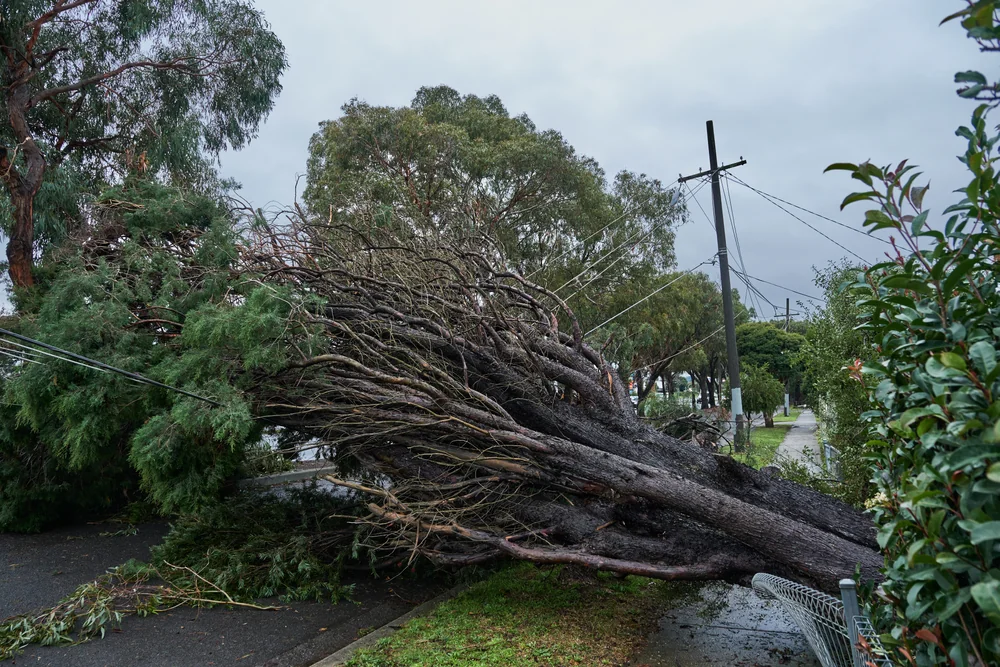
When strong winds combine with soaked soil conditions, the entire root plate may shift or fail. This causes large trees to lean or topple across neighbouring properties. These failures may not happen immediately, as tension in the root system sometimes delays collapse. This creates a false sense of safety until the tree finally gives way.
Uprooted trunks crush fences or outdoor structures as they fall across property lines and shared spaces.
Trees that settle against driveways or walkways can block essential access points and make it difficult for vehicles or emergency responders to reach the home.
Large trunks that fall across multiple boundaries may cause disputes between neighbours over responsibility and damage costs.
The Role of Trees in Utility Disruptions and Hazard Creation
Storm-related tree damage can disrupt power supply and communication networks, turning a property emergency into a public safety concern. Even small branches can cause outages or fires when they collide with electrical equipment. Residents often underestimate the danger and attempt DIY clearance.
Fallen timber on live lines can spark fires or emit electrical arcs, creating deadly hazards that require specialist handling.
Power outages caused by tree contact disrupt refrigeration and lighting, communication and medical devices during severe weather events.
Downed lines may be hidden under branches or leaves or even fencing. This increases the risk for anyone moving through the area.
How to Assess Tree Damage Safely After Severe Weather
Once the storm clears, homeowners often step outside to see what has happened. This is the stage where many injuries occur though. Broken limbs may still be hanging overhead, or trunks may lean under tension. Soil may also be unstable around root systems. A calm visual inspection from a safe distance helps identify hazards without physical contact. This approach keeps everyone safe while preparing for professional help if required.
Warning Signs That Need Immediate Professional Attention
Certain visual cues indicate high-risk situations that must be handled by qualified crews. Branches suspended in the canopy or cracked trunks and rapid shifts in trunk angle are all indications of structural failure. Ignoring these signs increases the risk of sudden collapse.
Hung-up branches may fall without warning as wind returns or wildlife disturbs unstable timber, making the area below extremely dangerous.
Freshly leaning trunks show signs of root plate failure beneath the soil and may collapse even in calm conditions after the storm has passed.
Deep cracks running along the bark suggest internal structural failure and require specialised cutting methods to manage safely.
Identifying Soil and Root Disruption After Heavy Rain
Root disturbance is a major factor in storm damage because it affects stability more than the canopy itself. Homeowners often overlook soil changes because they are subtle or hidden by garden materials. Watching for soil movement helps detect potential collapse risks.
Soil mounding on one side of a trunk indicates root plate lifting, showing that the tree may continue to move after the storm.
Exposed or lifted roots point to anchor failure caused by erosion or soil saturation, increasing the chance of delayed collapse.
Cracks in surrounding pathways or edging signal underground movement as roots shift during extreme weather.
Recognising Electrical and Utility Hazards in the Area
Utility involvement changes the safety approach because even light contact with electrical equipment can cause serious injury or death. Any sign of line damage must stop homeowners from attempting cleanup until specialist crews attend.
Sparking or smoking and even buzzing near lines indicates active electrical hazards and requires immediate reporting to emergency authorities.
Metal structures such as fences and sheds may conduct electricity if lines have fallen onto them, creating invisible risks.
Even weakened communication lines can be dangerous after storms due to potential contact with live electrical systems.
What Happens During an Emergency Tree Response
Emergency tree work combines fast assessment with specialised equipment and strict safety protocols. Crews stabilise the scene while identifying hazards and establishing exclusion zones or removals using climbing gear or cranes. Every action aims to protect workers and residents while restoring safety.
Safety Protocols for Urban and Suburban Environments
Work near homes and utilities demands precise planning supported by training and protective equipment. Exclusion zones prevent homeowners and pedestrians from entering hazardous spaces until tree removal is complete.
Workers use helmets and harnesses with protective trousers and high-visibility clothing to reduce injury risk during cutting or rigging and climbing.
Controlled lowering systems guide limbs safely to the ground rather than allowing them to fall. This protects roofs or fences and vehicles.
Traffic or pedestrian controls may be set up when damage affects driveways or streets, preventing accidental entry into active work zones.
Equipment Used for Safe and Controlled Tree Removal
Storm-damaged structures cannot always be felled in one piece, so equipment selection is crucial. Sectional dismantling reduces uncontrolled force and protects surrounding buildings.
Cranes lift heavy trunks away from structures when free-fall removal would cause significant damage or safety issues.
Elevated platforms allow workers to access broken limbs safely when climbing is not possible due to structural instability.
Winches and rigging systems guide sections away from hazards, ensuring predictable drop zones during removal.
Coordination With Emergency and Utility Teams
Storm events often involve multiple services, including arborists or electrical contractors and emergency responders. Coordination ensures safe sequencing of tasks.
Utility teams isolate circuits and assess hazards before tree crews begin removal around poles or lines.
Emergency responders may close roads or restrict access to give work crews room to operate without interference.
Insurance assessors may document damage before removal to support accurate claim processing for affected property owners.
When Trees Become a Legal and Insurance Issue
Storm damage can introduce legal and insurance complexities when property lines or vehicles and public assets are involved. Responsibility depends on ownership, including tree condition and maintenance records. Accurate documentation supports smoother communication between neighbours or insurers and assessors.
Understanding Liability When Trees Cross Boundaries
Confusion often arises when trees fall across fences or shared spaces. Liability may change depending on whether the tree was healthy or neglected.
Healthy trees that fail due to severe weather generally leave cleanup and repairs to the affected property owner due to the unpredictable nature of storms.
Neglected trees showing decay or structural failure may shift liability if the owner ignored maintenance or warnings.
Clear communication supported by photographs and dated maintenance records helps resolve disputes calmly.
How Insurance Handles Tree Damage Claims
Insurance policies vary in how they cover tree-related damage, and understanding coverage reduces frustration during recovery.
Most policies cover damage to homes or vehicles caused by falling limbs because the event is sudden and accidental.
Removal costs may not be covered unless the tree damaged insured property or blocked essential access.
Photographs with reports and timestamps help assessors complete claims faster and with fewer disputes.
Documentation Requirements for Smooth Claim Processing
Proper documentation improves claim outcomes and prevents delays. Recording information early is beneficial before any cleanup changes the scene.
Photos of fallen trunks and damaged structures provide reliable evidence for insurers.
Maintenance receipts and reports demonstrate responsible tree care and can influence liability decisions.
Arborist assessments provide expert detail about tree condition before removal, strengthening claim validity.
What to Do While Waiting for Emergency Tree Services
The period between identifying damage and receiving professional help can feel overwhelming. Homeowners should prioritise safety over cleanup and take simple steps that prevent further harm. These actions protect family members and belongings until specialists arrive.
Securing the Area for Family and Pet Safety
Keeping people away from damaged trees is the most important step after a storm because unpredictable collapses are common.
Using bins or chairs and even rope helps block access to dangerous zones and prevents children or pets from wandering near unstable structures.
Closing curtains prevents glass hazards if branches strike windows during aftershocks from wind.
Moving vehicles away from leaning trunks creates safer access for emergency crews and reduces additional property loss.
Communicating With Neighbours and Household Members
Sharing information helps reduce misunderstandings and supports coordinated responses among nearby residents.
Alerting neighbours to shared boundary damage prevents accidental entry into hazardous zones.
Informing household members about safe exits keeps them away from collapsed branches or power risks and slippery debris.
Providing emergency contacts ensures that family members know who to call if conditions worsen before help arrives.
Protecting Valuables From Secondary Storm Damage
Simple actions can protect personal belongings without creating unnecessary risk.
Covering exposed indoor areas with tarps helps protect furniture and flooring from incoming rain after roof damage.
Relocating fragile outdoor items prevents further breakage and keeps access pathways clear for emergency technicians.
Managing minor leaks with towels or buckets reduces water spread that could otherwise lead to mould or structural deterioration.
Reducing Future Storm Damage Through Proactive Tree Management
Preventative care greatly reduces the number of emergencies during severe weather. Regular assessments identify hidden decay or overextended limbs and pest damage. Professional maintenance supports stronger root systems with healthier canopies and reduced debris during storms.
The Value of Professional Tree Inspections
Regular inspections detect problems early and allow for timely intervention that improves resilience during severe weather.
Inspections reveal fungal decay or pest activity that weakens limbs and increases the chance of failure under wind pressure.
Evaluating canopy balance helps determine when thinning or weight reduction is needed to prevent structural stress.
Root health assessments detect soil settling or disease that could destabilise entire trees over time.
Benefits of Pruning and Weight Management Before Storm Season
Pruning is an important safety measure because it changes how trees respond to intense wind loads.
Removing dead branches eliminates brittle timber that snaps easily and creates unnecessary storm debris.
Thinning selected areas improves airflow through the canopy, reducing overall wind resistance and branch pressure.
Reducing heavy limbs prevents them from acting as levers during high winds, which can split trunks or cause large failures.
Selecting Suitable Species for Residential Properties
Species selection influences long-term risk because some varieties handle wind or soil saturation and confined spaces better than others.
Species with flexible branches cope better with wind movement and are less likely to fracture during storms.
Trees with deep anchoring root systems are more stable in saturated soils and less prone to uprooting during heavy rain.
Smaller and slower-growing species reduce long-term conflicts with buildings and utilities, lowering future removal costs.
Storm damage creates stressful situations for homeowners, but careful decision-making with hazard awareness and timely professional support makes a huge difference. Understanding storm-related risks and knowing how to respond helps protect homes and personal safety during severe weather events. When residents choose proactive management and rely on qualified experts during emergencies, the recovery process becomes safer and less overwhelming.
North Shore Tree Services assists local property owners with emergency response with professional assessment and preventative tree management to help reduce future risks and keep communities safe. By combining responsible care with practical communication and strong safety standards, homeowners can feel confident facing severe weather events while protecting their homes and families.