When you look at a mature tree on your property, it is easy to focus on what you can see above ground, such as the trunk, canopy and overall shape. What often matters most, however, is hidden below the surface. Root problems and internal structural weaknesses can develop gradually and turn an otherwise healthy-looking tree into a safety risk. At North Shore Tree Services, arborists use non-destructive assessment methods to better understand tree stability without unnecessarily disturbing lawns, driveways or garden beds.
This article explains how qualified arborists assess tree roots and structural stability using non-invasive and minimally invasive methods. It explores how visual tree assessment, site observations and specialised tools such as resistance drilling, sonic tomography and, where appropriate, ground-penetrating radar or detailed root mapping methods can help reveal what may be happening below ground or inside the trunk. It also shows how these findings support practical recommendations, whether that involves pruning, soil improvement, root protection or, in some cases, deciding whether tree removal in Sydney is the safest option. Understanding how these assessments work makes it easier to ask informed questions and make sound decisions about tree safety on your property.
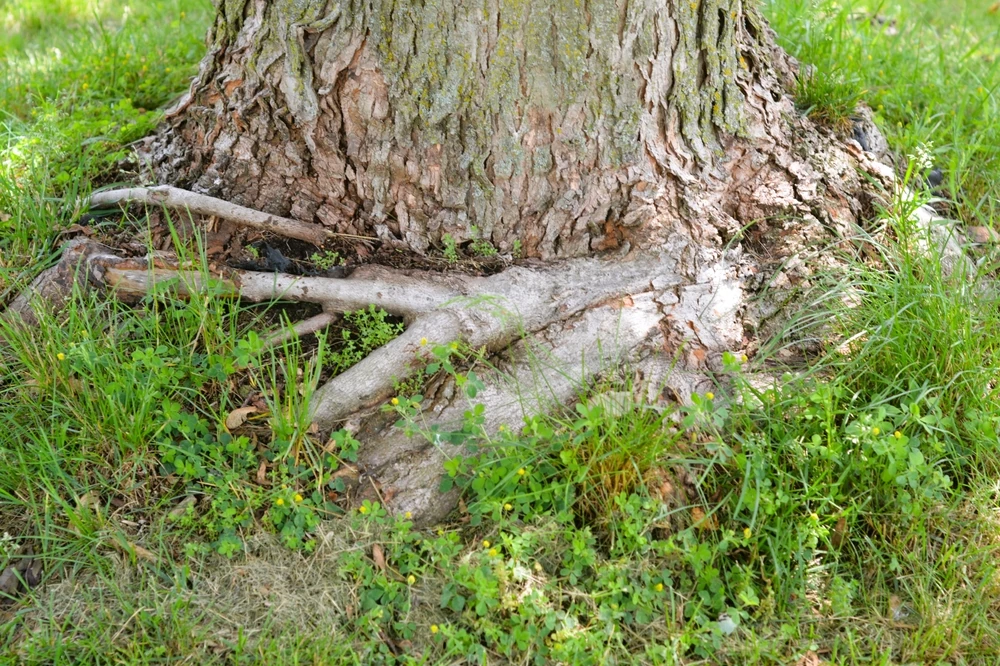
Early warning signs of root instability are often subtle and may appear well before a tree fails. Recognising these indicators early allows for targeted assessment without excavation and can significantly reduce the risk to people, buildings and surrounding infrastructure.
Many of the first clues come from visible changes in the trunk, root flare, canopy and surrounding ground. None of these signs confirms a problem on its own, but a combination of symptoms often indicates the need for prompt professional inspection.
The area where the trunk meets the soil is one of the first places to check for stability issues. Problems at this point often reflect compromised structural roots.
Key signs include:
Mushrooms or fungal conks on or near the root flare can strongly indicate internal decay affecting supporting roots. Vertical cracks or seams at the base of the trunk may also point to developing structural failure.
Although root systems are hidden, they often reveal their condition through the canopy. When roots are damaged or decayed, the tree may struggle to transport water and nutrients, which can lead to visible crown decline.
Warning signs include:
These symptoms are especially significant when they appear quickly in an otherwise mature, established tree with no obvious pest or disease issue in the canopy itself.
Root instability is often triggered or accelerated by changes around the tree rather than by the tree alone. Any recent disturbance near the root zone should be treated as a potential risk factor.
Important red flags include:
Early signs of this may include fresh gaps between soil and roots or newly exposed fine roots at the surface.
A visual tree assessment is often the starting point for understanding root and structural risk without digging. A qualified arborist reads the visible parts of the tree and the surrounding site like a diagnostic map, looking for signs that may suggest what is happening below ground and inside the trunk.
Rather than relying on guesswork, VTA follows a structured process. The arborist begins with the overall site, then assesses the tree as a whole, before focusing on specific defects or stress indicators that may point to hidden decay or compromised roots.
Root problems often appear first in the ground and nearby structures before they become obvious in the trunk. A qualified arborist will carefully examine the following:
A large canopy combined with a lean on a saturated or shallow soil profile may indicate an increased risk of uprooting, even if the crown still appears healthy.
The transition zone at the base of the trunk is a critical focus during assessment. Arborists look for a flared root collar that blends naturally into the soil. Loss of this flare, or a trunk that appears more like a straight pole entering the ground, may suggest past soil fill or buried roots that can hide decay.
Key warning signs include:
Lean is also assessed closely. A recent or increasing lean, especially when combined with soil heave, gaps opening on the compressed side or lifted roots, may indicate root plate failure.
The canopy often reveals problems that began in the roots. An experienced arborist looks at crown symptoms in the context of likely below-ground issues.
Dieback concentrated on one side of the crown can indicate root loss on the corresponding side, perhaps from trenching or service installation. Thinning foliage, smaller-than-normal leaves or early autumn colour may point to chronic root stress or restricted rooting volume.
Branch structure is also examined for:
By comparing visual cues from the site, trunk, roots and crown, a qualified arborist can form a well-grounded view of root and structural risk before excavation or advanced testing is considered.
Internal decay is one of the most serious structural risks in a tree because it weakens support from the inside, where it cannot be seen easily. Modern arboriculture uses non-destructive tools and techniques to help identify hidden cavities and decayed wood without cutting into the trunk or major roots. These assessments help determine whether a tree can be retained through management or whether removal is the safer option.
A thorough decay assessment usually combines visual inspection with specialised instruments that measure how sound travels through wood or how much resistance the wood offers to drilling. The goal is to locate decay, estimate its size and position, and understand how much solid wood remains to support the tree.
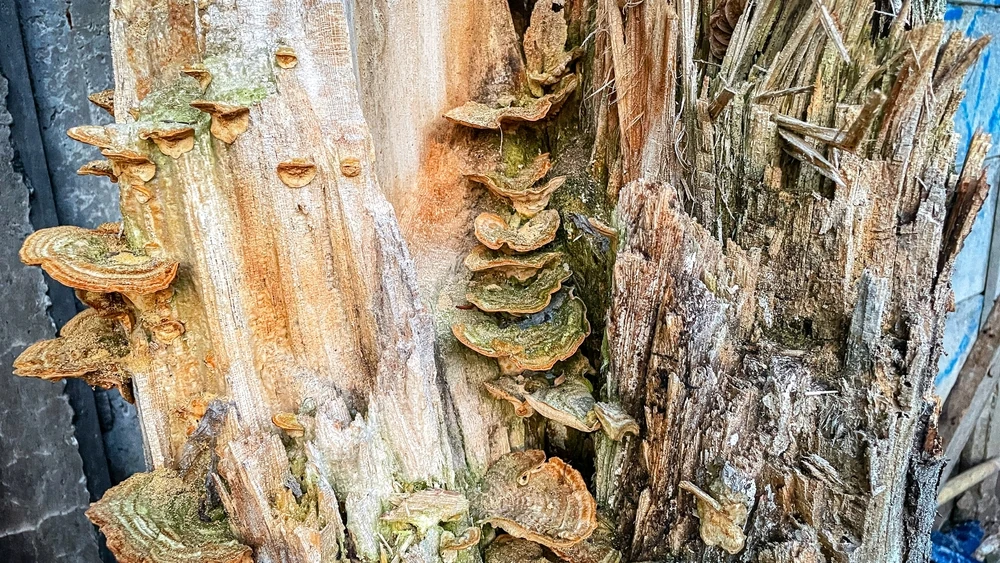
The first step is always a careful ground-level inspection. Arborists look for external signs that may indicate internal problems, such as fungal brackets, open cavities, old pruning wounds, cracks, bulges, seams, oozing sap and dead sections in the canopy. The base of the trunk and root flare receive particular attention because decay in these areas can have a major effect on structural stability.
Sounding is a simple but effective non-invasive method. A rubber or wooden mallet is lightly tapped around the trunk. Solid wood produces a sharper, more resonant sound, while hollow or decayed areas tend to create a dull or drum-like tone. Changes in sound can help identify possible cavities and guide where more advanced testing should be focused.
When visual and sounding checks suggest possible internal damage, a resistance drill may be used. This specialised instrument has an extremely fine, needle-like bit that measures how much resistance it encounters as it travels through the wood. The trace it produces shows variations in wood density along the drilling line.
High and consistent resistance generally indicates sound wood. Sudden drops or extended low-resistance zones suggest decayed or hollow sections. Because the bit is so narrow, the resulting holes are minimal and do not compromise tree health when used correctly. Multiple drill lines taken at different angles allow an arborist to estimate how much sound wood surrounds a cavity, which is important when judging structural safety.
For larger or high-value trees, acoustic tomography can provide a more detailed picture of internal condition without cutting into the tree. Small sensors are attached around the trunk, and a light tap sends sound waves through the stem. The equipment measures how quickly the sound moves between sensors. Sound travels faster through solid wood and slower through decayed or hollow areas.
Specialised software converts these measurements into a colour-coded cross-sectional image, similar in concept to a medical scan. This can reveal the size and position of internal decay and show how much healthy wood remains. In some situations, sonic or stress-wave tools may also be applied around the root collar to give further insight into decay affecting key buttress roots.
Mapping structural roots without digging focuses on locating the main anchoring roots that keep a tree upright and stable. The aim is to understand where critical roots are, how far they extend and whether they have been compromised by construction, soil compaction or decay, all while leaving the soil and surrounding surfaces intact.
Modern arboricultural practice combines close surface inspection with specialised instruments that can detect roots below ground or estimate their position through physical measurements. This allows informed decisions about risk and protection zones without destructive trenching.
The first step is interpreting what can be seen on and above the soil. Stem flare, buttress roots and surface roots can provide strong clues about the shape and spread of the unseen structural root system. A pronounced, even flare around the base of the trunk usually indicates a broad, well-distributed root plate. A flat or buried flare may suggest past fill, buried roots or decay close to the stem.
Soil cracks radiating from the trunk, lifting of paving or tilting of nearby structures can indicate expanding or shifting roots. In contrast, depressions or sinkage near the base may signal loss of root mass or collapse in the surrounding soil. Bark condition at the base, fungal fruiting bodies and cavities at or just below ground level may also indicate decay extending through primary roots.
Where greater precision is needed, arborists may use specialised root investigation methods to better understand root location and distribution below the surface. In Sydney, this can include ground-penetrating radar as well as more direct root mapping approaches, depending on the site, the tree and the reason for the assessment.
Ground-penetrating radar can be useful as a non-invasive screening tool over soil and some hard surfaces. It helps identify patterns that may indicate the presence and direction of larger roots, which can assist with planning and highlight areas that need closer investigation. However, it is not always relied on as a standalone method for detailed root mapping, as results can vary depending on soil conditions, surface materials and the level of detail required.
Where a more accurate understanding of root location is needed, arborists may recommend detailed root mapping using methods such as careful hand excavation, air excavation or water excavation under controlled conditions. These approaches allow important roots to be exposed and assessed with less damage than conventional digging. Used together with visual assessment and site knowledge, these methods help arborists make more reliable decisions about tree stability, protection zones and the likely impact of nearby works.
Root investigation findings are only useful when they are interpreted in the context of structural stability. Arborists compare root distribution with tree height, crown spread, prevailing wind exposure and site constraints. A tree with roots confined to one sector, for example by a building or retaining wall, may have a higher risk of instability towards the less-supported side.
These findings can also guide decisions about excavation, construction and tree protection. If investigations show that important structural roots extend through a proposed work area, arborists may recommend a no-dig protection zone or changes to the design to reduce root loss. If root distribution is limited or uneven and is combined with signs of decay or movement at the base, the findings may support stronger risk management measures such as pruning, ongoing monitoring or staged removal.
Tree roots near buildings, underground services and busy access areas are assessed more conservatively because the consequences of failure are higher. An arborist’s role is to judge not only whether defects are present, but also how likely they are to affect foundations, pipes, driveways or people using the space every day.
Assessment combines visual inspection, surface-level investigation and non-invasive tools to understand how roots are behaving around structures. The aim is to balance tree retention with safety and asset protection while keeping intervention as limited as possible.
The starting point is a measured assessment of how close the tree is to built features and what those features are made of. Foundations, retaining walls, paths, driveways and service trenches are mapped in relation to the trunk and canopy spread. Root systems usually extend at least as far as the canopy and often beyond it in permeable soils, so distance alone is never used as the only indicator of risk.
Building age and construction type also matter. Older strip footings, shallow slabs and unreinforced masonry are generally more susceptible to movement caused by soil shrink-swell influenced by roots. Newer reinforced slabs can tolerate minor movement more effectively, so the same tree may present very different levels of risk depending on the structure nearby.
Risk in high-use areas is judged not only on tree condition but also on how people use the space. A moderate structural defect above a quiet rear garden may be tolerable, while the same defect over a busy driveway or school walkway may require prompt action.
Arborists identify critical targets such as:
The likelihood of impact is then weighed against the severity of potential damage. For example, a root encroaching on a flexible asphalt path may be managed through surface redesign, while a similar root pressing against a brittle, shallow sewer line may justify more urgent mitigation.
Non-invasive root and trunk testing can reveal hidden structural problems without cutting roots or damaging bark. However, these tools are specialised and can be expensive, so they are not justified for every tree or every concern. The key question is whether the extra diagnostic detail is likely to change management decisions in a meaningful way.
In many North Shore situations, a thorough visual inspection combined with basic probing and simple measurements provides enough information to make a sound decision about safety. Advanced instruments such as sonic tomography, ground-penetrating radar and resistance drilling are most valuable when the risk is high, the tree is significant and the condition remains uncertain.
Non-invasive or minimally invasive tests are usually worth the cost when a tree is both significant and potentially hazardous, yet cannot be lightly removed. This often includes:
For example, if a large coastal tree overhangs a house and shows crown dieback or a lean, a sonic tomograph or resistance drill may clarify how much sound wood remains in the trunk. That information can support decisions about targeted pruning, cable bracing or staged removal rather than immediate felling.
In many cases, the added cost of sophisticated testing does not change the outcome. If a tree already shows clear signs of advanced failure risk, such as extensive basal decay, active root plate lifting, large open cavities or repeated major limb failures, further testing often only confirms what is already evident. In these situations, resources are usually better directed towards prompt risk reduction work.
Likewise, smaller trees that can be replaced relatively easily do not usually justify high testing costs. If removal and replanting are simpler and more economical than detailed investigation and ongoing monitoring, non-invasive testing is rarely a good investment.
The decision to use non-invasive testing usually comes down to three factors: the level of potential harm if the tree fails, the uncertainty surrounding internal or below-ground conditions and the value of retaining that specific tree. When risk, uncertainty and value are all high, the case for advanced diagnostics is strong. When any of those factors is low, the benefits of extra testing tend to diminish.
A structured risk assessment should come first. Non-invasive tools are then used selectively when they can refine risk ratings and support defensible long-term management decisions, rather than being treated as a default step for every tree.
Assessing tree roots and structural risk without excavation relies on a combination of science, experience and careful observation. Arborists use these methods to interpret defects, decay, soil conditions and site history, building a clearer picture of how safe and stable a tree is likely to be. For North Shore property owners, involving a qualified consulting arborist early can help protect both trees and structures while avoiding unnecessary damage, disruption and expense.