Building or renovating a property often involves working around established trees that have taken decades to mature. While these trees provide shade, character and significant property value, construction is one of the leading causes of avoidable tree decline. Much of the damage occurs below ground, where roots are disturbed by excavation, soil compaction and changing ground levels, meaning the effects may not become apparent until months or even years after the project has been completed.
As a provider of tree services in Sydney, North Shore Tree Services understands the challenges of balancing construction requirements with responsible tree preservation. With careful planning and professional arboricultural guidance, many construction-related impacts can be avoided before work begins, allowing development to proceed without unnecessarily compromising valuable trees.
This article explains how to protect established trees throughout the building and renovation process, from understanding Tree Protection Zones and Root Protection Areas to managing excavation and construction activities. It also outlines the warning signs of construction-related tree damage, the role of qualified arborists and when professional assessment is necessary to help retain mature trees for years to come.
Although mature trees appear strong and resilient, they are highly sensitive to changes in their growing environment. Construction activities can disturb roots, compact soil, damage trunks and alter natural drainage, placing trees under stress that may not become obvious until well after the project has finished.
Understanding how different stages of construction affect tree health makes it far easier to prevent damage before it occurs.
Most of a tree's fine absorbing roots lie within the upper 300 to 600 millimetres of soil, where oxygen and moisture are most readily available. These roots often extend well beyond the canopy, meaning construction activities that appear to be a safe distance from the trunk may still interfere with critical parts of the root system.
Excavation for footings, driveways, retaining walls, swimming pools and underground services can sever roots responsible for water uptake and structural support. Even relatively small losses may reduce a tree's ability to absorb nutrients, increasing the likelihood of canopy thinning, dieback and greater susceptibility to pests and disease.
Construction equipment, delivery vehicles and stockpiled materials place pressure on the soil. As the soil becomes compacted, air spaces collapse, reducing oxygen availability and restricting water movement to the roots. The resulting stress often develops gradually and may be mistaken for natural ageing or drought.
Changes to ground levels can be equally harmful. Adding fill over the root zone reduces oxygen and alters drainage, while excavation removes roots and weakens the tree's structural support. Even relatively small changes in soil level can affect sensitive species.
While root damage is often hidden, injuries to trunks and canopies are usually more obvious. Machinery, scaffolding and building materials can strip bark, bruise the trunk or break major branches, creating entry points for decay and reducing the tree's structural integrity.
Excessive pruning to provide building clearance can also place stress on a tree. Removing too much foliage in a short period limits the tree's ability to produce energy and may leave remaining branches more vulnerable to wind damage.
Construction frequently changes how water moves across a property. New roofs, paving and drainage systems can divert water away from established trees or concentrate runoff in areas where roots have not adapted to prolonged saturation.
These altered moisture conditions may lead to drought stress, waterlogging or root decay depending on the site. On sloping properties or in poorly drained soils, even modest changes to drainage can affect tree health over time.
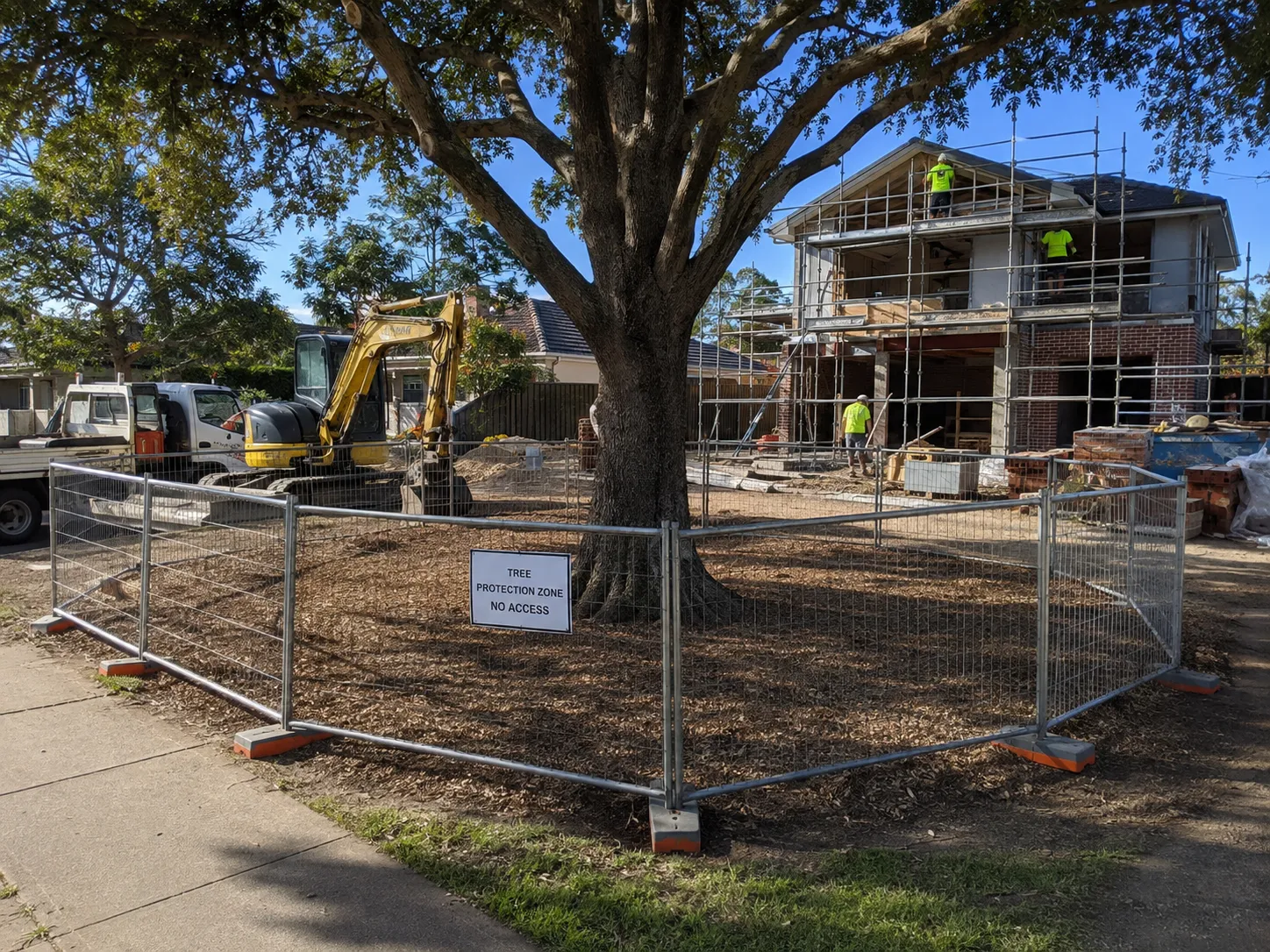
Protecting mature trees begins with understanding that the visible trunk represents only a small portion of the tree. Beneath the surface lies an extensive root system that supports water uptake, nutrient absorption and structural stability. Because these roots are easily damaged during construction, arborists establish Tree Protection Zones (TPZs) and Root Protection Areas (RPAs) to guide how building work should be carried out.
Respecting these protection zones from the earliest planning stages reduces the risk of irreversible root damage and improves the likelihood that retained trees will remain healthy after construction is complete.
A TPZ is the designated area surrounding a tree that should remain free from activities likely to damage its roots, trunk or surrounding soil. Its size is determined by factors such as trunk diameter, species, age, condition and relevant Australian standards, with calculations carried out by a qualified arborist.
Although many people assume the canopy marks the edge of the root system, roots often extend well beyond the dripline in search of moisture and nutrients. The TPZ therefore protects a much larger area than many property owners expect.
Before demolition or construction begins, the TPZ should be clearly marked with sturdy protective fencing to prevent accidental access by machinery, vehicles and contractors throughout the project.
Within or alongside the TPZ, an arborist may identify RPA where important structural or absorbing roots require additional care. These areas become important when excavation, trenching or underground services are proposed close to established trees.
Structural roots anchor the tree and help maintain stability, while thousands of smaller feeder roots absorb water and nutrients. Damage to either can affect the tree's health and increase the risk of future failure, even if visible symptoms do not appear immediately.
Where work cannot be avoided near these sensitive areas, lower-impact construction methods like directional boring, hand excavation or air spade excavation can often minimise root disturbance while allowing the project to proceed safely.
Excavation and heavy equipment are responsible for much of the permanent damage that occurs to established trees during construction. Whether roots are severed, soil is compacted or ground levels are altered, these activities can reduce a tree's health and stability if they are not carefully managed.
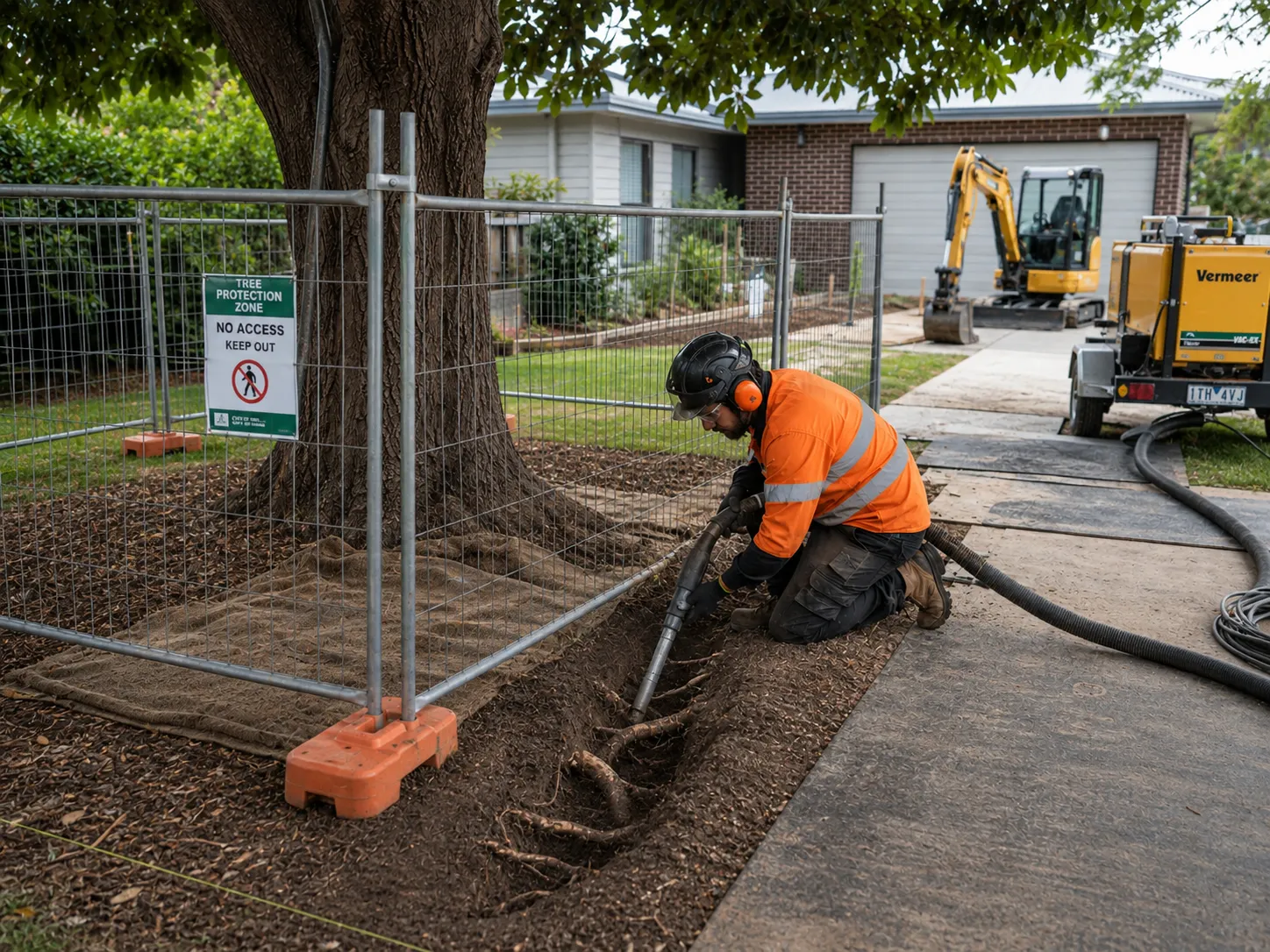
Excavation is one of the leading causes of construction-related tree decline because it removes or damages the roots responsible for anchorage, water uptake and nutrient absorption. Since most fine feeder roots are concentrated within the upper 300 to 600 millimetres of soil, they are highly vulnerable when trenches, footings, retaining walls or swimming pools are installed nearby.
Service trenches are problematic because they often pass through established root systems. Cutting large structural roots can reduce both the tree's stability and its ability to recover, while repeated excavation around several sides of the tree may leave it permanently compromised.
Understanding the available options for managing tree roots near buildings can help property owners address conflicts without automatically assuming that complete tree removal is necessary.
Where work near trees cannot be avoided, lower-impact methods such as directional boring, hand excavation or air spade excavation should be considered to minimise root disturbance.
Even when roots remain intact, heavy machinery can damage the soil environment they rely on. Excavators, trucks, cranes and repeated vehicle movements compress the soil, reducing the air spaces that allow water and oxygen to reach the root system.
Compacted soil restricts root growth, reduces drainage and increases surface runoff, making trees more vulnerable to drought and environmental stress. Because this damage develops gradually, visible symptoms often do not appear until months or even years after construction has finished.
Planning machinery access routes outside TPZ and using temporary ground protection where necessary can reduce the risk of soil compaction.
Construction frequently changes the natural ground level around established trees. Adding fill over the root zone restricts oxygen and alters soil moisture, while excavation removes roots and weakens the tree's structural support.
Temporary stockpiles of soil, gravel, bricks or other building materials can have a similar effect by compacting the ground and preventing air and water from reaching the roots. For this reason, material storage should always be kept well outside protected tree areas.
While root damage often goes unnoticed, injuries to trunks and canopies are usually the most visible signs of construction-related damage. Machinery, scaffolding, cranes and building materials can all affect a tree's health and structural integrity if appropriate protection measures are not in place.
Common forms of trunk and canopy damage include:
Although these injuries may appear minor initially, their effects can continue to develop long after construction has ended. Protecting trunks and canopies is therefore just as important as protecting the root system.
The most effective tree protection starts before construction begins. Considering established trees during the planning stage allows buildings, access routes and underground services to be designed around them, reducing unnecessary conflicts and avoiding costly changes later in the project.
Significant trees should be identified and assessed by a qualified arborist before building plans are finalised. Their health, condition, size and expected tolerance to construction will influence whether they can be retained and what protection measures will be required.
Property owners should also understand when an arborist report may be required, particularly when proposed building work could affect protected or significant trees.
This assessment should guide the placement of buildings, driveways, retaining walls, underground services and machinery access so that critical root systems are avoided wherever possible.
Property owners undertaking work in the North Sydney Council area should review Council’s tree requirements for development applications to understand when arborist reports, impact assessments and tree protection documentation may be required.
Once the design is complete, a Tree Protection Plan should outline how retained trees will be protected throughout construction. It should identify TPZ, specify protective fencing and clearly define restrictions on excavation, material storage, machinery access and other activities within protected areas.
The applicable approval process will depend on the property’s location, as NSW planning controls for trees and vegetation allow local councils to establish tree-protection requirements through their planning controls.
Providing these requirements to builders and contractors before work begins helps ensure everyone understands their responsibilities, reducing the risk of accidental damage while supporting compliance with council requirements where applicable.
Even the best Tree Protection Plan requires ongoing supervision once construction begins. As site conditions change and different trades move through the property, protective measures can easily be overlooked. Regular monitoring and clear communication help ensure TPZ remain effective until the project is complete.
TPZs should remain securely fenced throughout the entire construction period. These areas should be treated as strict no-go zones for excavation, machinery, material storage and concrete or chemical washout to prevent unnecessary damage to roots and surrounding soil.
Where temporary access near a protected tree is unavoidable, suitable ground protection should be installed to minimise soil compaction and reduce stress on the root system.
Construction activities should always be planned to minimise impacts on retained trees. Machinery access, service installation and material storage should be kept outside protected areas wherever possible. If excavation near roots cannot be avoided, lower-impact methods, such as hand digging, air spade excavation or directional boring, should be used under arboricultural guidance.
Even well-planned projects can encounter unexpected root conflicts or changing site conditions, making regular inspections valuable for identifying problems early and adjusting protection measures before damage occurs.
Construction-related damage is not always immediately obvious. Trees may appear healthy while work is underway, only to develop signs of stress months or even years later. Regular inspections during and after construction improve the chances of identifying problems before they become severe.
Here are some warning signs:
Because many of these symptoms develop gradually, even subtle changes should be assessed before they progress into more serious structural or health problems.
Protecting established trees is an ongoing process rather than a task completed before work begins. As construction progresses, unexpected issues such as exposed roots, changing access routes or service conflicts can arise. Having a qualified arborist involved helps ensure these situations are managed without unnecessarily compromising tree health.
Depending on the project, an arborist may:
Once construction is complete, a final inspection can identify any delayed impacts and recommend ongoing care. This helps maximise the likelihood that retained trees recover successfully and continue providing shade, privacy, habitat and landscape value for many years after the project is finished.
Not all construction-related tree damage is immediately visible and some problems become more serious if left untreated. While minor stress may improve with appropriate care, root disturbance or structural damage should always be assessed by a qualified arborist. Early intervention can improve the chances of retaining the tree and reduce the risk of future failure.
Professional assessment is recommended if:
Prompt assessment helps determine whether the tree can be safely retained or whether remedial work is needed before further decline occurs. Depending on the severity of the damage, an arborist may recommend ongoing monitoring, remedial pruning, soil improvement, root treatments or tree removal.
Protecting established trees during building and renovation is an investment in the health, safety and value of a property. By planning around Tree Protection Zones, minimising root disturbance and involving qualified arborists throughout the project, homeowners and builders can reduce the risk of permanent construction-related damage while meeting relevant planning and compliance requirements.
With the right planning and ongoing site management, mature trees can continue to provide shade, privacy, habitat and visual appeal long after construction is complete. North Shore Tree Services works with homeowners, builders and developers to provide expert arboricultural advice, tree protection planning and on-site support, helping ensure valuable trees and successful building projects can coexist for years.