When a neighbour’s tree grows over the fence line, it can quickly shift from a minor annoyance to a genuine property and safety concern. Overhanging branches may block sunlight, fill gutters with debris, threaten roofs and sheds or create hazards during storms. In densely planted residential areas, professional pruning or tree lopping in Sydney may be needed to manage canopy spread, maintain safe clearances and reduce risk without damaging the tree or breaching local rules. North Shore Tree Services regularly assists homeowners facing these situations.
This article explains what is generally permitted when dealing with a neighbour’s overhanging tree, how concerns can be raised constructively and when qualified arborists should be involved. It outlines the situations that may require professional equipment, technical assessment or council approval. The discussion also covers safety risks, property protection and tree preservation considerations so that overhanging branches can be managed safely and lawfully.
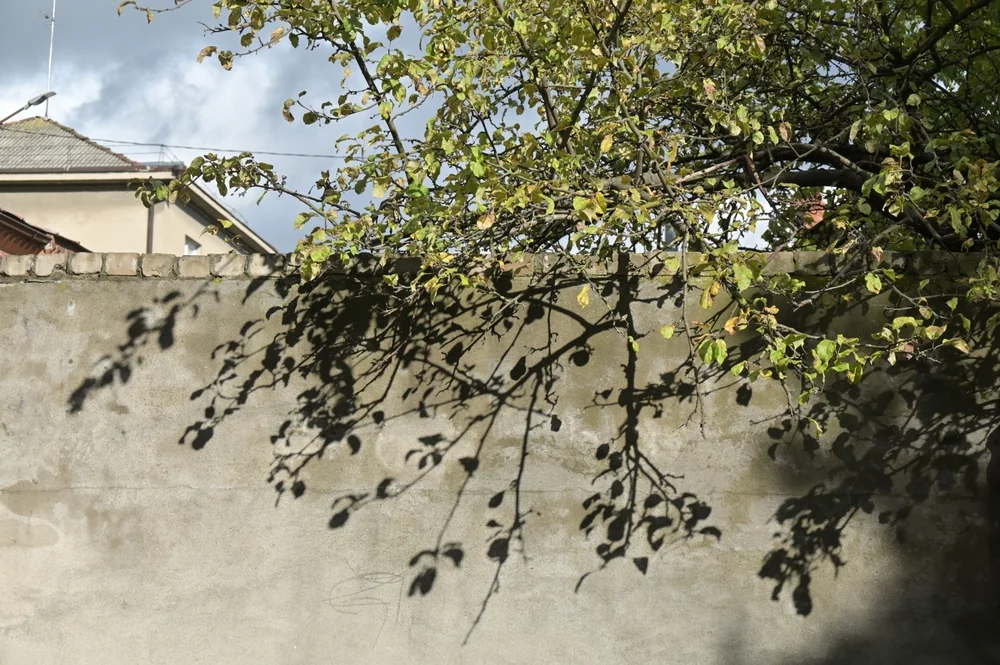
An overhanging tree issue arises when branches or roots from a tree on one property extend into another property and begin to interfere with the neighbour’s reasonable use of their land. Not every branch that crosses a boundary is a legal or practical problem. The situation becomes more serious when there is a risk to safety, potential damage to property or an ongoing nuisance that creates a genuine maintenance burden.
Understanding what actually counts as a problem helps property owners decide whether to seek an informal agreement with a neighbour or whether a more formal response may be justified. The important questions are where the tree is growing from, what parts are encroaching and what effect that encroachment is having.
The starting point is the boundary line. A tree generally belongs to the owner of the land where the trunk is rooted. Branches or roots that cross that line into neighbouring land are considered encroaching.
Overhanging branches may become an issue when they interfere with the neighbour’s use of the space. Typical examples include branches that:
Light encroachment high in the canopy that causes little impact often remains a minor concern. A denser overhang that drops debris, blocks access or creates hazards is more likely to be treated as a genuine problem.
Safety risk is usually the clearest sign that an overhanging tree has moved from an inconvenience to an issue. Warning signs include large branches that are dead, cracked or visibly decaying above a neighbour’s driveway, roof, shed or play area. Trees leaning heavily over a boundary or showing lifting roots near structures can also indicate a higher risk of failure.
Potential damage from overhanging trees covers more than falling branches. Branches rubbing on roofs can damage protective coatings or dislodge tiles. Heavy leaf or needle fall can clog gutters and downpipes, increasing the risk of leaks or water ingress during heavy rain. Root encroachment that lifts paving, affects fencing or threatens drainage and foundations can also be a more serious issue than a simple cosmetic concern.
Some overhanging trees do not create immediate danger but still cause an ongoing nuisance. Persistent shade over gardens or solar panels, reduced outdoor usability and repeated debris build-up can all become frustrating for the affected property owner. Excessive leaf, fruit or sap drop onto driveways, vehicles, pools or outdoor furniture may also be more than a minor annoyance when it is frequent and substantial.
However, loss of views or a general dislike of a neighbouring tree rarely qualifies as a strong issue on its own. In most situations, the focus is on measurable impacts such as blocked access, damaged structures, repeated maintenance problems, safety hazards or significant loss of sunlight in specific areas rather than purely aesthetic objections.
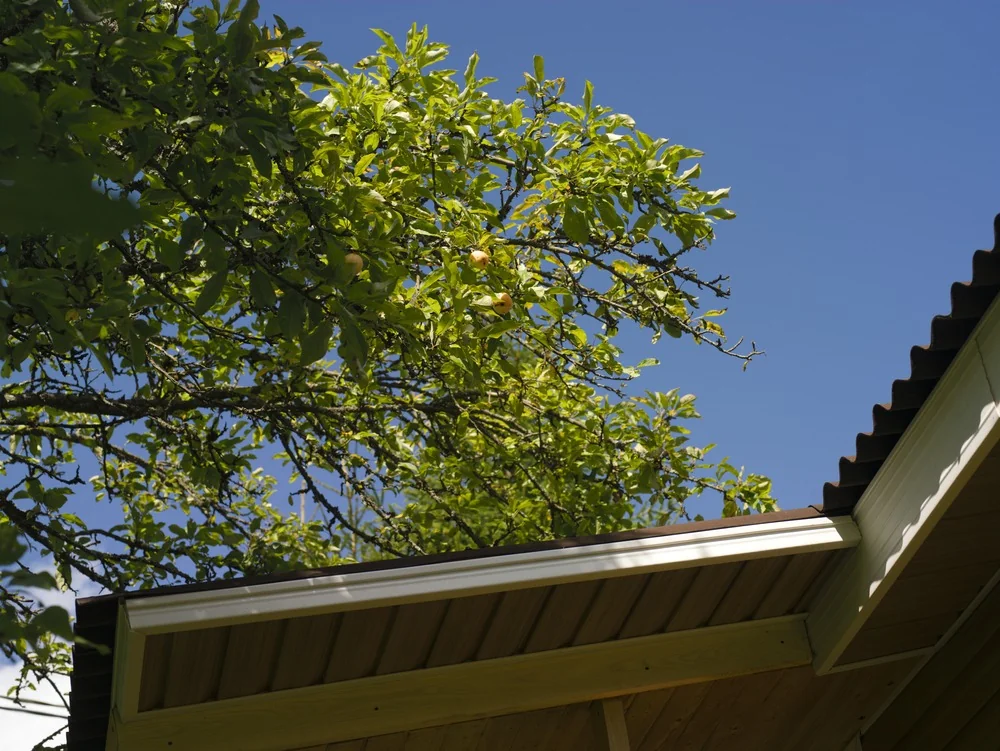
When a neighbour’s tree grows over the boundary, the law generally allows a property owner to prune branches that cross into their property. This is commonly referred to as the common law right of abatement. It can apply even if the neighbour does not agree, provided the work is limited to what is on the affected owner’s side of the boundary and is carried out safely and reasonably.
However, this right is not unlimited. Local council rules, heritage protections, tree preservation controls and the size or species of the tree can all restrict what may be removed without consent. Before arranging pruning, it is important to check whether the tree is protected and whether approval is required.
The usual legal position is that parts of a tree crossing the legal boundary line may be cut back to the boundary. This can include overhanging branches and, in some cases, roots that have grown into the neighbouring property and are causing damage.
The work should remain within the property carrying out the pruning. Reaching across the fence to cut further into the neighbour’s side or entering the neighbour’s land without permission may amount to trespass. The pruning should also be carried out in a way that avoids unnecessary harm to the tree.
Branches or roots that are cut remain the property of the tree owner. It is appropriate to offer the material back if it has value as firewood or mulch. If the neighbour does not want it, the material can usually be disposed of, provided local green waste rules are followed.
Even when branches are clearly overhanging the boundary, pruning must be reasonable. It should not:
Anything more than light pruning should be discussed with the neighbour and checked against local council rules. Crown reduction, large limb removal or heavy pruning on one side of a tree can unbalance the canopy and increase the risk of failure. This is why larger works should be assessed by a qualified arborist before cutting begins.
Roots that have encroached and are causing damage may generally be cut back where they cross the boundary. This often arises when roots block drains, lift paving, damage retaining walls or affect foundations. However, cutting major structural roots can destabilise the tree and create a safety risk for both properties.
If root removal is likely to affect the health or stability of the tree, a cautious approach is required. Arboricultural or engineering advice may be needed before work proceeds. In some cases, a council application or a formal tree dispute process through the NSW Land and Environment Court may be safer than extensive root cutting without assessment.
Even if common law allows pruning of branches that overhang the boundary, local council rules can still restrict what can legally be removed. In many parts of Sydney, councils treat trees as protected assets and impose penalties for unauthorised pruning or removal, even where the tree belongs to a neighbour. Before arranging any work on an overhanging tree, the first step should be checking the relevant council’s tree management rules.
Many councils have tree preservation rules that protect trees above a certain height, canopy spread or trunk diameter. If the neighbour’s tree meets those criteria, approval may be needed before removing more than minor growth.
Councils may protect:
If the overhanging branches are part of a protected tree, unauthorised cutting beyond exempt limits may be treated as unlawful tree work. This can apply even when only the material above the boundary is being trimmed.
Council approval is more likely to be required where the property is in a heritage conservation area or the tree itself is listed as significant. Controls in these areas are often stricter than standard tree preservation rules.
Approval may be required where:
Council may restrict the extent of pruning or refuse removal unless there is clear evidence of risk, damage or unacceptable impact. Supporting evidence from a qualified arborist is often required.
Where an overhanging tree is clearly dangerous, there may be more flexibility to make the site safe. However, council rules can still apply. Genuine emergency work is usually limited to what is reasonably necessary to remove the immediate danger.
To reduce the risk of later disputes, it is prudent to record the tree’s condition with photos or video before work begins where it is safe to do so. A written assessment from a qualified arborist can also help demonstrate why urgent action was required.
For non-immediate hazards, such as large dead branches, decay, structural defects or significant lean, most councils generally expect an arborist report and permit application rather than unilateral action by a neighbour. Where agreement cannot be reached, property owners in NSW may be able to use the tree dispute process through the NSW Land and Environment Court under the Trees (Disputes Between Neighbours) Act 2006.
Responsibility for what falls from a neighbour’s tree depends on what has occurred. In most circumstances, leaves, twigs, fruit and small debris are treated as a normal part of living near trees. Damage from falling branches, structural roots or neglected hazardous trees is treated differently.
In general, a property owner is expected to deal with ordinary seasonal debris on their own land. Responsibility is more likely to become an issue where a tree is neglected, clearly defective or causing foreseeable damage that has not been addressed.
Natural litter from healthy trees is usually considered a normal part of suburban living rather than a legal problem. When leaves or small branches blow into a yard, gutter or pool, the affected neighbour is normally responsible for cleaning them up, even if the tree is entirely on the other side of the boundary.
Councils and tribunals often view this type of debris as a predictable seasonal issue. Compensation is generally difficult to claim for ordinary leaf fall, fruit drop or minor nuisance alone. The matter becomes more serious where debris is linked to a broader risk, such as blocked stormwater drainage, repeated water damage or hazardous overhanging limbs.
Responsibility can change when a tree causes physical damage. If overhanging branches or invasive roots from a neighbour’s tree damage fences, driveways, roofs, pipes or other structures, the tree owner may be held responsible in some circumstances, especially if they knew about the risk and failed to act.
Factors that may affect responsibility include:
For example, if a dead or visibly cracked limb overhangs a roof and the tree owner refuses to address it, responsibility may be easier to establish if the limb later falls. If a healthy branch snaps suddenly during an extreme storm, responsibility may be less clear and could be treated as an unavoidable natural event.
Damage from a neighbour’s tree is often first handled through home insurance. Many policies cover storm or impact damage, after which the insurer may investigate whether recovery from another party is possible.
Property owners concerned about risk should keep clear records. Dated photographs, written notes, emails to the neighbour and an arborist’s report can all help demonstrate that the concern was raised before damage occurred. This evidence can support negotiation, insurance claims or formal action if the matter cannot be resolved directly.
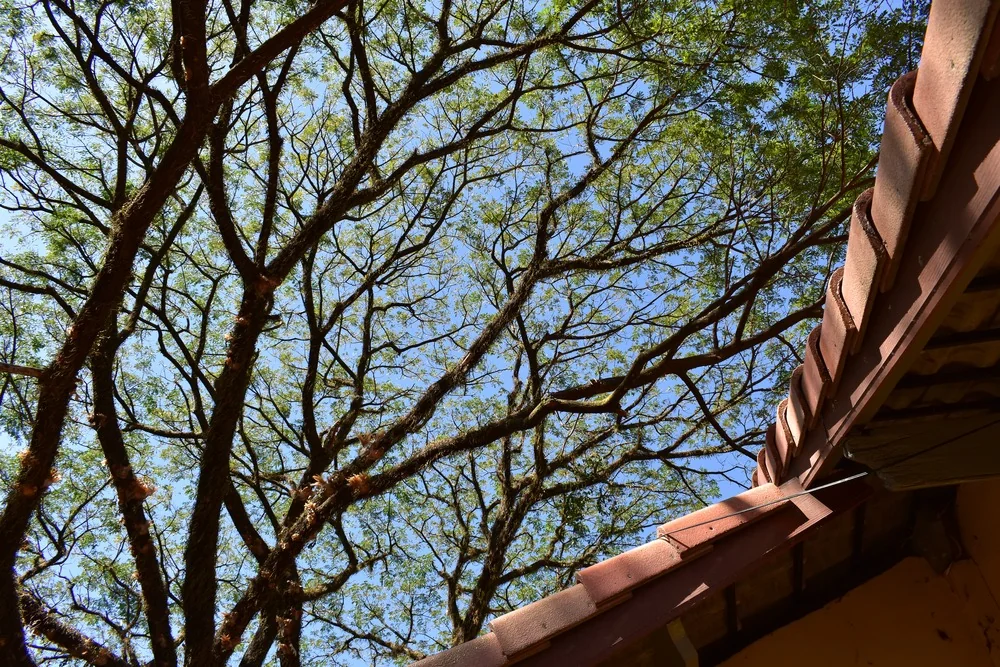
An overhanging tree that looks unstable should be treated seriously. It can create safety, liability and insurance risks for both properties, especially before storms or periods of high wind. The priority is to determine whether the danger is immediate, then document the concern, communicate with the neighbour and involve qualified professionals where needed.
Large unstable branches, trees leaning suddenly, cracked trunks, exposed roots, hanging limbs and movement in the ground around the base of the tree should never be ignored. These signs may require urgent assessment.
Once concerns are identified, the next step is to raise the issue with the tree owner. Start with a calm conversation that explains specific observations rather than making general complaints. Referring to visible signs of risk helps keep the discussion factual rather than personal.
If verbal discussion is not enough, follow up with a written letter or email. This should:
Keeping copies of all correspondence and photos creates a useful record if insurance, council advice or legal action becomes necessary later.
Where a tree appears genuinely hazardous, a qualified arborist should inspect it. An arborist can provide a written report on the tree’s condition, likely failure points and recommended works, such as pruning, cabling, bracing or removal. This report provides objective evidence that can be shared with the neighbour, council or insurer.
If the neighbour refuses to act and the tree appears clearly dangerous, the local council may be able to provide guidance or intervene where the tree breaches safety or vegetation rules. In some cases, councils can issue notices requiring work where a serious risk is identified.
In an emergency where a limb is hanging over a house, road or power line, or the tree has partially failed, contact emergency services or the relevant authority immediately. Large or unstable branches should never be removed without the right equipment, training and site controls, particularly near buildings, roads or electrical infrastructure.
Overhanging trees can be frustrating when they drop debris, block sunlight or create property concerns. How the issue is raised often determines whether it becomes a practical neighbourly discussion or an ongoing dispute. The goal is to make the neighbour aware of the impact and explore a solution while keeping the relationship civil.
A calm, factual approach works best. Focus on safety, access and property maintenance rather than blame. If professional advice or council input is needed later, clear documentation will also help show that the issue was approached reasonably.
Avoid raising the issue when angry or immediately after a storm or incident. Instead, choose a neutral time when both parties are more likely to be calm. A face-to-face conversation is usually better than a note because it allows clarification and reduces the chance of misunderstanding.
Begin by acknowledging that trees are valuable and that many people are attached to them. Then explain the specific problem, such as branches scraping the roof, gutters constantly clogging or limbs hanging over a driveway. Keep the focus on practical effects rather than opinions about the tree’s appearance.
If direct conversation is difficult or previous tension exists, a polite written note can be used. Briefly state the concern, describe where the tree overhangs and ask whether a time can be arranged to discuss possible solutions.
Language that sounds accusatory can quickly escalate conflict. Avoid phrases such as “your tree is causing damage” or “you have to fix this”. Instead, refer to “the tree along the boundary” and “the overhanging branches”. Describe what is happening rather than blaming the neighbour personally.
When raising the issue, suggest options rather than making demands. This may include arranging an arborist quote, pruning branches back to the boundary or checking council requirements together before any work begins. Offering flexibility on timing can also ease concerns, especially if the neighbour is worried about cost or disruption.
If the tree is large or close to structures, explain the benefit of using a qualified arborist. Professional advice can help protect both properties, avoid poor pruning and reduce the risk of breaching council rules.
Records are useful, but they do not need to turn the matter into a legal dispute. Note the dates of discussions and take clear photos of branches close to roofs, fences, driveways, power lines or other structures. Keep any emails, letters or arborist advice in one place.
If a solution cannot be agreed upon, consider neutral third-party input before escalating. This may include written advice from a qualified arborist, council guidance or mediation. Where the issue involves damage, injury risk or unresolved obstruction, the NSW Land and Environment Court may provide a formal pathway for tree disputes under the Trees (Disputes Between Neighbours) Act 2006.
Overhanging tree disputes are best handled with a balance of legal awareness, practical action and respectful communication. Property owners may have the right to prune encroaching branches back to the boundary, but protected trees, hazardous limbs, major pruning and root damage often require careful assessment before any work begins. Checking council rules, documenting concerns, speaking with the neighbour early and seeking qualified arborist advice can help prevent unnecessary conflict while ensuring that any tree work is carried out safely and lawfully.