When applying for tree removal in Sydney, councils do not rely on general statements or assumptions. Each application must be supported by clear, objective evidence showing that the tree is dead, declining, dangerous or causing measurable damage. Without that level of detail, applications are often delayed, conditioned or refused under local tree preservation controls. North Shore Tree Services uses this process to navigate with clients every day. Different councils apply different rules, thresholds and documentation requirements, which can make it difficult to know what evidence is actually needed and how it should be presented.
This article will look at the types of evidence councils expect and how these elements work together in a compliant application. It also explains how Australian standards, Tree Preservation Orders and local council policies influence what qualifies as acceptable proof to prepare the application and avoid unnecessary delays or compliance risks.
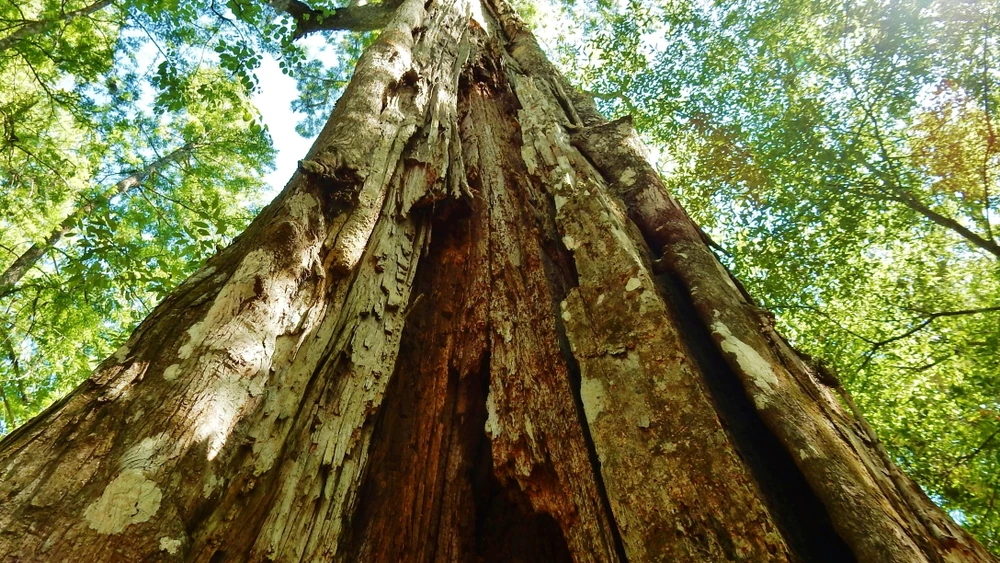
Councils in Sydney rely on evidence to decide whether a tree can be legally pruned or removed. Without clear proof of risk or justified impact on property, an application is likely to be delayed, conditioned or refused. Evidence is the basis for showing that a tree meets the criteria in local Tree Preservation Orders and Development Control Plans, rather than being removed for convenience.
Well-prepared evidence also protects owners from fines and enforcement action. Councils have powers to issue penalties for unauthorised works and often require replacement planting or remediation if a tree has been removed without adequate justification. Proper documentation helps demonstrate that decisions were responsible, necessary and compliant.
Each council sets out specific rules for what can and cannot be done to trees, including size thresholds, exempt species and protection for trees in heritage or environmentally sensitive areas. Evidence is needed to show how a particular tree fits within those rules.
For example, measurement photos of trunk diameter at 1.3 metres above ground can determine whether a tree exceeds the protected size. A site plan or survey can show distance to buildings, boundaries and services that may be affected by roots or canopy. Photographs of structural damage, such as cracking in paths or walls, help demonstrate that the tree is causing genuine impact, not just minor inconvenience.
Without this level of detail, council officers must assume the most protective interpretation of their policies. Clear evidence allows them instead to make a balanced decision grounded in the actual site conditions.
Removal is usually only supported where a tree presents an unacceptable risk or cannot be reasonably managed through pruning or other measures. Evidence is critical in proving that risk is real, current and not easily mitigated.
Typical forms of risk-related evidence include:
This information allows council staff who may not have seen the tree in person to understand the severity of defects and likelihood of failure. Where a tree is healthy but inconvenient, a lack of compelling evidence will usually result in refusal. Where a tree is compromised by disease, poor structure or storm damage, a detailed report can clearly justify removal.
Evidence also creates a formal record that can be referred to if there are neighbour disputes, insurance questions or later complaints about tree removal. Councils expect applications to be transparent and defensible.
Accurate documentation of tree condition before works helps show that the tree was not removed simply for better views or easier maintenance. It also supports decisions regarding replacement planting conditions and can be important if a neighbour claims loss of privacy or amenity. In a heavily regulated urban environment, strong evidence is not just a paperwork requirement. It is the primary tool that aligns property needs with environmental protection in a way that is fair, consistent and legally robust.
Sydney councils generally require clear, objective evidence that a tree is unsafe, unhealthy, causing unreasonable damage or unsuitable for its location before approving removal. The strength and clarity of the supporting material often determine whether an application is approved, refused or delayed with requests for further information.
Most councils in the region expect a combination of expert documentation, visual records and technical reports. The more accurately the evidence explains the risk or impact, the more likely the assessment officer is to justify approval.
The cornerstone of most successful applications is a detailed report from a suitably qualified arborist, usually AQF Level 5. Councils place weight on independent professional assessments that address both tree health and risk.
A compliant arborist report typically includes the species, height and diameter of the tree, along with an assessment of its health, structure and remaining useful life expectancy. It should identify defects such as decay, cracks, weak unions, root damage or pest and disease problems and explain how these affect safety or long-term viability.
Risk is often evaluated using a recognised methodology such as QTRA or TRAQ. The report should clearly state the targets at risk, for example, a house, driveway, neighbouring property or public footpath and the likelihood of failure. Councils usually expect the arborist to discuss alternatives like pruning or root management and to justify why full removal is the most appropriate option.
When the primary concern is damage or health impact, councils generally expect corroborating documentation from relevant professionals, not just the property owner’s description.
For structural or property damage, this may include:
For medical concerns related to allergies or asthma, some councils accept letters from medical practitioners or specialists that specify the condition and the likely impact of the particular species or pollen. Generic doctor’s notes without clear linkage to the tree often carry limited weight, so specific references to the tree and symptoms are important.
Strong visual evidence helps council officers understand the situation without multiple site inspections. Clear, dated photographs that show the whole tree, close-ups of defects and the surrounding targets are usually expected.
Useful images include shots of dead or failing branches, fungal brackets, cavities, termite damage, lifted paving or root encroachment. Context photos that show the tree’s distance from buildings, fences, pools, or power lines help support arguments about risk or unsuitability.
Site plans or simple sketches are often requested to locate the tree on the property, indicate boundaries and show nearby structures or services. Where overshadowing or solar access is an issue, some councils may seek sun diagrams or architect plans as supporting evidence so the impact can be quantified rather than assumed.
Most councils require a formal arborist report before deciding if a protected tree can be removed or heavily pruned. An arborist report provides independent evidence about the tree’s health, risk level and the impact of removal on the surrounding environment. Knowing when this report is needed saves time and reduces the risk of a rejected application or fines for unauthorised work. Although exact rules differ between councils on the North Shore and across Sydney, several common triggers apply.
An arborist report is often required when a tree meets certain size or species thresholds. Many councils specify that any tree above a set height or trunk diameter is protected and cannot be removed without supporting evidence.
Typically, a report is needed when:
In these cases, the arborist must assess structural integrity, disease, likely lifespan and amenity value to justify removal or major pruning.
When a tree is suspected of damaging structures, councils usually expect a qualified arborist to confirm the link and assess risk. An arborist report is commonly requested if a tree is:
The report should clearly outline whether the tree is the probable cause of damage, if the risk can be managed through pruning or root management or if removal is the most appropriate solution. Councils rely on this technical evidence rather than photos or homeowner opinion alone.
Where safety is a concern, an arborist report is often critical to demonstrate that the tree presents a real and not just perceived hazard. This usually applies when:
In emergencies, councils may allow immediate work then request a report retrospectively.
Any development that affects the root zone or canopy of trees typically triggers a requirement for an arborist report as part of the development application. Examples include:
The report usually includes a Tree Protection Plan, root zone mapping and recommendations to retain trees where possible or justify removal if retention is not viable.
Councils generally require clear, documented evidence that a tree is causing measurable damage or presents a genuine safety risk before approving removal. Strong applications explain exactly what is happening, where it is occurring and how the tree is directly involved, supported by photos, reports and sometimes specialist assessments.
The focus is usually on objective proof such as structural damage to buildings or infrastructure, interference with essential services or a demonstrated likelihood of branch or whole-tree failure that could harm people or property. Vague concerns or general dislike of a tree are not sufficient.
To prove damage, councils expect a clear link between the tree and the problem. Useful evidence typically includes:
Where damage involves structures or underground services, councils often look for professional documentation. This may include:
Providing dates or records showing that damage is increasing over time strengthens an application. For example, photos taken months apart that show cracks widening or surfaces lifting further indicate a continuing problem rather than a historic or unrelated defect.
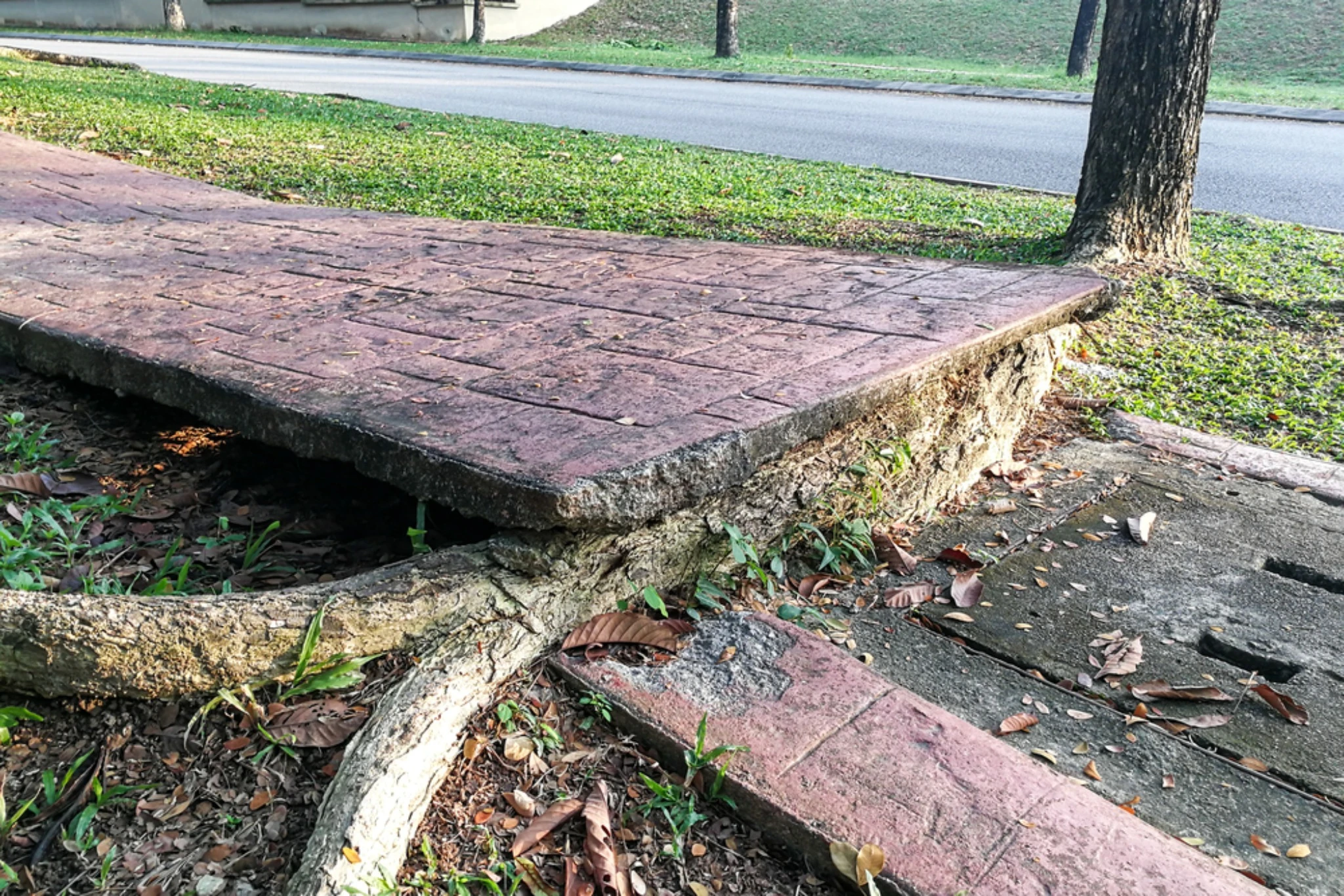
Safety-based applications need to demonstrate a realistic risk of failure, not just the presence of a large tree. Councils generally expect an assessment of both the likelihood of failure and the consequences if failure occurs.
Useful evidence for safety risks includes:
A detailed arborist report using an accepted risk assessment method carries substantial weight. This type typically identifies structural defects, assesses target areas beneath the tree and assigns a risk rating that councils can use in their decision-making.
Some types of information feel persuasive to a property owner but rarely satisfy a council on their own. Councils generally require objective evidence that a tree is dangerous, unhealthy or causing significant damage, assessed against their tree preservation orders and development control plans. The points below are commonly misunderstood. They may support an application but will rarely justify removal without additional arborist evidence, photographs or engineering input.
Disliking a tree is not grounds for approval. Councils are tasked with protecting the urban canopy, so reasons based on preference or inconvenience carry very little weight without more serious supporting factors.
Examples that are usually not enough on their own include:
Even moderate shading of lawns or garden beds usually needs to be backed by an arborist report demonstrating that pruning cannot reasonably address the problem and that the tree does not provide environmental or streetscape value.
Minor or easily managed impacts generally do not justify complete removal without technical evidence. Councils typically look for clear, documented damage.
Examples that are often considered insufficient on their own are:
Where structural damage is claimed, an independent structural engineer’s report and site photos are usually needed. Even then, councils may prefer root pruning or barrier installation before approving full removal.
Health concerns are taken seriously but still require clear evidence. Many common nuisance issues do not meet the threshold on their own.
Examples that usually need more support are:
Documentation from a medical professional or specialist may be requested and even then councils may first consider pruning or management solutions instead of removal.
Many tree removal applications in Sydney are delayed or refused not because the work is unreasonable but because the paperwork is incomplete or poorly prepared. Understanding the most frequent mistakes helps ensure an application provides the clear evidence councils expect and avoids unnecessary back-and-forth.
Sydney councils typically assess risk, health, species significance and impact on neighbours. Any gap in these areas can raise red flags. Careful preparation of documents, photographs and reports is often the difference between quick approval and a formal refusal.
A common reason for refusal is a lack of specific evidence that the tree meets the council’s criteria for removal. Simply stating that a tree is "dangerous" or "too big" is rarely enough.
Councils usually expect clear descriptions of structural defects, disease symptoms or interference with buildings and services. Applications that do not explain where the defect is located on the tree, how long it has been present or how it affects safety are often viewed as unsubstantiated claims rather than evidence.
Photographs that are too distant, poorly lit or do not show the problem area in context also undermine an application. Councils generally prefer multiple angles that show the whole tree, its position relative to buildings or boundaries and close-ups of defects such as cavities, fungal bodies or large dead branches. Vague comments without matching visual evidence give assessing officers little reason to depart from a conservative approach.
Reports that lack a clear risk assessment, fail to identify the species, omit trunk diameter at breast height or do not discuss retention options can be given little weight. Councils often want to see that alternatives to full removal have been considered, such as canopy reduction, deadwood removal or root investigation. Applications that demand removal without addressing these options are more likely to be refused or deferred pending further information.
Failing to provide an engineering opinion where building damage is alleged is another pitfall. Claims of cracked slabs or walls attributed to tree roots without a supporting engineer’s letter or report are frequently dismissed as speculative rather than evidence-based.
Tree removal is not governed by a single statewide rule. Each local council has its own TPO or DCP that sets out when consent is needed and what evidence must be supplied. Property owners should never assume that requirements in one suburb will be the same in the next. Although there are common themes, such as protecting native species and trees, the details can differ. Trunk size thresholds, exempt species lists, evidence of damage and even the application forms and fees can all change at the council boundary.
Some councils require approval for any tree with a trunk diameter over 300 mm measured at 1.4 m above ground. Others set the threshold at 200 mm or 400 mm or link it to overall height, such as trees over 5 m or 6 m tall. A tree that is exempt in one area because it is under the size limit might be fully protected in the next local government area.
Species rules also differ. Many councils provide a list of exempt species, such as common invasive trees or certain fruit trees that can be removed without consent. Other councils protect almost all species except a short list of declared weeds. Native trees are often more strictly controlled; however, some councils focus protection on locally indigenous species while others protect all Australian natives on private land.
Some councils insist on a detailed arborist report from a qualified AQF Level 5 consulting arborist, including photos, risk assessment ratings and root zone analysis. Others may accept a simpler report or even site photos and a written explanation from the owner for straightforward cases, such as clearly dead trees.
Definitions of “damage” also vary. In one area, minor cracking in paving might be considered insufficient, while another council may accept root damage to paths or retaining walls as justification for removal if there is evidence that the problem will worsen. Requirements for proving structural damage to buildings can range from photos and an arborist's opinion to formal engineering reports.
Heritage listing or special zoning can override general tree rules and these layers are not consistent across Sydney. A tree within a heritage conservation area or on a heritage item property may need consent regardless of size or species, even if it would be exempt elsewhere in the same council.
Some waterfront foreshore or scenic protection areas also have stricter criteria for removal and may require additional justification to show that views or development plans do not override environmental or streetscape values. In bushfire-prone areas, councils may allow more generous pruning or removal for asset protection, but the exact allowances and required documentation differ from one council to another.
Understanding what evidence councils need for tree removal approval is essential for anyone responsible for managing trees on their property. From detailed arborist reports to proof of structural damage, council officers expect clear objective documentation that meets their statutory duties. By approaching the process methodically, engaging a qualified AQF Level 5 consulting arborist and assembling a comprehensive application that addresses tree health risk, public safety, heritage and environmental impacts from the outset, property owners can reduce delays and rejected submissions. Ultimately, the approval process is not designed to make tree work difficult but to ensure that necessary removals are justified.