Palm trees can be a valuable feature of a property, so deciding when one should be removed is not always straightforward. While some palms can remain healthy for decades, others may eventually become unsafe, difficult to maintain or unsuitable for their location.
Knowing when palm removal in Sydney is necessary means looking beyond normal ageing. Disease, pests, structural problems, root issues, falling fronds or fruit and conflicts with buildings, services or access areas can all indicate that a palm may no longer be suitable to keep.
North Shore Tree Services helps assess the warning signs and determine whether a palm should be maintained, treated or removed. A professional assessment can provide greater confidence that the decision is based on safety, practicality and the palm’s long-term condition.
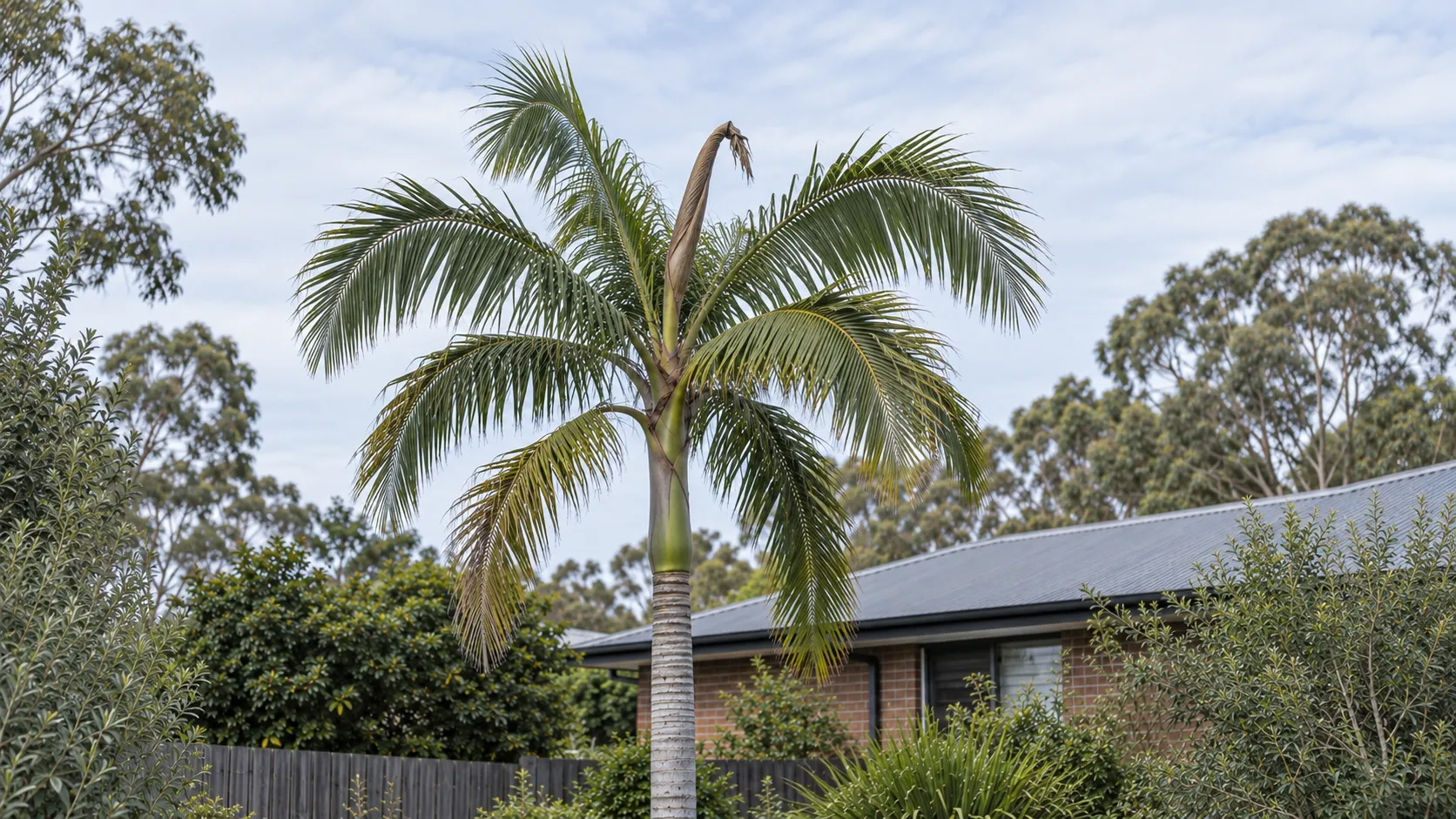
Palm trees can hide serious disease or internal decay until the damage is advanced. While some health problems can be managed with professional treatment or pruning, severe damage to the crown, trunk or root system may make a palm unsafe or unlikely to recover. Recognising these warning signs early can help prevent falling debris or tree failure from putting people, vehicles and nearby structures at risk.
Removal may be necessary when a palm shows signs of severe decline, structural weakness or irreversible damage, including:
When the growing point has been destroyed or structural decay has compromised the trunk, treatment may no longer be effective. Continued maintenance may only delay an unavoidable removal while the risk remains. A professional assessment can determine whether treatment is still viable or whether removal is the safer and more practical option.
Understanding tree pests, disease and risk assessment can also help property owners recognise when declining health may require professional investigation.
A leaning palm is not automatically dangerous, but a recent or worsening lean can indicate problems with the trunk, roots or surrounding soil. When structural stability is compromised, the risk of the palm falling may increase during strong winds or heavy rain. Identifying whether the lean is stable or changing is important when deciding whether removal is necessary.
Some palms develop a natural, gradual lean that remains unchanged for many years. A smooth, consistent curve with no signs of movement or damage may not require removal.
A lean is more concerning when:
A professional assessment can help determine whether the palm remains stable or poses a genuine failure risk.
Movement around the base can indicate that the palm is no longer securely anchored. Beware of these warning signs:
Where the extent of the problem is unclear, arborists can assess tree roots and structural risk using visual observations and, where appropriate, specialised investigation methods.
Heavy rain, soil erosion and saturated ground can make existing instability worse. Root movement in a mature palm should be assessed professionally rather than addressed through DIY staking or root cutting.
A stable root system does not eliminate the risk of trunk failure. Soft or spongy areas, cavities, cracks, splits or extensive fungal growth can indicate internal deterioration. Damage near the base or around a major bend is concerning because it may weaken the trunk's ability to withstand wind.
Where structural defects or progressive instability are present, removal may be safer than attempting to manage the palm through pruning or other maintenance. An arborist can assess the extent of the problem and determine whether the palm can be retained safely.
Strong winds, heavy rain and coastal storms can leave palms with broken fronds, damaged crowns or structural problems. Minor damage does not necessarily mean removal is required, but damage to the growing point, trunk or root system can make a palm unsafe or unlikely to recover.
The crown contains the palm's main growing point, so damage to this area can be serious. Removal may be necessary when:
A damaged palm can sometimes remain standing after a storm before failing later, particularly if the trunk or root system has been compromised. Extra caution is needed where the palm is near houses, driveways, powerlines, pools, play areas or other frequently used spaces.
If a storm-damaged palm presents an immediate danger to people, property or access, emergency tree removal in Sydney may be required to control the hazard safely.
Not every storm-damaged palm needs to be removed. If only older outer fronds have broken and the central spear remains healthy, the trunk is sound and there are no signs of movement or decay, professional pruning and monitoring may be sufficient.
However, worsening lean, new cracks, crown deterioration or declining spear health should be reassessed promptly. Where storm damage has compromised the palm's growing point or structural stability, removal may be the safest and most practical option.
A healthy palm can still become a problem when it is planted too close to buildings, structures or essential services. As the palm grows, its trunk, roots and crown may interfere with roofs, walls, driveways, underground pipes or overhead cables. Signs such as lifted paving, damaged structures, blocked gutters or repeated contact with service lines can indicate that the palm is no longer suitable for its location.
The crown and trunk should also be considered, where a mature palm grows over a roof, driveway, balcony or other frequently used area. A palm that requires pruning to maintain safe clearance may become difficult and costly to manage. If the location leaves little room for future growth or safe maintenance, removal may be more practical than repeatedly managing the same conflict.
Where a palm is close to powerlines or other essential services, professional assessment is important. If pruning cannot maintain adequate clearance or the palm's continued growth will create an ongoing safety or access problem, removal may provide a more reliable solution.
Ausgrid warns that tree trimming or removal near powerlines can be extremely dangerous and may need to be completed by appropriately accredited workers.
A healthy palm can become unsuitable for its location as it grows. A space that was adequate when the palm was young may become too restrictive as the trunk and crown mature, particularly on smaller urban properties. When its size begins to interfere with access, structures, landscaping or everyday use, removal may be worth considering.
Here are some signs that a palm has outgrown the space it is in:
A large palm does not automatically need to be removed. The key consideration is whether its size and location create an ongoing problem that cannot be reasonably managed.
It is also important to consider how much further the palm is likely to grow. Different species vary in mature height, crown size and maintenance needs, so a palm that is manageable now may become increasingly difficult to maintain as it matures.
If the palm requires frequent professional pruning to keep it clear of structures, access areas or services, removal and replacement with a more suitable species may be the better long-term option. A professional assessment can help determine whether continued maintenance is practical or whether tree removal in Sydney is a more suitable solution.
Although palm roots are fibrous and relatively shallow, they can still cause problems when a palm is planted close to underground infrastructure. As the root system develops, it may interact with sewer and stormwater pipes, irrigation systems, paving and other nearby structures.
Root damage does not automatically mean a palm needs to be removed. The important consideration is whether the roots are causing ongoing problems and whether the affected infrastructure can be repaired or managed without compromising the palm's stability.
Roots can enter damaged or poorly joined sewer and stormwater pipes, potentially contributing to repeated blockages or drainage problems. Warning signs may include:
Sydney Water explains that tree roots can enter cracks in wastewater pipes, where continued growth may restrict drainage and contribute to blockages.
A blockage alone does not prove that the palm is responsible, as pipe age, poor joints and existing defects can also cause problems. The source of the damage should be confirmed before considering removal.
Palm roots can also affect surrounding landscaping and surface infrastructure as they expand. Here are some common problems:
Minor surface issues may be manageable through repairs or changes to the surrounding area. However, recurring damage can become difficult to address as the palm and its root system mature.
Removal may be considered when root-related damage is significant, recurring or difficult to separate from essential infrastructure. Repeated repairs to sewer lines, drainage or other services can become costly, while aggressive root pruning may compromise the palm's stability.
Property owners should have the cause of the damage properly assessed. An arborist can evaluate the palm and its root zone, while a plumber or relevant service specialist can confirm the condition of underground infrastructure. This helps determine whether repairs, modifications or removal provide the safest solution.
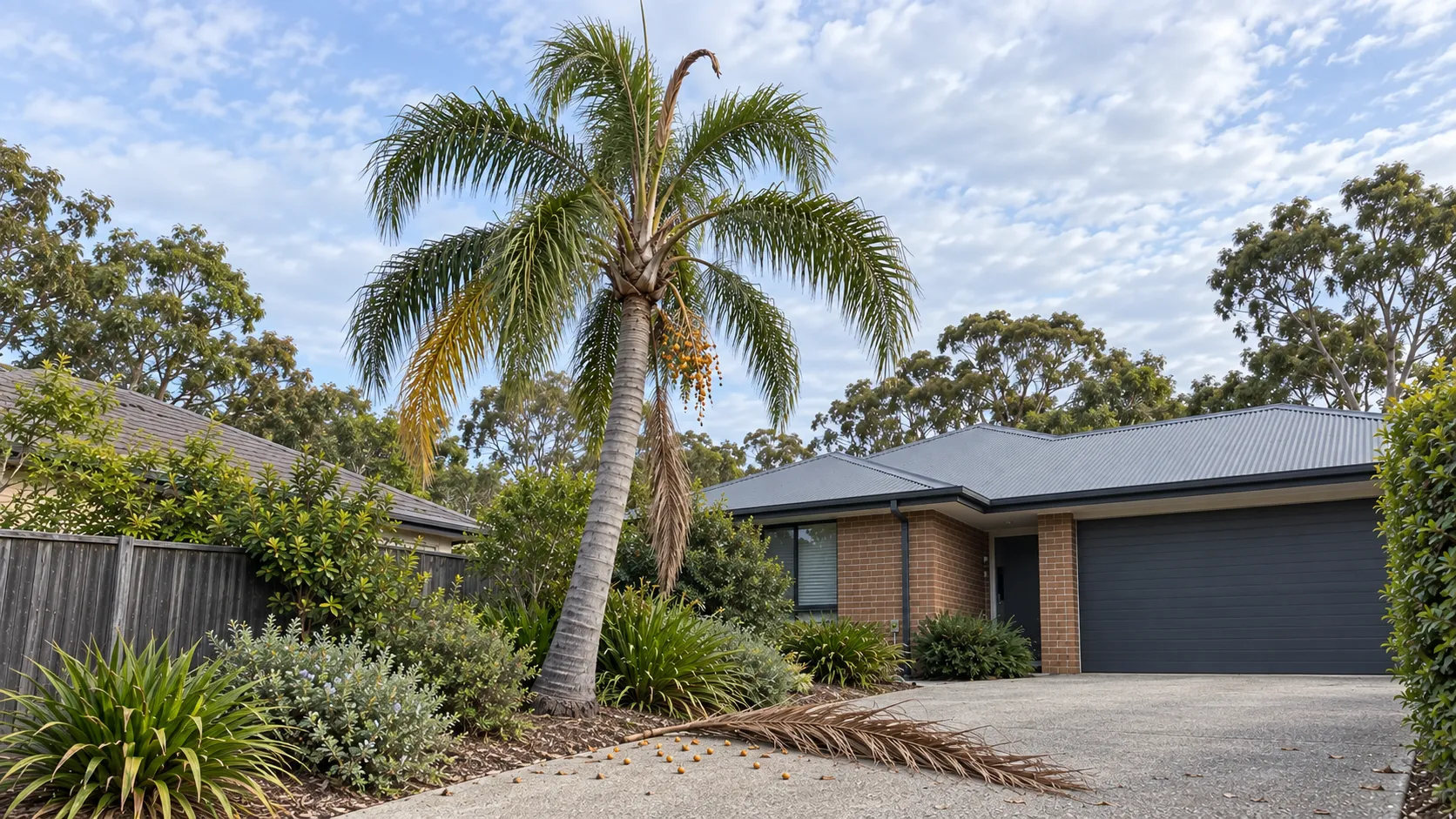
A healthy palm can still become a safety hazard when its size, position or falling debris interferes with how a property is used. Large fronds, fruit and seed pods can fall onto people, vehicles and outdoor areas, while a mature trunk or crown may obstruct driveways, paths and other access points.
Removal may be appropriate when these risks are persistent and cannot be reliably managed through routine maintenance. The decision should consider the frequency and severity of the hazard, as well as whether the palm can be safely maintained in its current location.
Falling material is a common concern with mature palms. Dead fronds can become heavy, while fruit and seed clusters may cause injury or property damage when they fall from height. The risk is greater when the palm is positioned above driveways, walkways, entrances, vehicles or other frequently used areas.
Professional pruning may control occasional debris, but a palm that repeatedly drops heavy material into high-use areas can become difficult to manage safely. If the hazard continues despite appropriate maintenance, removal may be the more practical solution.
As a palm grows, its trunk and crown can restrict movement around a property. It may narrow a driveway, obstruct a pathway, interfere with gates or garages, or reduce visibility for vehicles entering and leaving the property.
Where there is limited space to modify surrounding access areas, these problems can become difficult to manage. If pruning cannot provide adequate clearance or the same obstruction repeatedly returns, removing the palm may be preferable to continually modifying the surrounding area.
Not every falling frond or access problem requires removal. A healthy and stable palm may be retained when the hazard can be effectively controlled through appropriate maintenance. Removal becomes more reasonable when the risk is persistent, difficult to manage or potentially serious, where people, vehicles or essential access are regularly exposed.
Homeowners should have the palm assessed by a qualified arborist. This can help determine whether pruning or other measures are sufficient or whether removal is the safest option. For tall palms near driveways, footpaths, roads or other high-use areas, professional services can also ensure the work is planned around surrounding people, property and access requirements.
In some cases, yes. Professional pruning and routine maintenance can resolve minor or manageable issues. Addressing these problems can improve safety and appearance while allowing a healthy palm to remain in place. Correct pruning is important, as excessive or inappropriate cutting can damage the palm rather than improve its condition.
However, maintenance cannot solve every problem. Trunk decay, advanced disease, progressive leaning caused by instability, severe root problems or a palm growing in an unsuitable location may require removal. Similarly, repeatedly pruning a palm to keep it clear of buildings, powerlines or access areas may only provide a temporary solution if the underlying location problem remains.
The best approach is to assess whether maintenance can manage the issue safely over the long term. If the palm continues to present a structural, safety or location-related risk despite appropriate care, removal may be the more practical option. A qualified arborist can determine whether the palm can be retained safely or whether removal is warranted.
Before removing a palm, property owners should check whether approval is required from their local council. Tree protection rules vary across Sydney and a palm that can be removed without approval in one area may require a permit or other consent elsewhere. Factors such as the palm's species, size, location, condition and proximity to structures may affect whether it is protected.
Some councils provide exemptions for certain circumstances that meet specific size or location criteria. However, exemptions usually come with conditions, so property owners should not assume that a palm is exempt simply because it is diseased, damaged or considered a nuisance. Where safety or structural concerns are involved, an arborist report or other supporting evidence may also be required.
The safest approach is to check the relevant council's current tree management requirements before arranging palm removal and confirm whether approval, an exemption or supporting documentation applies to the property. If consent is required, it should be obtained before removal work begins.
Professional arborist advice is recommended whenever a palm presents a potential safety risk, is difficult to access or is located close to buildings, powerlines, driveways or other structures. An assessment is important when there are signs that the palm may be unstable or damaged.
A professional assessment is recommended when:
An arborist can determine whether the palm can be safely retained through pruning and maintenance or whether removal is the better option. Where removal is necessary, professional equipment and controlled techniques can reduce the risk of injury or damage to surrounding property.
Deciding whether a palm tree should be removed comes down to safety, practicality and the long-term needs of the property. Structural defects, disease, pests, root problems, excessive growth or proximity to buildings, powerlines and high-use areas can all indicate that removal may be the best option. Considering the palm's condition, location and ongoing maintenance requirements can help make a measured decision rather than waiting for a serious failure or storm-related emergency.
When the right course of action is unclear, North Shore Tree Services can assess the palm and determine whether pruning, treatment, ongoing maintenance or removal is most appropriate. A professional assessment helps ensure the decision is based on the palm's condition and potential risks, helping protect people, property and the surrounding landscape.