Healthy trees can occasionally lose large branches without any obvious warning, even when the canopy appears green and vigorous. While many people associate falling limbs with storms or dead trees, various factors can contribute to unexpected branch failure. Understanding these risks is an important part of responsible tree care. For Sydney property owners, understanding the causes of sudden limb failure can make it easier to know when professional tree services are needed.
This article explains why healthy-looking branches sometimes fall, the conditions that increase the likelihood of sudden limb drop and the warning signs that often go unnoticed. It also discusses how appropriate inspections, strategic pruning and ongoing maintenance can reduce risk while preserving the health and structure of established trees. North Shore Tree Services understands the importance of identifying potential hazards before they become serious safety issues.
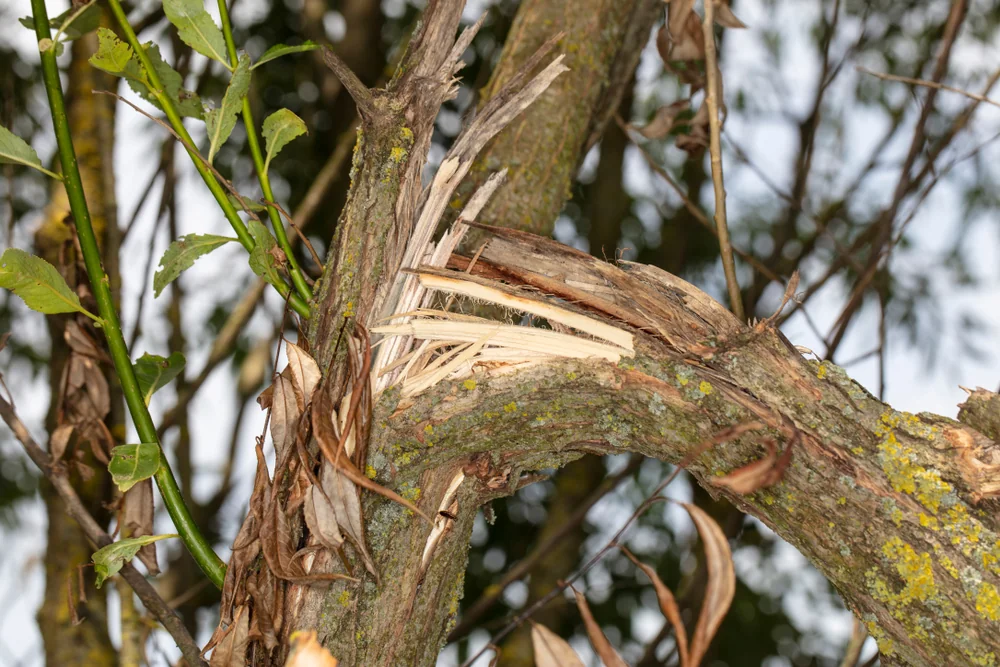
A branch that appears green and solid can fall with little or no obvious warning, especially in mature trees. What looks healthy from the ground may hide structural weaknesses, decay or internal stresses that only become critical under certain conditions, such as heat, wind, heavy moisture or changes in the surrounding site.
This type of failure is often called sudden limb drop or summer branch drop. It is unpredictable in the strictest sense, but there are patterns and risk factors that make it more likely in some trees, branches and locations than others.
Unlike dead branch failure, sudden limb drop often involves live branches with healthy foliage. The tree may appear stable, yet a large limb can break because of hidden defects, poor branch attachment, excess weight or internal stress. This is why visual appearance alone is not always enough to determine whether a tree is structurally safe.
From ground level, a branch is often judged by its foliage. If the leaves look green and full, the limb is usually assumed to be sound. In reality, branch strength depends on much more than leaf health. Wood quality, internal structure, branch attachment and the distribution of weight all affect whether a limb can safely support itself.
Hidden problems that can cause failure include:
These defects may be invisible from below but can significantly reduce the branch’s ability to support its own weight. The risk increases when that weight suddenly changes, such as after heavy rain, during hot still weather or when dense foliage adds extra load to the outer part of the limb.
A branch may also be compromised by past damage. Old storm injuries, poor pruning cuts, topping wounds or mechanical damage can allow decay to develop inside the limb while the outer shell remains alive. This means the branch can continue producing leaves even though the internal wood has weakened.
Sudden limb drop is a phenomenon where large, seemingly healthy branches break and fall without clear external warning. It is often reported in calm or lightly breezy weather and is most commonly associated with mature broadleaf trees.
This type of failure is different from obvious storm damage or deadwood failure. The fallen branch may have healthy leaves, no obvious dieback and little visible decay on the outside. The break often reveals internal cracking, decay pockets, included bark or other structural weaknesses that were not visible from the ground.
Sudden limb drop often involves long horizontal or slightly leaning branches. These limbs experience high bending forces because much of their weight sits far from the trunk. Over time, a limb may carry increasing weight from wood growth, dense foliage and epicormic shoots. On warm, still days, moisture and heat can build up within the canopy. When this stress combines with hidden structural flaws, the wood may fracture abruptly rather than gradually bending or splitting in a visible way.
Failures may occur at the branch union, just outside the union or partway along the limb where the branch changes direction. In many cases, the issue is not that the tree is generally unhealthy, but that a particular branch has become structurally marginal.
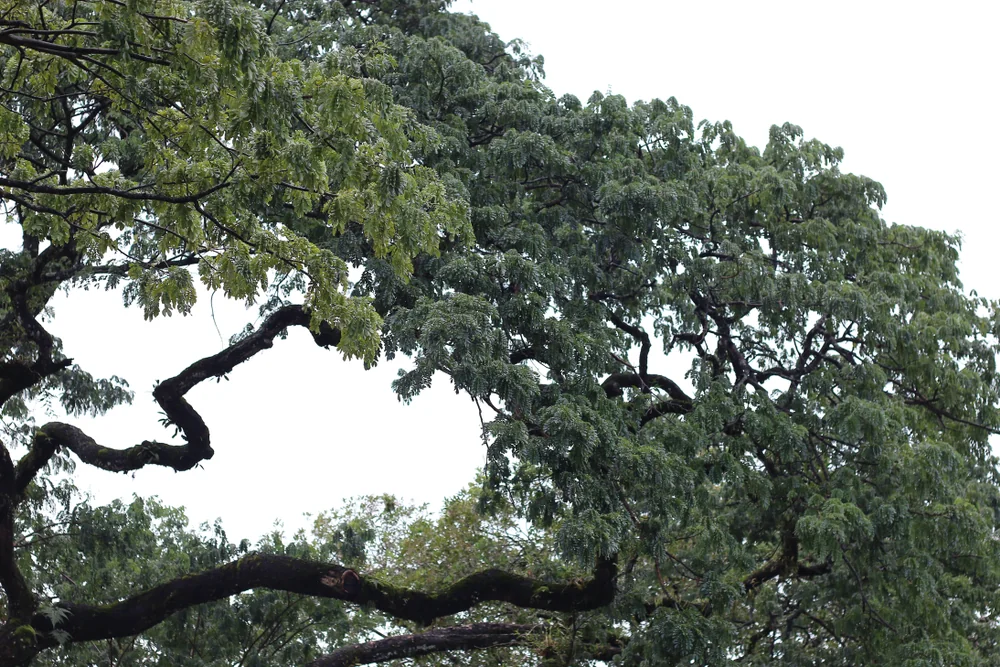
Sudden branch failure can occur at different times of the year, but it is often associated with late spring and summer conditions. This surprises many property owners because large branches are commonly expected to fail only during storms.
Common triggers include:
Large mature trees with broad spreading crowns can be more vulnerable because their limbs may have developed unchecked for many years. A long branch that extends well beyond the main canopy carries substantial leverage at the attachment point. Even a small internal defect can become more serious when combined with the weight and length of the limb.
Urban and suburban conditions can also increase risk. Restricted root zones, compacted soil, changed drainage and nearby construction can all place stress on a tree. While these issues may not directly cause a single branch to fall, they can reduce the tree’s ability to respond to heat, moisture changes and structural strain.
Some tree species and individual trees are more prone to dropping apparently healthy branches than others. This is usually due to a combination of growth habit, wood structure, age, previous damage and site conditions rather than one single cause.
Species often associated with sudden limb drop or summer branch failure include large mature broadleaf trees such as oaks, elms, maples, eucalyptus and plane trees. These trees can develop wide spreading crowns and heavy limbs that extend horizontally over gardens, streets, driveways and buildings.
Common traits that increase susceptibility include:
Trees with narrow branch angles are a particular concern because bark can become trapped between stems or branches. This is known as included bark. Instead of forming a strong connection, the two stems press against each other with a weak join between them. As the limb grows heavier, the attachment can split or peel away unexpectedly.
Maintenance history also matters. Trees that have been heavily topped, poorly reduced or left without formative pruning can develop structural problems that worsen over time. Excessive pruning may remove too much foliage, create large wounds or shift weight onto remaining limbs. Lack of early structural pruning can allow co-dominant leaders, crossing branches and overextended limbs to become established.
Some branch failures occur with no obvious external sign, but many trees show subtle indicators of elevated risk. Regular ground-level checks can help identify issues early, especially after storms, during dry periods and at seasonal changes.
Homeowners should pay close attention to large limbs over areas where people, vehicles or structures are commonly present. Even a low-probability failure can have serious consequences if the branch is above a driveway, roof, deck, car park, path or play area.
The point where a branch joins the trunk is one of the most important areas to watch. Strong branch unions often have a broad U-shaped attachment with visible ridging where the branch and trunk meet. Weak unions are more likely to appear tight and V-shaped.
Warning signs include:
Branches growing almost upright from the trunk rather than outward may also be more likely to split under their own weight or during high wind, particularly when they form competing leaders.
Changes on the surface of a branch can reflect problems deeper inside the wood. Bark that was once firm and uniform should not suddenly become sunken, soft, cracked or loose in one isolated area.
Concerning signs include:
Foliage can also provide clues. A branch with thinning leaves, smaller-than-normal leaves or leaves that change colour earlier than the rest of the tree may be under stress. A branch that remains bare in spring while the rest of the tree leafs out is often dead or severely compromised and should be assessed promptly.
Even a healthy-looking branch can become hazardous if weight distribution changes. Homeowners should consider the overall shape of the tree and any recent changes to the surrounding area.
Points to watch include:
Storm damage should also be taken seriously. A branch may appear intact after high winds but have new cracks, torn fibres or weakened attachment points. In some cases, failure can occur days or weeks after the original weather event.
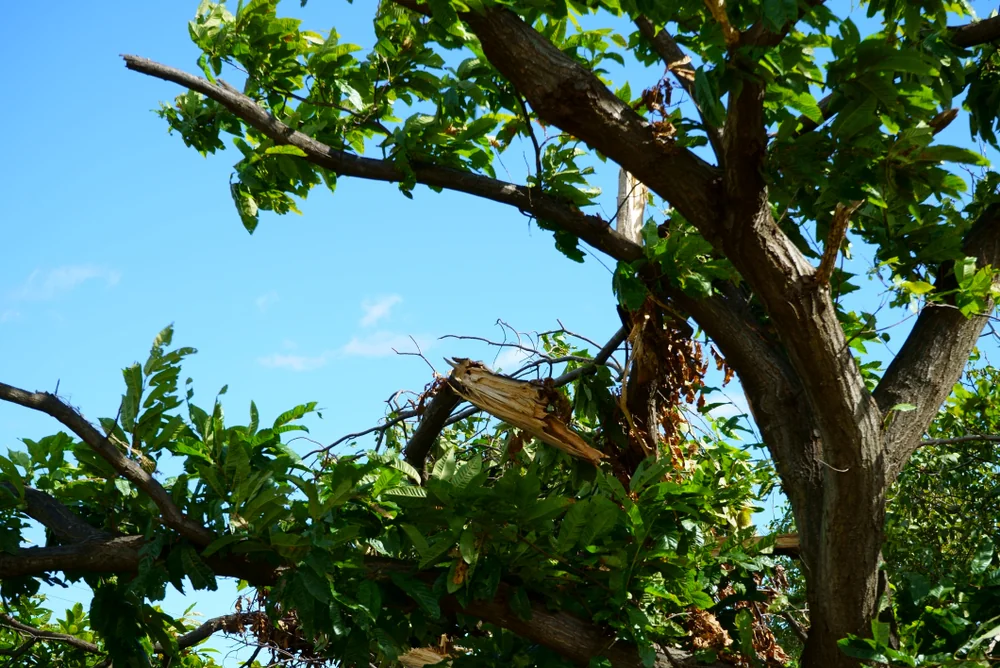
Pruning can reduce the chance of apparently healthy branches failing without warning, but only when it is done correctly and at the right time. The aim is not to strip the canopy or remove large amounts of foliage. Effective pruning manages weight, improves structure and removes defects while maintaining the tree’s health.
Poor or excessive pruning can increase risk. Large unnecessary cuts may expose the tree to decay, while over-thinning can leave remaining limbs more exposed to wind, heat and mechanical stress.
One of the main contributors to unexpected branch failure is excess weight far out on long limbs. Reduction pruning can shorten selected branch tips back to suitable lateral branches, reducing leverage on the attachment point. This can be useful for heavy horizontal limbs over driveways, roofs, paths and play areas.
Selective thinning may also help when done conservatively. Removing small, poorly placed branches can reduce overall weight, improve airflow and make structural defects easier to inspect. However, the tree must retain enough foliage to support normal growth and energy production.
Correct pruning can also remove:
Once selected foliage is removed, a trained arborist may be able to see hidden defects more clearly, including decay pockets, included bark, cracks and weak branch unions.
Incorrect pruning can create the same problems it is meant to prevent. Heavy topping, large flush cuts or excessive canopy thinning may weaken the tree and encourage poorly attached regrowth.
Pruning should be carried out by a qualified arborist and follow the Australian Standard for Pruning of Amenity Trees to reduce the risk of damaging the tree.
Poor pruning can lead to:
Branches that regrow after heavy pruning may look healthy but can be weakly attached. Over time, these shoots can become large enough to fail, especially if several grow from one wound or cut point.
Structural pruning in the early life of a tree is one of the most effective ways to reduce future branch failure. Young trees respond more efficiently to pruning cuts than mature trees, and smaller corrective cuts are less stressful than large cuts made later.
Structural pruning focuses on developing:
A strong structure established in the first 5 to 10 years can reduce the need for major corrective pruning later. It can also lower the likelihood of co-dominant stems, weak unions and overextended limbs becoming long-term hazards.
An arborist should assess a tree whenever there is uncertainty about its structural safety. Healthy-looking branches can conceal decay, internal cracking or weak attachments, so professional assessment is important when the risk is difficult to judge from the ground.
Certain situations strongly indicate the need for inspection rather than waiting to see if the issue worsens.
Strong wind, heavy rain and heatwaves can weaken even healthy-looking branches. An inspection is recommended after:
Branches that appear intact may still have new cracks, torn fibres or partially damaged attachments. In exposed areas, coastal winds can place extra strain on major limbs, and failure may occur after the weather has passed.
Mature trees benefit from regular professional inspections, even when no obvious problems are visible. Routine assessment helps detect structural concerns before they become serious.
As a general guide:
Preventive inspections allow an arborist to recommend targeted pruning, weight reduction, support systems or staged management where appropriate. This can help preserve the tree while lowering the risk of sudden branch failure.
Arborist assessment is also important before building work, landscaping, excavation or drainage changes near established trees. Site changes can affect root stability, soil moisture and wind exposure.
An arborist can identify critical root zones, recommend tree protection measures and assess whether existing limbs may become more exposed or unstable once surrounding vegetation, structures or soil conditions change.
Construction-related changes that can increase risk include:
Even when branch failure appears to happen suddenly, the underlying stress may have developed over months or years. Early assessment helps identify these risks before they result in damage.
Although a healthy-looking branch may appear stable, unexpected failures are usually caused by hidden structural defects, internal decay, past damage, environmental stress or natural growth characteristics rather than truly random events. Weak branch attachments, overextended limbs, heat stress, poor pruning practices and changing site conditions can all contribute to sudden branch drop, even when no obvious warning signs are visible.
Regular inspections, timely structural pruning and ongoing tree maintenance remain the most effective ways to minimise these risks while preserving the health and longevity of mature trees. Where uncertainty exists, a professional arborist can identify underlying issues and recommend appropriate management before a branch becomes a serious hazard.