A dense tree can make your living room, bedroom or outdoor seating area feel comfortably tucked away. Once it becomes overgrown, however, arranging pruning can feel like a gamble. You want unwanted growth managed without creating an unexpected opening towards your windows or neighbouring properties.
It is often possible to retain useful screening while having a tree pruned, but the outcome depends on the tree's structure, condition and the position of its foliage. For homeowners in Sydney, understanding sightlines, pruning options and likely regrowth makes it easier to communicate expectations before work begins. North Shore Tree Services can assess the tree and discuss suitable approaches to managing its growth while considering the privacy it provides.
The amount of foliage on a tree is not necessarily the same as the amount of privacy it provides. A large canopy can leave your living spaces exposed, while a smaller patch of well-positioned foliage can block the views that matter most.
Privacy tree pruning depends on how the foliage sits between your home and surrounding viewpoints. Overall height and width alone do not determine how effectively a tree screens your property.
Imagine a tree besides a ground-floor living room. Its upper canopy may spread well above the roof, but the branches outside the window could provide most of the screening. Shortening those lower branches might expose the room even if the tree still looks substantial from the street.
The opposite can apply to an upstairs bedroom. Foliage high in the crown may sit directly across a view towards that window. Work that seems remote from the garden seating area could affect privacy upstairs.
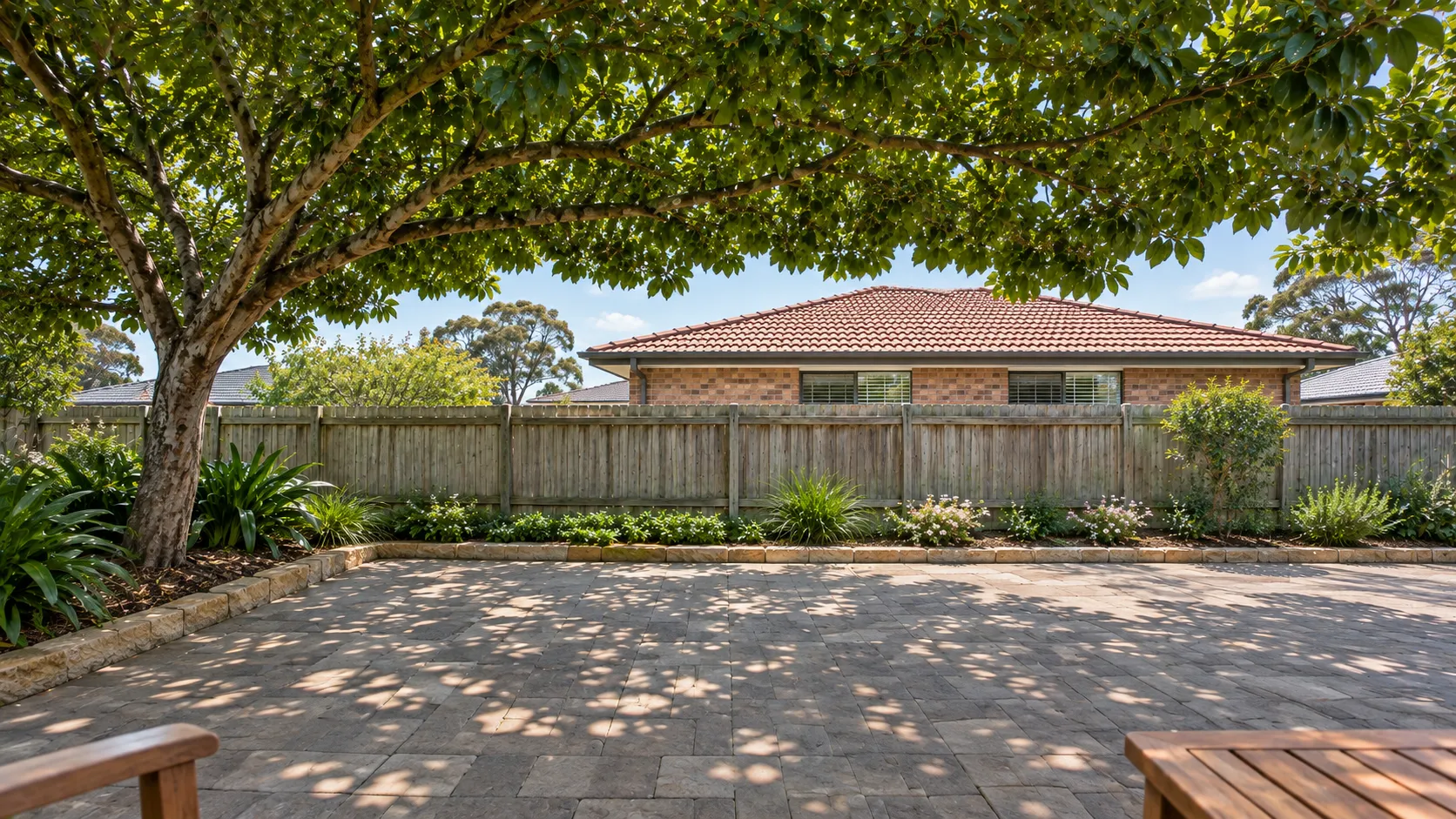
Overhead cover creates a sense of enclosure, but it does not necessarily block sideways views. A leafy canopy above a courtyard can make the space feel sheltered while leaving clear gaps beneath it. Raising the lower edge of that canopy may leave plenty of leaves overhead but reduce screening around people sitting below.
Distinguish between these functions during an assessment. Explain whether you value the tree's overhead presence, its ability to obscure a particular window or both. Those preferences may involve different parts of the canopy.
A tree viewed from the lawn can look completely solid. From your usual chair inside, however, the angle between branches may reveal a narrow opening. Removing foliage besides that opening can turn a minor gap into a noticeable loss of privacy.
Distance matters too. Leaves close to a window can occupy a large part of your field of view. Foliage farther away may look dense from one position yet offer limited coverage when you move a few steps to the side.
This is why a photograph taken from the driveway is rarely enough to explain your screening needs. The important view might be from a seated position at the dining table or from the entrance to your outdoor living area.
Several layers of foliage may also contribute to the same screen. Removing an outer layer can reveal sparse growth behind it. A professional needs to consider this depth rather than judging privacy from the outline of the crown alone.
You do not need to identify individual branches or understand tree anatomy before arranging an assessment. Your role is to show where privacy matters and explain how you use those spaces.
The professional can then relate those sightlines to the tree's structure. This is more reliable than trying to specify cuts from the ground without knowing which branches support the surrounding foliage.
Start by observing the tree from your normal living positions. Sit where you usually relax, stand at the windows you regularly use and look from the part of the outdoor area where you spend time. A view from the centre of an empty room may not reflect your everyday experience.
Notice whether the screening comes from a broad area or a narrow band of leaves. If one small section hides most of a window, that area deserves attention during the assessment. You are identifying a privacy requirement, not deciding that every branch in that position must remain.
Also, recognise essential screening from general greenery. You might want strong coverage outside a bedroom but feel comfortable with a more open canopy besides a rarely used corner of the garden. Establishing these priorities helps identify where changes are more acceptable.
Take photographs from a few relevant positions if they help you communicate. Use accessible areas of your home and garden, and avoid climbing, reaching into the canopy or attaching markers to elevated branches.
During the site visit, show the assessor the relevant views from inside as well as the tree from outside, where access is practical. A brief look from your living room can reveal a screening requirement that is not obvious from beneath the canopy.
Describe the outcome in everyday terms. For example, you might want the outdoor table to remain screened when people are seated, while growth extending over another part of the garden needs attention. This explains your priority and the area causing concern.
Ask the assessor to identify which parts of the tree provide that coverage. Sometimes the visible leaves belong to a branch extending from a different part of the crown than you expected. Understanding this connection helps avoid assumptions about what can be removed independently.
If several people use the space differently, mention their priorities before the scope is settled. A standing viewpoint and a seated viewpoint can produce different screening needs, even within the same small courtyard.
A privacy-conscious pruning plan does not begin with making every side of the tree equally short. It starts by identifying the growth that needs managing and considering how the proposed work will affect the remaining screen.
Selective canopy pruning may allow useful foliage to remain while specific growth is addressed. Whether this approach suits your tree depends on its species, structure, condition and previous pruning history.
A professional may be able to focus work on branches rather than reducing the entire canopy to a uniform outline. This can be useful when the unwanted growth occupies a different part of the crown from the foliage screening your windows.
However, selective pruning does not mean every branch can be shortened wherever you choose. Suitable pruning points and the arrangement of supporting branches influence what is appropriate. A branch carrying useful screening may also support growth you want reduced, so the two outcomes cannot always be separated neatly.
The tree's natural structure also determines how much foliage can realistically remain. Some branches may need to be removed or shortened in ways that affect surrounding growth. Selective pruning is a way to target specific areas, not a guarantee that every privacy screen can be preserved exactly as it is.
Ask how the proposed work will affect the outer profile and the foliage density behind it. A tree can remain almost the same height yet become noticeably more transparent if leaves are removed throughout the crown. Conversely, some changes to its outline may have little effect on your most important sightline.
For an initial discussion about tree lopping in Sydney, explain that retaining useful screening is part of the brief. The service label alone does not describe the cuts you want or establish what is suitable for your tree.
Crown lifting and thinning can affect privacy in different ways. Lifting removes lower branches, while thinning can open gaps in the foliage without changing the tree’s height.
An evenly shaped canopy may look tidy from the garden while performing poorly as a screen. Trees do not distribute their leaves evenly, and foliage density can vary considerably around the crown.
Where dense growth extends well into the canopy, a modest change to the outer edge might leave substantial coverage. Elsewhere, most leaves may sit near the branch tips. Similar-looking reductions in those two areas can produce different gaps.
This makes visual symmetry a potentially misleading priority. You may need to accept a less uniform outline to retain foliage in the position that matters most, provided the proposed structure is appropriate for the tree.
If a supplier recommends a broad canopy reduction, ask which screening areas would change and why that approach is preferable to more targeted work. Background reading on crown reduction and how it differs from removal can help you follow the terminology, but the proposal still needs to address your tree and the views around it.
Regrowth is possible after pruning, but it should not be treated as a promise that lost privacy will return. The amount, position and quality of new growth depend on the tree, the branches retained and their growing condition.
If an opening would make a room feel exposed, discuss that consequence before work starts. Relying on future foliage is a different decision from retaining an established screen.
Some trees respond readily with new shoots after pruning. Others have a limited ability to produce foliage from older, bare sections. Even within the same tree, one branch may respond differently from another because of its condition, age and growing position.
Check between new shoots developing from retained branches and foliage returning to sections that were previously bare. A tree may produce healthy new growth around a pruning point without being able to fill an opening further along an older branch.
A leafy outer shell can also conceal a sparse interior. If work exposes that interior, there may not be enough suitable growth behind the removed foliage to restore the same density. The appearance of a healthy canopy before pruning does not establish that every bare section can become leafy again.
Previous pruning matters too. A tree that has repeatedly been cut back may have a growth pattern quite different from an unpruned tree of the same species. The assessor should consider the existing branch arrangement rather than predicting the response from the species name alone.
Ask whether the proposed work retains established foliage across your priority sightlines or depends on new growth appearing later. These approaches can produce very different privacy outcomes.
A tree may produce plenty of new growth without filling the opening you care about. Shoots can develop higher in the canopy, extend away from the relevant window or form clusters that leave spaces between them.
Their direction matters as much as their quantity. Upright shoots above a pruned branch might add height without restoring a lower screen besides an outdoor seating area. Growth visible from the lawn may still sit outside the line between your window and the surrounding viewpoint.
New foliage can also develop a different branch structure from the original canopy. A fresh flush of leaves may look dense without providing the same lasting coverage. A professional should consider how that growth may develop and what future maintenance it could require.
There is no useful universal recovery timetable for privacy tree pruning. Ask for a realistic explanation of the likely response, the uncertainties and the possibility that a gap will remain. If the proposal depends heavily on regrowth, clarify how the tree is expected to look immediately after the work rather than focusing only on its possible future appearance.
Keeping a useful screen is a legitimate priority, but it cannot determine every pruning decision. A branch may sit in exactly the right position for privacy and still be unsuitable to retain because of its condition or attachment.
A professional assessment needs to consider these limitations before promising a particular appearance. The aim is to understand where your screening preferences can be accommodated and where they conflict with the tree's condition.
Dense foliage can make a branch look healthy without revealing the condition of the wood supporting it. Cracks, damaged attachments or decay may affect whether it can remain, even when its leaves provide excellent coverage.

Likewise, a dangling or broken branch should not be retained simply because it blocks a view. Do not approach it to inspect the damage or attempt to secure it yourself. Keep clear of the affected area and arrange an assessment by a tree professional.
Ask the assessor to distinguish between work recommended because of a defect and work suggested to manage size or appearance. This helps you understand which parts of the proposed scope offer flexibility. There may be room to adjust an aesthetic preference, while a damaged screening branch presents a different problem.
Where a useful branch cannot reasonably be retained, ask how its removal is likely to affect the surrounding foliage. It may create an opening larger than the branch itself suggests, particularly if neighbouring leaves only overlap it from certain viewpoints.
Sometimes the constraint is broader than one branch. Poor condition, unsuitable existing structure or the effects of earlier heavy pruning can limit how much change a tree can accommodate while providing a dependable screen.
In these circumstances, a request to make the tree smaller while preserving all lower foliage may not be realistic. Retaining every visible leaf is not necessarily compatible with appropriate management of the underlying structure.
Be cautious about a proposal that promises complete privacy without first considering the tree itself. A meaningful assessment should explain limitations and likely compromises rather than simply confirm that the canopy can be made to match a preferred shape.
If different suppliers propose different scopes, compare their reasons. Ask what each has observed, which branches are involved and what screening would remain immediately afterwards. A cheaper or smaller-looking scope is not automatically the better option if it leaves an unresolved defect or relies on an unrealistic growth response. You should be able to understand the recommendation without being expected to diagnose the tree yourself.
A useful brief explains what the tree does for your home and what you want changed. It gives the professional a clear objective while leaving technical pruning decisions to a qualified expert.
For screening tree maintenance, the most important details are usually the areas you want kept private, the growth causing concern and the amount of visible change you are prepared to accept.
Asking for a set percentage of foliage to be removed can create confusion. It does not tell the assessor whether you mean height, spread or foliage density and it says nothing about where privacy matters.
Instead, describe a specific relationship. For example, you might want the bedroom window to remain screened while having the growth extending beyond a particular part of the garden assessed. If you are unsure what is possible, say so. The assessment should help define a suitable scope rather than simply translate a number into cuts.
Request a written scope that identifies the intended areas of work clearly enough for you to understand the proposal. If retaining screening foliage is important, ask how that intention will be recorded and communicated to the crew. Avoid relying on a general instruction such as leaving the tree looking full.
When reviewing the quote, use SafeWork NSW’s checklist for hiring a tree work contractor to check what the quote should cover and what to ask about qualifications and insurance.
Before approving the work, ask what you should expect to see immediately afterwards. Will a previously hidden section of trunk become visible? Will there be an opening besides the window? Will the lower edge of the canopy sit higher than it does now?
Also ask how the retained screen is likely to develop. Future maintenance should respond to the species, growth pattern and condition of the tree rather than follow an assumed schedule of cutting everything back equally. Discuss whether later work could preserve the same sightlines or gradually change them.
Check applicable tree controls before any work proceeds, including whether approval is needed for the proposed scope. Requirements vary, so do not assume selective pruning is automatically exempt. This explanation of checking council approval before tree work provides useful background for that discussion.
If the proposed scope changes after the assessment, revisit the privacy brief as well. Different branch selections or a more substantial reduction may produce a different screening result, even if the overall aim is still described as managing an overgrown tree.
Maintaining privacy while pruning an established tree requires a balance between useful foliage, appropriate tree management and the condition of the remaining branches. Clear communication before work begins helps set realistic expectations and reduces the risk of unwanted openings around your home. North Shore Tree Services can assess the tree, discuss suitable pruning options and help homeowners consider how proposed work may affect their existing screening.