Storms can place significant stress on trees, exposing hidden structural weaknesses that may not be obvious during normal conditions. While many branch failures are associated with dead or damaged limbs, healthy-looking branches can also break unexpectedly due to poor branch structure, excessive weight or internal defects. For property owners looking into tree lopping in Sydney, understanding how the right pruning approach can reduce storm-related branch failure is an important part of maintaining safer outdoor areas.
Thoughtful tree management extends beyond appearance. Strategic pruning can improve a tree’s ability to withstand severe weather by reducing unnecessary weight, improving branch structure and removing limbs that are more likely to fail. North Shore Tree Services recognises the value of proactive tree care in reducing the likelihood of storm-related branch failure and supporting healthier, more resilient landscapes.
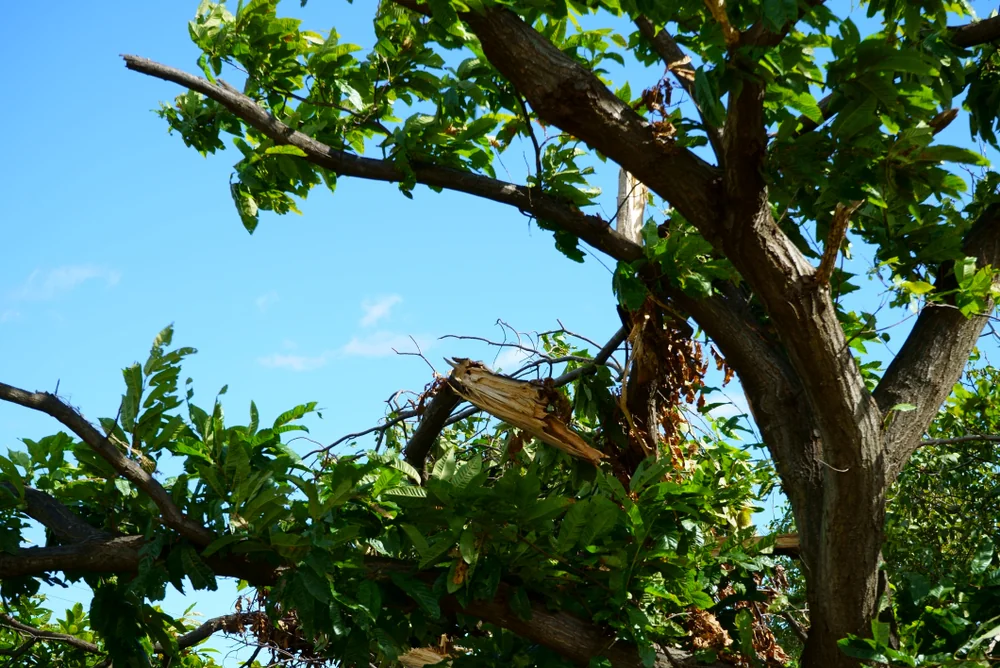
A branch that appears green and full of leaves is not always structurally sound. Many of the defects that cause branches to snap during a storm are hidden inside the wood or located at connection points that are difficult to notice from the ground. Visual health and structural safety are related, but they are not the same thing.
Storm risk is driven less by how leafy a branch looks and more by how it is attached to the trunk, how weight is distributed and whether decay, cracks or other defects are present. A branch can continue to photosynthesise normally while its core is weakened by rot or its attachment is gradually losing strength.
A branch can be biologically healthy yet still carry more weight than its structure can reliably support during a storm. Long horizontal limbs that extend well beyond the rest of the crown act like levers in strong wind. The further the weight sits from the attachment point, the greater the bending force placed on that joint.
Dense clusters of foliage at the tips of branches also catch more wind and add to the load. A tree that has been previously topped or poorly pruned may respond with vigorous but weakly attached regrowth. These shoots can grow quickly and look lush, yet they often develop with poorly formed wood and shallow attachment points that fail more readily.
An imbalanced crown, where one side of the tree carries much more foliage than the other, can also increase stress on specific limbs. During high winds, these overloaded branches absorb more force even though they may appear outwardly strong.
Site factors can turn an otherwise healthy-looking branch into a serious risk. Branches that extend over roofs, driveways, power lines, fences, paths or play areas deserve closer scrutiny because the consequences of failure are much higher.
The prevailing wind direction is another important consideration. Limbs that face into the usual storm path receive repeated stress year after year. Over time, this can widen small cracks, strain weak unions or increase movement in overextended branches until they are more likely to give way.
Trees that have recently been exposed by nearby removals, clearing or construction may also experience more wind than before. A branch that developed in a sheltered position can become vulnerable when surrounding trees, buildings or vegetation are removed.
Regular professional inspections that focus on structure, not just foliage, can identify these hidden hazards. Strategic pruning can then reduce weight, shorten overextended limbs and relieve stress on weak unions before the next major storm.
Branches rarely fail “out of nowhere”. In most cases, there are underlying structural, environmental or health-related issues that make a limb more likely to snap once strong winds, heavy rain or saturated conditions arrive. Understanding these weaknesses helps identify which trees may need attention before storm season.
Unexpected failure often begins with problems that are easy to miss from the ground, such as hidden decay inside the branch, tight forked unions, previous poor pruning cuts or limbs that have become too long and heavy for their attachment points.
One of the most common structural problems is a weak branch union. This occurs when a branch grows at a very narrow angle to the trunk or another limb. Instead of forming strong overlapping wood, the tree traps bark between the two stems. This is known as included bark, and it acts like a wedge that prevents a solid attachment from forming.
These weak forks are common in fast-growing species and in trees that have not been structurally pruned when young. Over time, the branches increase in length and weight, placing greater leverage on the poor attachment. In high winds, the union can split suddenly along the trunk or main limb.
Multiple co-dominant stems of similar size are another risk factor. Without a clear single leader, competing stems can develop included bark and uneven weight distribution, making storm breakage more likely. These defects may look stable for years before failing suddenly under storm pressure.
Long limbs that extend well beyond the main canopy are highly vulnerable during storms. As branches reach outward towards light, they can outgrow the wood strength needed to support their own weight, especially when saturated with rain or loaded by wind-driven foliage.
Heavy end weight commonly occurs where:
During a storm, an overextended branch acts like a long lever. The bending stress concentrates at the attachment point or at any existing crack, which can result in sudden failure even where the wood still appears healthy.
Internal decay is a major hidden cause of branch failure. Fungi can enter through wounds caused by broken limbs, lawn equipment, poor pruning cuts or earlier storm damage. Over time, the heartwood inside a branch may weaken while the exterior still appears sound.
Indicators of possible internal decay include:
Existing cracks also increase the likelihood of failure. Historic storm damage or improper pruning that left stubs, tears or large wounds can weaken a branch over time. Even if a limb remains attached after an earlier storm, internal fibres may still be damaged, making it more vulnerable when the next severe weather event arrives.
Sudden limb drop is a term used when large, seemingly healthy branches fall from a tree without obvious warning, sometimes even in calm conditions. It is also known as summer branch drop or sudden branch failure. It typically involves heavy lateral limbs that shear away partway along their length rather than breaking directly at the trunk.
This phenomenon is concerning because it can occur without the usual warning signs associated with dead, cracked or visibly decayed branches. Understanding what sudden limb drop is and why it may occur helps explain why strategic pruning, monitoring and professional assessment are important around homes, driveways, paths and outdoor living areas.
Sudden limb drop most often happens in warm, still weather, often after a period of high temperatures. Large limbs may begin to creak or crack shortly before failure, or they may fail suddenly with a loud report and fall vertically or at an angle.
Branches involved are usually:
Instead of breaking where they join the trunk, the branch often fails mid-limb. The break surface may show some internal defects, but in many cases there is no obvious rot, which is why the event can appear so unexpected.
Sudden limb drop has been recorded in many species, although mature broadleaf trees appear more prone than younger or smaller trees. Species frequently noted in arboricultural reports include eucalyptus, oaks, elms, plane trees, poplars, willows and some conifers.
Large mature specimens with broad, spreading canopies and heavy lateral limbs are generally at higher risk, especially where growth has been vigorous and crown management has been minimal over many years. Trees in high-use areas, such as parks, schools, streetscapes, gardens and commercial properties, require particular attention because the consequences of limb failure can be serious.
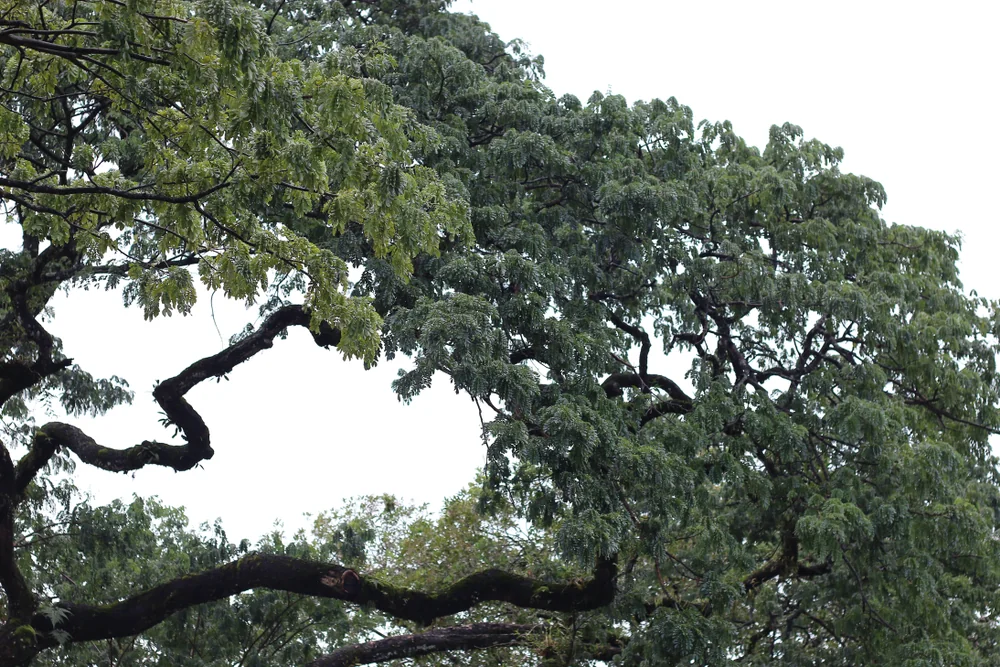
The exact cause of sudden limb drop is not fully understood. Current research and field observation suggest that it may involve a combination of factors, including internal moisture stress in the wood, accumulated limb weight, minor internal defects and mechanical stress from the limb’s own leverage.
Clear warning signs are often limited, but several indicators increase concern:
Because visual clues can be subtle, sudden limb drop is regarded as a residual risk even on trees that appear generally sound. Regular inspections by a qualified arborist and the selective reduction of overextended limbs are important tools for identifying and reducing this type of branch failure risk.
Identifying a hazardous branch before a storm is critical to reducing the risk of property damage and personal injury. Certain visual and structural clues can reveal when a limb is more likely to fail under wind, heavy rain or saturated conditions. Regularly scanning key areas of the canopy can help reveal problems before they become emergencies.
Some warning signs can be observed from the ground with no special equipment. Others become clearer only when viewed from different angles, during different seasons or after severe weather. When multiple red flags appear on the same branch, the risk of failure increases and professional assessment is strongly advised.
Visible cracks along the length of a branch or at its base are among the clearest indicators of possible failure. Long vertical splits, open seams or bark that appears torn or pulled apart suggest that the wood fibres are already overstressed. During a storm, these weakened fibres may no longer flex properly, causing the branch to snap suddenly.
Weak branch attachments are another major concern. Narrow V-shaped unions where two branches squeeze tightly together often trap bark between them. This included bark prevents the wood from joining properly, creating a natural fault line.
Large limbs that join the trunk at a sharp angle, or that appear to sit against the side of the trunk rather than grow smoothly from it, are more likely to shear away in strong wind. These defects can be especially dangerous when the limb is large, overextended or located above a target such as a roof, driveway or footpath.
Dead branches are more brittle than living wood and often break with minimal force. Telltale signs include a lack of leaves during the growing season, dry or peeling bark and fine twigs that snap cleanly when lightly pressed. A single dead limb over a driveway, roof or play area can pose a greater risk than several healthy limbs in a low-use part of the garden.
Decay greatly increases the chance of branch failure. Mushrooms or fungal shelves on the branch or near its base often indicate internal rot. Soft, crumbly or spongy wood can suggest that the structural core has already been compromised.
Cavities or hollows inside large branches may not be visible from one side, so viewing the tree from multiple angles is important. A large limb with internal decay can look solid from the outside yet fail without warning once storm loads place extra force on the weakened wood.
Branches that are overly long or heavily weighted at the tip are more likely to break during storms, particularly if they extend far beyond the main canopy. Limbs that stretch over roofs, service lines, driveways or open areas often have limited support from neighbouring branches and act as levers in high wind.
A pronounced downward bend or unusual lean can signal that a branch is overstressed or has shifted from its original position. Changes in branch angle, new sagging or visible movement after rain or wind should not be ignored.
Past storm damage can also weaken branch structure. Torn stubs, improperly cut branches, large wounds or partially broken limbs can all create long-term failure points. Where a branch has been damaged in a previous event, fibres may continue to tear slowly even if the limb remains attached, leaving it highly vulnerable during the next period of severe weather.
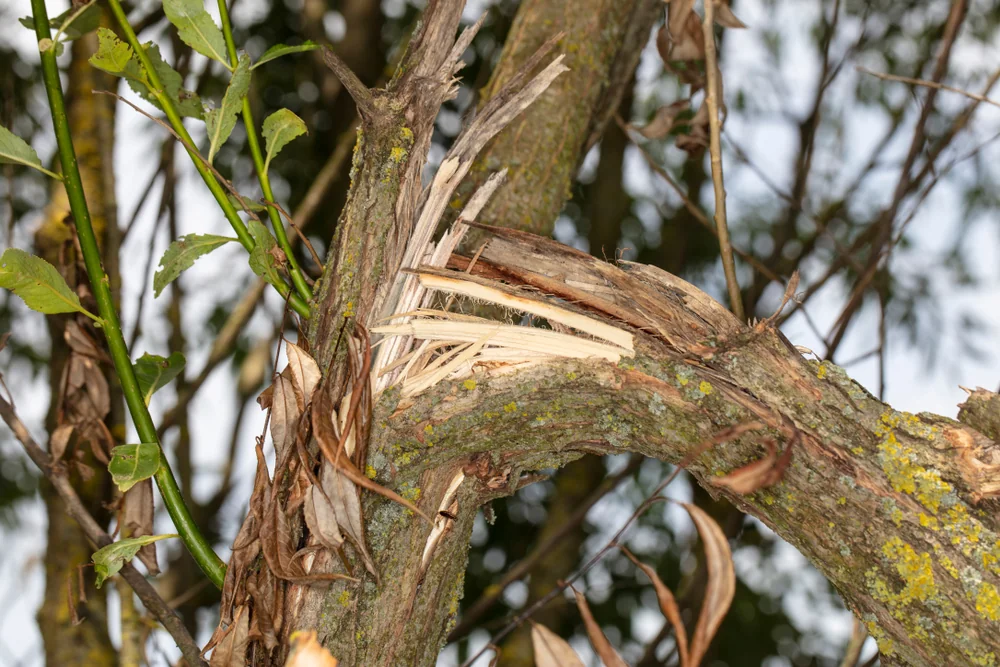
Pruning can reduce the risk of branches failing during storms when it is done correctly and at the right time. By removing weak, dead or poorly attached limbs and managing how weight is distributed through the canopy, pruning helps trees better withstand high winds and heavy rain.
Not all pruning has the same effect. Poor or excessive cutting can increase failure risk by creating decay points, encouraging weak regrowth or leaving the canopy unbalanced. The key is structural pruning that focuses on tree health, branch strength and long-term stability rather than simply cutting for clearance or appearance.
Thoughtful pruning improves the way a tree responds to wind and rain. By selectively reducing excess canopy density, wind can move through the tree more effectively, reducing leverage on major limbs and the trunk. This is different from topping, which removes large sections of the canopy and often creates dense, weakly attached regrowth that is more likely to snap in future storms.
Removing crossing or rubbing branches prevents wounds that can invite decay fungi. When branches rub against each other, the bark can wear away and expose the wood beneath. Over time, these wounds may allow decay to enter, weakening the limb or branch union.
Structural pruning also encourages a single dominant leader and well-spaced scaffold branches. Wide branch angles and well-attached limbs are much less likely to peel away from the trunk under storm load. For younger trees, early structural pruning can prevent weak unions from becoming major hazards later. For mature trees, careful reduction of overextended limbs can help reduce leverage without removing too much live canopy.
Pruning can also improve crown balance. If one side of the tree is carrying significantly more weight than the other, selective pruning may reduce uneven stress and help the tree distribute wind forces more evenly.
Storm-risk pruning is not just about cutting off anything that looks large or heavy. Incorrect cuts can leave stubs or flush wounds that decay and compromise the branch collar, which is the tree’s natural defence zone. Removing too much of the canopy at once can also stress the tree and trigger weak, fast regrowth.
Qualified arborists assess species, age, existing defects and site conditions such as prevailing winds, soil condition, surrounding structures and previous pruning history. This allows them to decide which branches should be removed, which should be shortened and which should be retained to preserve overall stability.
Professional pruning also considers how the tree will respond over time. A cut that solves a short-term clearance issue may create a long-term structural problem if it encourages weak regrowth or exposes the tree to decay. Proper pruning techniques support natural wound closure, reduce unnecessary stress and help maintain the tree’s strength.
Regular professional inspections combined with periodic structural pruning give trees the best chance to resist storm forces and reduce the likelihood of dangerous falling branches.
Timing is important when the goal is to reduce the chance of branches failing during storms. An arborist should assess a tree before problems become obvious because by the time a limb is visibly splitting, leaning or hanging, the risk may already be high. Regular inspections combined with targeted assessments after certain events provide the best protection.
Different trigger points call for professional assessment, from scheduled checkups to urgent inspections after severe weather or visible structural changes. Knowing when to call an arborist allows problems to be identified and managed before high winds and heavy rain expose weaknesses.
Most mature landscape trees benefit from a professional assessment every 1 to 3 years, depending on species, age, condition and site exposure. Younger and fast-growing trees may require more frequent checks because their structure changes quickly and early pruning can prevent long-term defects.
Calm weather and good daylight provide the best conditions for an arborist to evaluate branch attachments, canopy density, weight distribution and existing pruning wounds. During routine inspections, the arborist can:
Planning pruning from these inspections allows work to be scheduled outside peak storm periods, reducing urgency, disruption and avoidable risk.
Assessment is especially important on sites exposed to strong coastal winds, open hillsides, saturated soils or repeated storm activity. In these locations, trees are more vulnerable to crown movement, limb failure and root instability.
An arborist should assess trees:
Following a storm, the arborist will look for new cracks, lifting soil around the base, fresh splits, broken branch stubs and hanging or partially failed limbs that may not be obvious from the ground. Prompt identification of this damage allows targeted pruning, support work or further investigation before the next weather event.
Certain visible changes in a tree or alterations in the surrounding environment signal the need for professional assessment, regardless of the time of year. These triggers include:
Site changes can also affect storm resilience. Construction excavation, trenching, new driveways, changes to drainage, soil compaction or cut and fill around roots can weaken anchorage and increase the chance of failure in high winds. Tree removals nearby can also expose a previously sheltered tree to stronger wind loads.
After any major site change, an arborist should reassess the tree to determine whether structural pruning, root zone protection, risk reduction pruning or ongoing monitoring is needed.
Pruning cannot guarantee that a tree will withstand every severe weather event, but it can significantly reduce the likelihood of avoidable branch failure. By improving canopy structure, reducing excessive limb weight and addressing defective branches before storms arrive, strategic pruning supports both tree health and property safety.
Healthy-looking branches can still fail when poor structure, decay, excessive weight or site exposure place too much stress on the limb. Regular inspections from a qualified arborist give property owners a clearer understanding of which branches pose a risk and what work is needed before the next major storm. With informed pruning and timely maintenance, trees can remain safer, stronger and better prepared for severe weather.