After a tree has been removed, attention often turns to what happens to the timber, branches and green waste left behind. While many people assume the wood can simply be kept or discarded, the outcome depends on the tree, the site, the contractor’s quote and any local waste requirements. For Sydney property owners arranging tree removal, understanding these details before work begins can help avoid confusion, unexpected costs and unnecessary waste.
Knowing what can be done with removed timber also creates opportunities to reuse valuable material instead of sending everything to waste. North Shore Tree Services helps property owners understand these options before work begins, including what timber can be kept, removed, chipped or reused.
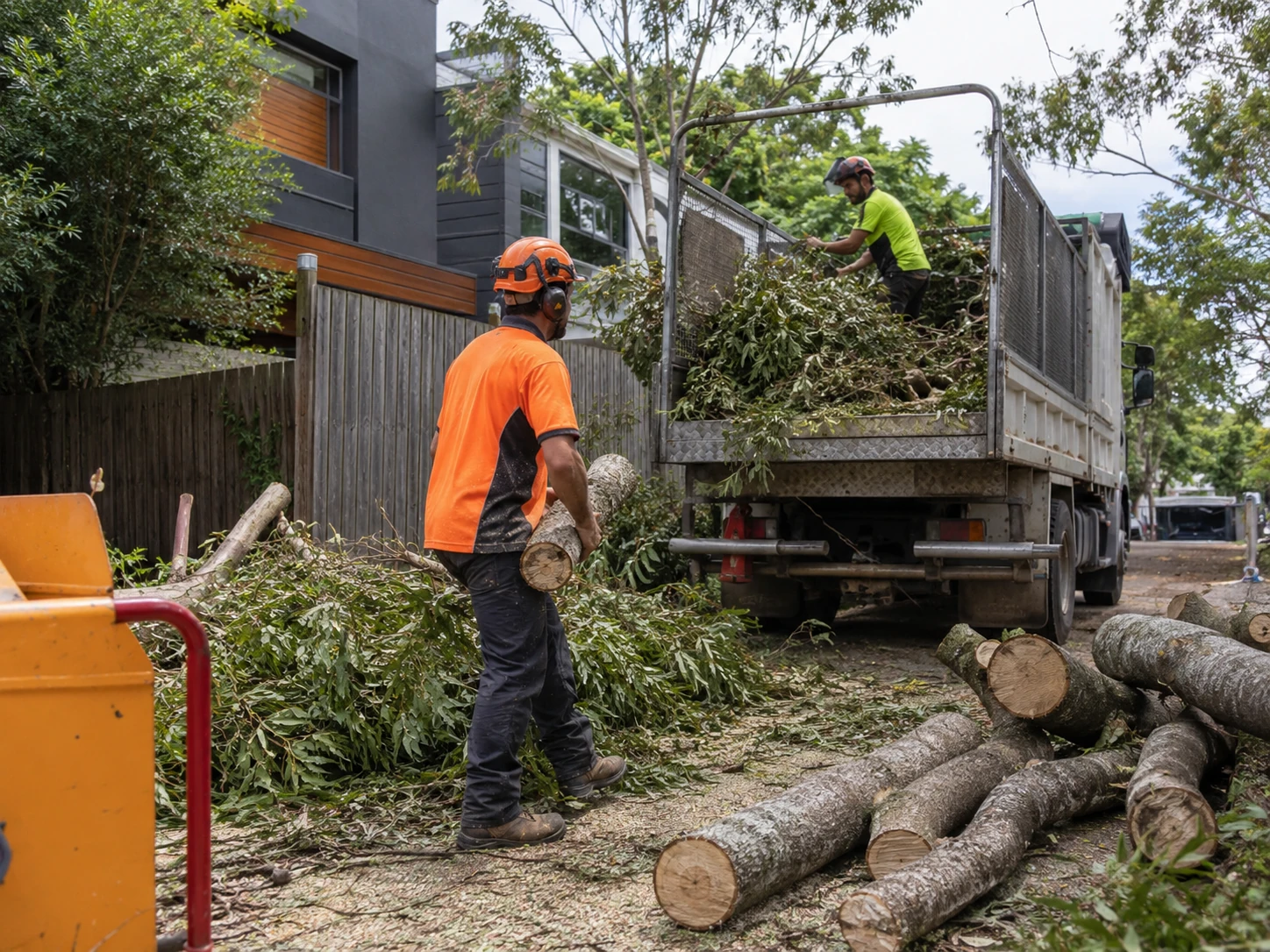
After a tree is removed, the timber and green waste rarely stay exactly as they fall. In most cases, the trunk, branches and leafy material are processed on site, then either left for the property owner in a usable form or taken away for recycling or disposal.
What happens usually depends on the quote the client accepted, the size and condition of the tree, site access, and any local regulations about green waste.
Tree removal commonly produces three main waste streams:
Each is handled differently and has different options for reuse.
The main trunk and large limbs are usually cut into manageable lengths with a chainsaw. Depending on the quote, these larger pieces may be:
If the timber is straight, sound and from a desirable species, it may be suitable for milling. In that case, longer sections can be cut to millable lengths and taken to a sawmill or timber recycler, where they may be turned into slabs, posts or boards.
This is more common with large hardwoods in good condition and usually needs to be arranged before the job starts. Milling timber requires extra planning, handling and transport, so it is not normally included in a standard tree removal quote unless specifically requested.
Branches, twigs and leafy growth are often fed through a wood chipper. This creates mulch that can either be left on the property or removed to a green waste facility.
Many households choose to keep some or all of the mulch for garden use. Fresh woodchips can help suppress weeds, retain soil moisture and protect garden beds, provided they are used correctly. They should be kept away from building foundations and not piled against tree trunks, plant stems or house walls.
Where space is limited, or where the tree is very large, the owner may prefer full removal of the mulch. In that case, the chipped material is usually taken to a commercial green waste processor and turned into bulk mulch or compost.
Once the main tree is removed, the stump can be ground below surface level using a stump grinder. This process creates a mix of wood chips and soil, known as stump grindings.
Stump grindings are often left on site and:
If a clean planting area, lawn repair or construction site is required, the grindings may need to be excavated and removed separately.
Large surface roots can sometimes be ground or cut out, particularly where they interfere with paving, lawns, driveways or services. Subsurface roots usually remain in the ground and break down naturally unless specific excavation has been requested.
In most residential situations, timber from a tree on private property belongs to the property owner unless the written agreement says otherwise. However, ownership and handling should never be assumed.
Some tree removal quotes include removal of all logs, branches and green waste. Others may leave timber on site, remove only selected material, or factor in the value of usable timber. The final arrangement depends on what has been agreed between the property owner and the contractor.
This is why timber handling should be discussed before accepting the quote. The written quote or work order should make it clear whether the timber will be kept, removed, chipped, stacked, cut to a particular size or handled in another way.
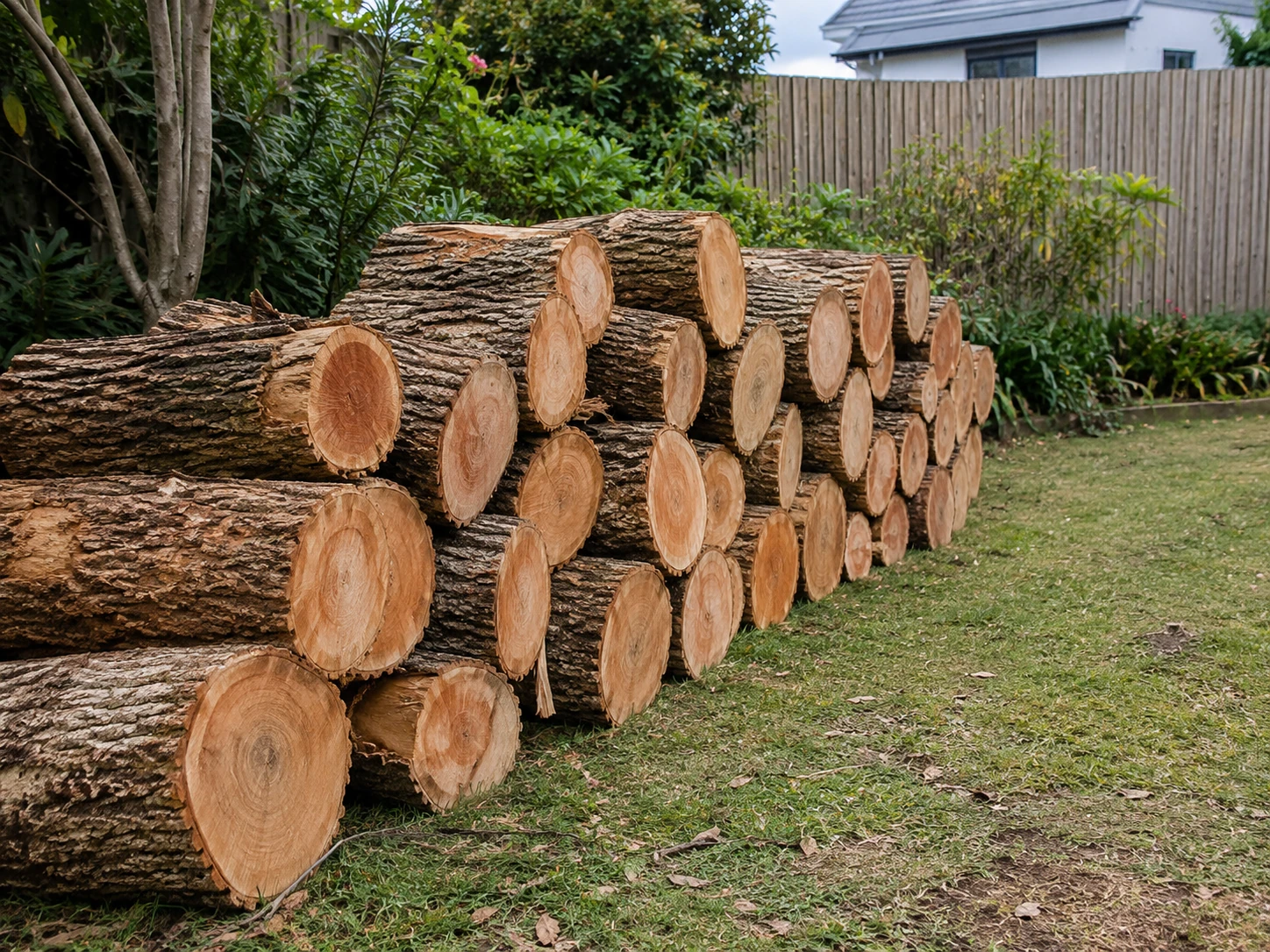
Yes, property owners can usually ask to keep the logs after tree removal. The key is to make that request before the job starts, not once the tree is already on the ground.
Keeping logs affects how the crew plans the work, how long the job takes, what equipment may be needed and what disposal costs are included or excluded. Large logs are heavy, awkward to move and difficult to store, so clear expectations are important.
Instead of making a general request such as “Can the wood stay?”, it is better to specify exactly what is wanted. For example:
These details help avoid confusion on the day. If timber is to be kept, the quote should clearly state what timber will remain, how it will be cut and where it will be left.
Keeping timber for firewood is often practical, especially where the tree is a suitable hardwood and there is enough space to store it while it dries. However, freshly cut timber is usually not ready to burn straight away.
Most firewood needs to season before use. Seasoning allows moisture to leave the timber so it burns more efficiently and produces less smoke. In many Australian conditions, hardwood can take 12 to 24 months to season properly, depending on the species, log size, splitting, airflow and storage conditions.
For better seasoning:
Not all tree species make equally good firewood. Dense hardwoods, including many eucalypts, usually provide longer-lasting heat once properly seasoned. Softer woods such as pine may be useful for kindling but burn quickly and are not always ideal as the main fuel source.
Firewood processing should also be clarified in the quote. A contractor may cut the trunk into large rounds, but that does not necessarily mean the timber will be split, stacked or cut to the exact size needed for a fireplace or wood heater. Those services may involve extra labour and cost.
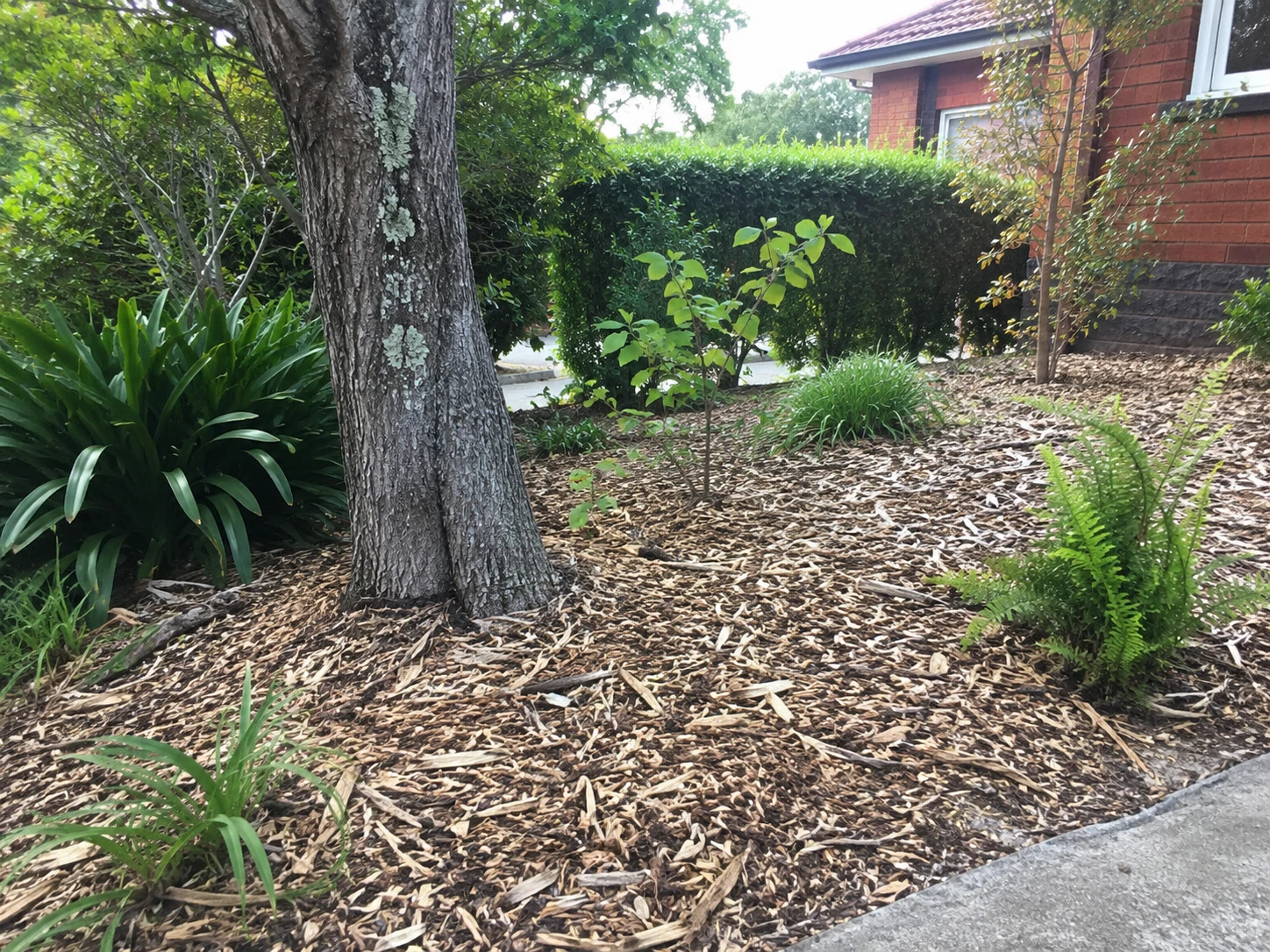
Tree branches can often be turned into mulch and reused on the property. This is one of the most useful by-products of tree removal, especially for larger gardens and landscaped areas.
After the tree is cut down, smaller limbs and branches can be fed through a wood chipper. The machine produces irregular woodchips that can be used around established trees, shrubs and garden beds, or in informal paths and access areas.
Fresh woodchip is usually suitable for surface mulching around established plants. A layer of around 5 to 10 cm is common. The mulch should be spread evenly and kept away from trunks and stems to reduce the risk of rot.
Fresh chips should not be dug directly into garden soil in large quantities, as this can temporarily affect nitrogen availability while the material breaks down. This is usually less of a concern when chips are used as a surface mulch.
There are also times when branches should not be reused as mulch. Caution is sensible if:
In these cases, removal to an appropriate green waste or disposal facility may be the better option.
Keeping timber can affect the price of tree removal, but the impact depends on the tree, the site and what has been included in the quote.
In some cases, keeping logs may reduce disposal costs because the contractor does not need to load, transport and tip as much material. In other cases, it may increase the cost because the crew must spend extra time cutting, moving, stacking or preparing the timber in a specific way.
The value of the timber also varies. Large, straight sections from desirable hardwood species may have some value for milling or reuse. Small, twisted, rotten or difficult-to-access timber may have little or no commercial value and may be treated as waste.
Keeping timber may increase the price where:
This is why it is helpful to ask for itemised options. A quote can show the difference between full removal, logs left on site, mulch left on site, firewood rounds cut, or all green waste taken away.
Before any tree removal begins, there should be a clear written agreement about what happens to the timber and green waste. This helps prevent disputes about ownership, clean-up, access and extra costs.
The most important points to confirm are:
Access should also be discussed. Heavy logs can damage lawns, paving or driveways if they need to be moved across the property. If machinery is required, the contractor should explain where it will operate and whether there are any site limitations.
Clear agreement on these details before work starts ensures the property owner knows exactly what will be left behind, what will be removed and what extra effort may be needed to make the timber usable.
Timber from a removed tree can often be kept, reused, chipped, milled or turned into firewood, but the best option depends on the tree species, timber condition, site access, storage space and the terms of the quote. Confirming these details before the job begins helps avoid misunderstandings and ensures the timber and green waste are handled in the most practical way.