Crown thinning and crown reduction are common tree pruning techniques, but they serve different purposes. Crown thinning reduces canopy density, while crown reduction reduces a tree’s overall height and/or spread. Understanding the difference helps ensure the appropriate method is used to improve light, airflow, clearance or structural management without unnecessary pruning.
North Shore Tree Services assesses each tree based on its species, condition, structure, growth pattern and surroundings before recommending the most suitable pruning approach. This helps address concerns around buildings, powerlines, gardens and other parts of a property while retaining as much of the tree’s natural form as possible.
For property owners considering tree lopping in Sydney, understanding when crown thinning or crown reduction may be appropriate can help avoid unnecessary cutting and protect the tree’s health and structural integrity. Professional assessment can ensure the pruning objective is clear and the work is planned around the needs of both the tree and its surroundings.
Crown thinning is a selective pruning technique used to reduce the density of a tree’s canopy while largely maintaining its existing height, spread and natural shape. Rather than making the tree smaller, carefully selected branches are removed or shortened throughout the crown to create a more open and evenly distributed canopy.
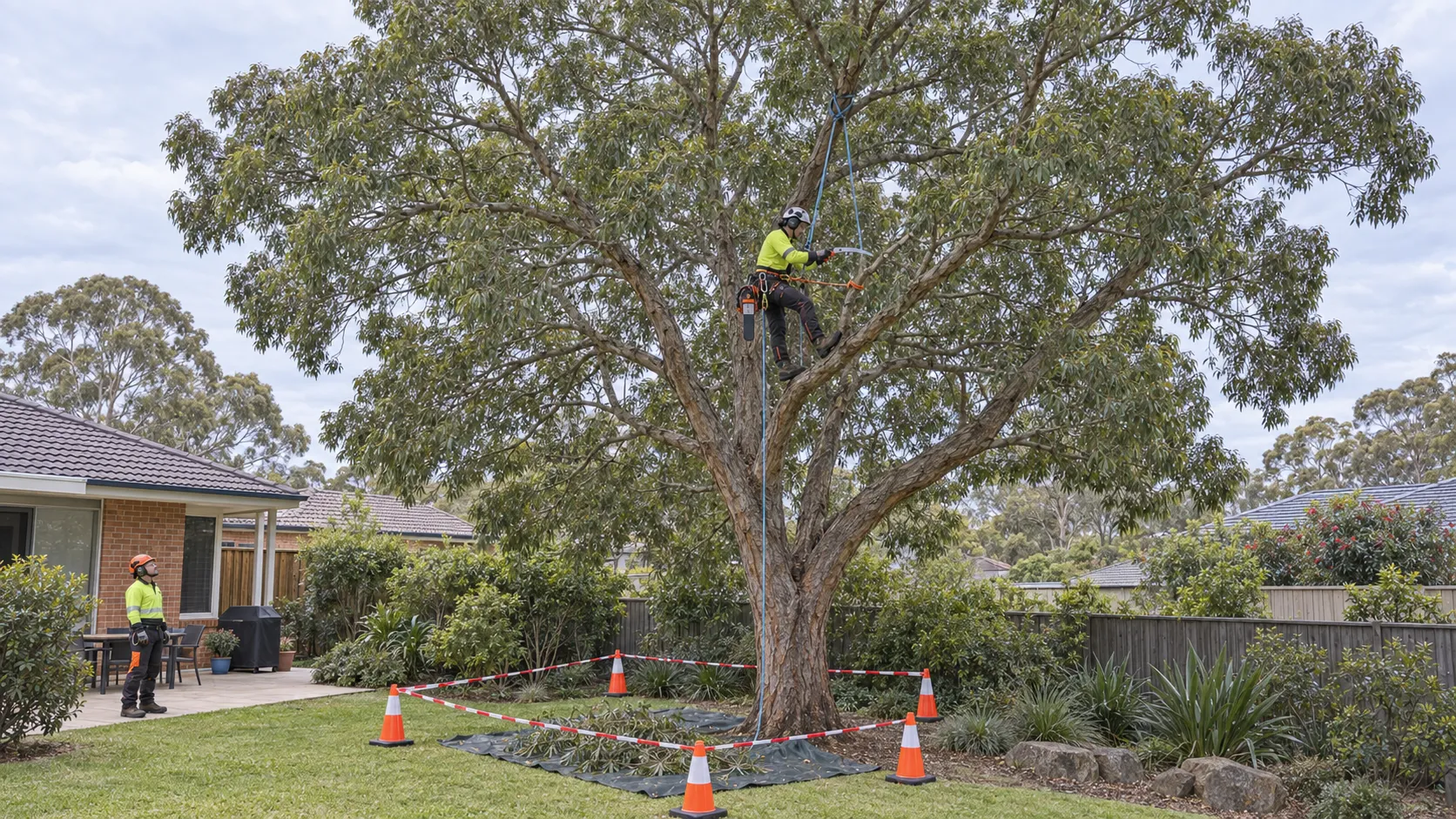
The work may involve removing dead, damaged, crossing, rubbing or poorly positioned branches, along with selected live branches where appropriate. Cuts should be distributed throughout the crown rather than concentrated in one area, helping prevent an uneven or artificially sparse appearance.
Where dead or severely declining branches are the main concern, tree deadwooding may be more appropriate than thinning healthy parts of the canopy.
A properly thinned canopy can allow more light and air to pass through the tree. This may improve conditions for vegetation underneath the canopy and reduce congestion between branches. However, thinning is not primarily a method for reducing the overall size of a tree or providing substantial clearance from buildings and infrastructure.
Crown thinning is most suitable for healthy trees with dense or congested canopies where the objective is to improve canopy structure, light penetration or airflow while preserving the tree’s natural outline. Where a tree has become too large for its location, crown reduction or another pruning approach may be more appropriate.
Crown reduction is a pruning technique used to reduce a tree’s overall height and/or spread while retaining a natural, balanced form. It may be considered when a tree has outgrown its surroundings, is creating genuine clearance issues or selected branches need their length and end weight reduced for structural reasons.
Rather than cutting the top or sides back indiscriminately, an arborist reduces suitable branches back to appropriate lateral branches capable of continuing the branch’s natural growth. Cuts are distributed through the crown so the tree remains balanced and retains as much of its natural structure as possible.
This differs from topping, which involves indiscriminate heading cuts that can leave large stubs and encourage dense, weakly attached regrowth. Crown reduction should be carefully planned and limited to an amount the individual tree can reasonably tolerate based on its species, age, health and condition.
Crown reduction may be appropriate where clearance is required around roofs, buildings, driveways or other structures, or where the tree’s overall dimensions have become unsuitable for its available space. If the tree is already an appropriate size but has an overly dense canopy, crown thinning may be a less intrusive option.
Crown thinning and crown reduction involve pruning a tree’s canopy, but they are used for different purposes. Crown thinning focuses on reducing canopy density, while crown reduction reduces the tree’s overall height and/or spread.
The main differences include:
Choosing between the two methods should always depend on the tree’s condition, location and the specific problem that needs to be addressed. In some cases, another pruning technique may be more appropriate than either crown thinning or crown reduction.
Crown thinning is the better option when a tree is healthy and structurally sound but its canopy has become too dense or congested. The objective is to selectively reduce foliage and branch density while maintaining the tree’s overall dimensions and natural appearance.
Crown thinning may be appropriate when:
Crown thinning is not the best solution when a tree has outgrown its space or branches need substantial clearance from buildings, services or other structures. In these circumstances, crown reduction or another pruning method may better address the underlying problem.
Thinning should also be carried out conservatively. Removing too much foliage can stress a tree and encourage excessive regrowth, so the aim should be to improve the canopy without unnecessarily stripping out healthy live growth.
Crown reduction may be more appropriate when a tree’s height or spread has become unsuitable for its surroundings and a measurable reduction in size is genuinely required. Unlike thinning, reduction changes the overall dimensions of the canopy.
Crown reduction may be considered when:
Reduction should not be used simply to make a healthy tree substantially smaller than its natural form allows. Excessive reduction can remove too much live foliage, create large pruning wounds and encourage vigorous epicormic regrowth.
If a tree continually requires substantial reduction because it repeatedly outgrows its surroundings, its long-term suitability for the location should also be assessed. Repeated heavy pruning may not be the best solution.
When repeated pruning may not provide a practical long-term solution, comparing crown reduction or tree removal can help property owners understand which approach is more suitable.
Professional crown pruning involves more than deciding which branches to cut. An arborist can assess the tree’s species, condition, structure, growth pattern, pruning history and surroundings before determining whether thinning, reduction or another approach is appropriate.
SafeWork NSW advises that tree work involves significant safety risks, including falls, falling branches, powerlines and specialised equipment.
Professional assessment can provide several benefits:
Before pruning begins, the underlying problem should be identified. A dense canopy, clearance issue, structural defect and excessive tree size may require very different approaches. Establishing the objective helps prevent unnecessary cutting.
Not every branch should be removed simply because it appears inconvenient. An arborist can identify branches that are dead, damaged, poorly attached, crossing, rubbing or otherwise unsuitable for retention while considering how their removal will affect the rest of the canopy.
Selective pruning can improve branch spacing and address certain structural concerns without unnecessarily altering the tree. Correctly positioned cuts can also reduce the risk of creating large wounds or stimulating undesirable regrowth.
Where canopy density is the problem, carefully selected thinning can improve light penetration and airflow while retaining much of the existing canopy.
Branches growing towards roofs, buildings, driveways, fences or services can create ongoing conflicts. Targeted pruning can help manage appropriate clearance while retaining as much healthy canopy as practical.
Professional pruning aims to work with the tree’s natural growth pattern rather than creating an artificial shape. Maintaining a balanced crown can preserve the tree’s shade, privacy, landscape value and visual appearance.
Regular assessment can identify developing issues before they require drastic corrective work. Pruning can then be planned around the tree’s growth and surroundings rather than being carried out only after branches become an immediate problem.
There is no single pruning schedule that applies to every tree. The appropriate frequency depends on the species, age, health, growth rate, location, previous pruning and reason for the work.
Rather than pruning automatically at a set interval, trees should be assessed based on their current condition and surroundings. Some trees may only require occasional maintenance, while fast-growing trees in restricted locations may need more frequent monitoring.
Crown thinning is a maintenance treatment rather than an annual task. If the tree remains healthy and the canopy stays well balanced, several years may pass before further thinning is required.
The frequency can depend on:
Repeatedly removing large amounts of foliage is undesirable. Conservative thinning allows the tree to retain sufficient foliage for normal growth and function.
Crown reduction may require closer monitoring because the tree continues growing after its height or spread has been reduced. New growth can extend the canopy towards its previous dimensions.
The appropriate interval depends largely on why the reduction was carried out. Trees growing close to buildings, roofs or infrastructure may require more regular assessment than trees with plenty of surrounding space.
Repeated heavy reductions should be avoided where possible. If a tree continually requires substantial size reduction, its suitability for the location and other management options should be reviewed.
Fast-growing species may require more frequent assessment than slow-growing trees. Young trees may also require formative pruning, while mature trees often benefit from more conservative maintenance.
Growing conditions, available space, exposure to wind and previous pruning can also affect how a tree responds. Trees that have previously been topped or heavily reduced may produce dense epicormic shoots that require careful assessment before further pruning.
A better approach is to inspect the tree and determine whether pruning is currently necessary. Regular assessment can identify deadwood, developing defects, excessive growth or clearance concerns before they become more difficult to manage.
An arborist can recommend an appropriate maintenance interval based on the individual tree rather than applying a fixed schedule to every tree.
Over-pruning occurs when more foliage or branches are removed than the tree can reasonably tolerate. Although crown thinning and crown reduction can be beneficial when planned, excessive pruning can stress a tree, affect its future growth and create structural problems.
The effects depend on the tree’s species, age, health and the extent of pruning. Mature or already stressed trees may be particularly vulnerable to excessive canopy removal.
Over-pruning can result in:
The best starting point is a clear pruning objective. If excessive density is the problem, selective crown thinning may be sufficient. If the tree genuinely needs to be made smaller, a carefully planned crown reduction may be more appropriate.
A qualified arborist can assess the tree before determining which branches should be removed and how much live canopy can reasonably be pruned. Conservative pruning, correctly positioned cuts and appropriate intervals between maintenance work can help protect the tree’s natural form and long-term condition.
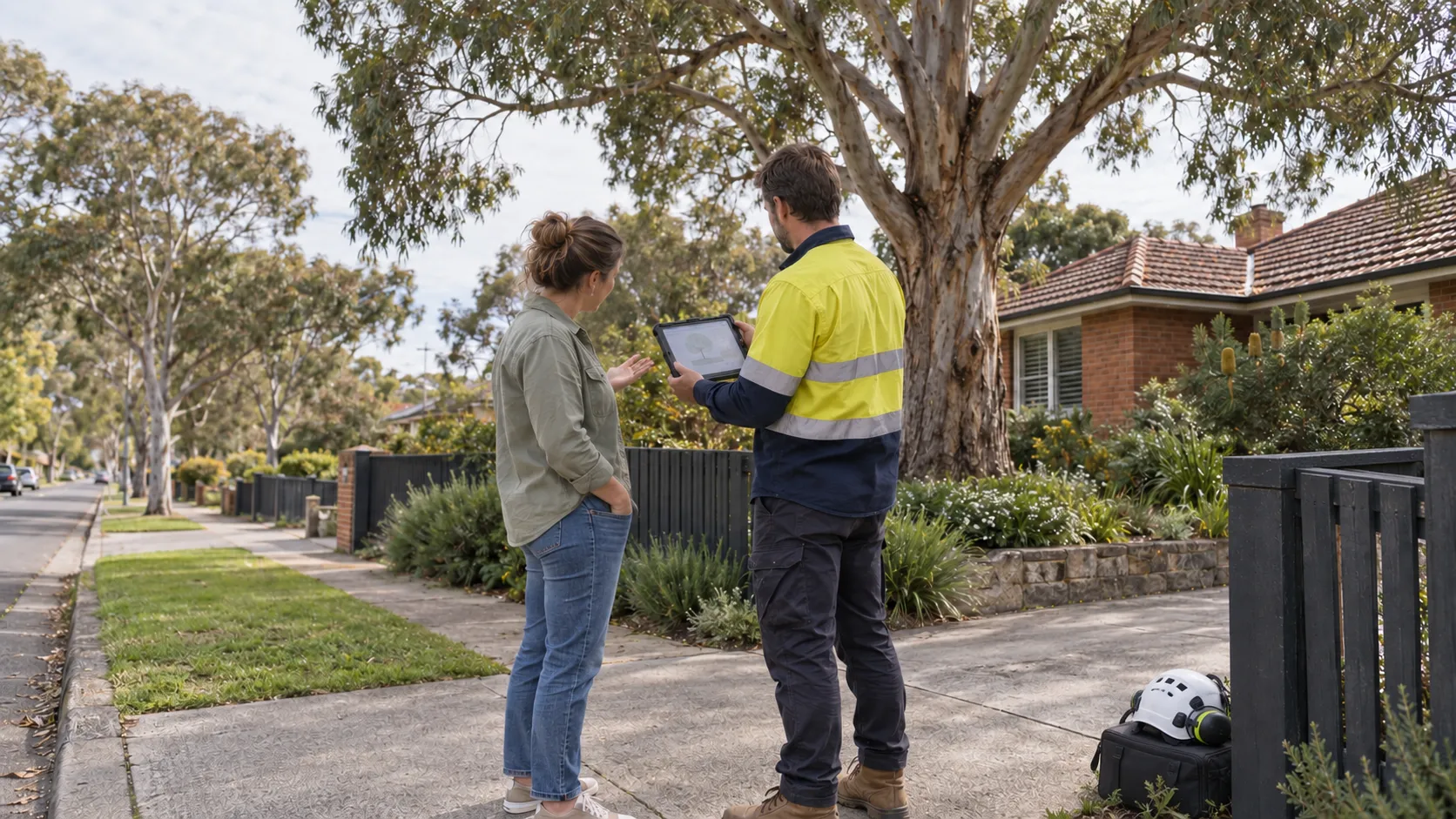
Before arranging crown thinning or crown reduction, property owners should check whether approval is required for the proposed work. Tree-pruning controls vary between local government areas and additional protections may apply to significant, heritage or otherwise protected trees.
The City of Sydney, for example, has controls governing tree pruning and removal, including requirements under its planning framework and Development Control Plan. Certain minor pruning activities may be exempt when specific conditions are satisfied, while other work may require approval.
Property owners within the City of Sydney can check whether they require approval to prune or remove a tree before arranging the work.
The requirements depend on factors such as the tree’s location, status, size, the proposed extent of pruning and the relevant council’s controls. Property owners should therefore confirm the current requirements before work begins rather than assuming that pruning on private property is automatically exempt.
Where an exemption applies, conditions may specify the amount or type of pruning permitted and the way the work must be carried out. More substantial crown thinning or crown reduction may fall outside a minor-pruning exemption.
The City of Sydney publishes specific exemptions for pruning and removing trees, including conditions concerning canopy removal, branch size, tree health and arborist qualifications.
Trees associated with heritage properties, conservation areas or significant-tree registers may have additional protection. Property owners should confirm the tree’s status before arranging work.
Street trees are managed by the relevant council or authority. Properties should not assume they can arrange pruning themselves simply because branches extend over their property. The appropriate council process should be followed.
Where pruning is permitted, the work should still follow accepted arboricultural practices. AS 4373, Pruning of Amenity Trees, provides guidance for pruning amenity trees and maintaining appropriate tree structure.
A qualified arborist can assess the tree, determine which branches are appropriate for removal and recommend a suitable pruning method and extent. This can help minimise unnecessary damage while addressing the reason for the work.
Because tree controls differ between Sydney councils, property owners should check the requirements of the relevant local government area before arranging pruning. Unauthorised work on protected trees can result in enforcement action or penalties.
Confirming the requirements in advance can help prevent delays, unexpected costs and the need for corrective action.
The best pruning method starts with the problem that needs to be solved, rather than the amount of tree a property owner wants removed.
Crown thinning may be more suitable when the goal is to:
Crown reduction may be more suitable when the goal is to:
The tree’s species, age, health, structure and previous pruning history should also influence the decision. Mature, stressed or poorly pruned trees may require a more conservative approach, while different species can respond differently to substantial pruning.
Long-term maintenance should also be considered. A tree growing close to a building may require periodic management as it regrows, while a tree with sufficient surrounding space may need little intervention. If substantial size reduction would have to be repeated frequently, the underlying suitability of the tree’s location should be assessed.
Crown thinning and crown reduction are not interchangeable pruning techniques. Thinning primarily reduces canopy density, while reduction decreases the tree’s overall height and/or spread. Selecting the right method depends on the tree’s condition, species, structure, location and the specific problem that needs to be addressed.
North Shore Tree Services can assess these factors and recommend an appropriate pruning approach for individual trees. With careful planning, suitable pruning techniques and attention to local council requirements, property owners can address clearance, density and structural concerns while preserving the tree’s natural form, health and long-term landscape value.