Palm trees are a defining feature of many residential and commercial landscapes, but maintaining their health and appearance requires a careful approach to pruning. While it may seem logical to remove ageing fronds regularly, excessive trimming can do more harm than good. In most cases, palm trees only need pruning once or twice a year, and some slow-growing or self-cleaning palms may need even less.
For Sydney property owners, professional tree services can help determine whether a palm needs pruning, light maintenance or no cutting at all. North Shore Tree Services understands that pruning schedules vary depending on the palm species, its environment and its overall condition.
This article explores how often palm trees should be pruned, the signs that indicate maintenance is needed and the common mistakes that can compromise tree health. It also explains when professional intervention is recommended to keep palms safe, healthy and visually tidy.
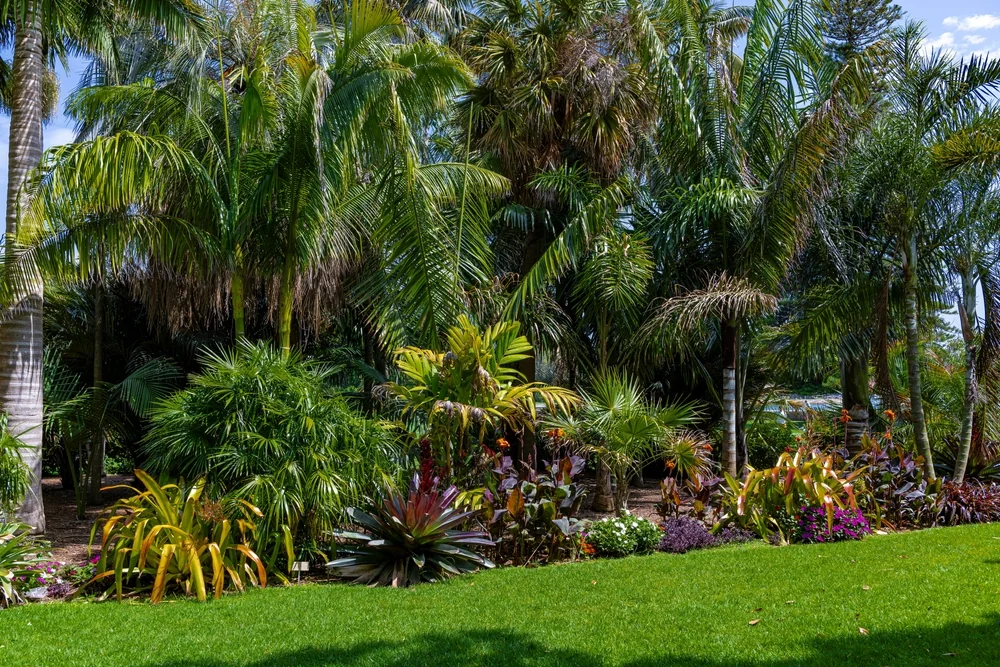
Palm trees do not follow a one-size-fits-all pruning schedule. The ideal timing depends on the species, growing conditions and the purpose of the pruning. Some palms benefit from light, regular maintenance, while others should be left alone for long periods with only occasional removal of clearly dead fronds.
Understanding how different palms grow and shed leaves helps prevent over-pruning, which can weaken the tree, increase disease risk and spoil its natural shape. A schedule that suits a fast-growing, self-cleaning palm is rarely appropriate for a slow-growing ornamental variety.
Palm species vary widely in how quickly they produce and shed fronds. This directly influences how often they should be pruned.
Fast-growing species, such as queen palms and some date palms, tend to produce abundant foliage and seed stalks in a single season. These palms may need attention once or twice a year to remove fully brown fronds and messy fruiting stems that drop litter on paths or driveways.
Slow-growing species, including many fan palms and specialty ornamental palms, usually produce fewer fronds each year. Over-pruning these trees can strip too much green foliage and reduce their ability to photosynthesise. These palms may only need careful pruning every one to three years, limited to fronds that are completely brown, damaged or hanging.
Self-cleaning palms, such as some royal or foxtail palms, naturally shed older fronds. These require very minimal pruning and may only need occasional removal of broken, storm-damaged or hazardous foliage rather than scheduled pruning.
Growing conditions influence how quickly palm fronds age and how much maintenance is needed.
Palms in exposed coastal positions often experience more wind damage, which can increase the need for clean-up pruning. Salt spray and strong winds can cause fronds to brown, split or break sooner, leading to more regular removal of damaged foliage.
In more sheltered gardens, palms may hold their fronds longer and stay visually tidy for extended periods. These trees can often be inspected seasonally and only pruned when fronds are fully dead or clearly posing a hazard.
Location around buildings and public spaces also affects the pruning schedule. Palms overhanging pools, driveways, footpaths or roofs may need more frequent maintenance to reduce slip hazards, blocked gutters or falling debris.
Not all pruning decisions are based on biology alone. The reason for pruning also determines how often it should happen.
Where safety is the priority, such as near powerlines or above areas with regular foot traffic, palms should be checked more often. Any loose, dead or heavy-hanging fronds that could fall in strong wind should be removed promptly rather than waiting for a fixed maintenance schedule.
Where appearance is important, such as in formal landscapes or resort-style gardens, palms may be lightly tidied more often by removing seed pods and clearly dead fronds. Care is needed not to cut into green tissue or create an over-pruned “hurricane cut” appearance.
For functional or naturalistic plantings, a more relaxed approach is usually appropriate. Inspection once or twice a year, with pruning only when fronds are completely brown, broken or hazardous, is often enough and may be healthier for the palm.
Palm trees generally need less pruning than many people think. The clearest sign that pruning is required is the presence of dead, damaged or hazardous fronds that no longer contribute to the tree’s health or appearance.
Pruning should always be guided by what the tree is showing. The colour, position and condition of fronds, flower stalks and seed clusters can help determine whether it is time to arrange maintenance or leave the palm alone.
The most obvious signal is fronds that have turned fully brown, grey or straw-coloured from the base to the tip. These fronds are no longer photosynthesising and can usually be removed without stressing the tree. They often feel dry or brittle and may snap when bent.
Fronds that are mostly green with only yellow or brown tips do not necessarily need pruning. Early discolouration can indicate nutrient issues, water stress or disease rather than a simple need to cut. Removing fronds too early reduces the tree’s ability to feed itself and can weaken the crown over time.
As palm fronds age, they naturally move from upright to horizontal, then downward. When lower fronds hang close to the trunk and point down sharply, they are usually approaching the end of their life cycle and may be suitable for removal.
Pruning is especially important when sagging fronds are:
If a frond is still firm and green but in the way, it is better to seek professional advice rather than remove large amounts of healthy foliage. Over-thinning to “tidy” the trunk or create an artificial pineapple shape can be harmful and may increase the risk of stress or wind damage.
Fronds that are clearly loose at the base, rattling in the wind or already partly detached should be removed before they fall. Heavy palm fronds can cause damage or injury if they drop from height, so instability is a clear reason to arrange pruning.
Old flower stalks and seed clusters are another cue. Once flowering and seeding are finished, the remaining stalks dry out and become messy. They may attract pests or drop fruit and seed onto paving, lawns, pools and driveways. Cutting spent flower stalks and large seed pods can improve appearance and reduce slip hazards without removing healthy fronds.
Palm trees can be over-pruned, and it happens more often than many property owners realise. Removing too many fronds at once, or cutting into healthy green growth, weakens the tree, slows its growth and can shorten its lifespan.
Correct palm pruning should be minimal and focused on safety, health and practical appearance. It should not force the palm to look bare, overly sculpted or artificially tidy.
A properly pruned palm keeps a full, rounded canopy with green fronds forming a wide circle or umbrella. Over-pruned palms often show:
If fronds that are still more than half green are being removed, pruning has usually gone too far. Even older fronds that are yellowing or blotched may still supply nutrients that the palm is recycling back into new growth. Removing them prematurely can rob the tree of resources.
Palm trees keep only a limited number of fronds compared with many broadleaf trees. Each frond plays an important role in photosynthesis. When too many are cut off in one session, the palm suddenly loses a large portion of its energy-producing foliage.
That loss of leaf area forces the palm to draw more heavily on stored reserves. Growth may slow, new fronds may emerge smaller or deformed and overall vigour can decline. A stressed palm is also less able to respond to pruning wounds, which may increase vulnerability to pests and decay.
Over-pruned crowns can also become less balanced in strong winds. It may seem logical that fewer fronds would reduce wind load, but palms rely on a full, flexible canopy to distribute movement. A thin, uneven canopy may twist more in high winds, increasing the risk of crown damage.
The safest approach is conservative pruning. As a practical guideline, only completely brown, dead, broken or hazardous fronds should be removed. Green fronds at or above the horizontal line should usually be left intact unless there is a clear safety reason for removal.
Fruit and flower stalks can be removed for tidiness or to reduce mess if cuts are made cleanly near the base. Trunk shaving and cosmetic sculpting should be avoided because they damage protective tissue and offer no benefit to tree health.
Limiting work to necessary pruning, rather than frequent cosmetic cutting, helps keep palms strong while still maintaining a neat appearance.
Pruning a small, low-growing palm can be safe for a capable homeowner who uses the right tools and follows basic safety practices. Once height, ladder work or heavy fronds are involved, however, the risks increase quickly and DIY pruning can become unsafe.
Safety depends on the size of the palm, the tools required and the experience of the person doing the work. Poor technique can also injure the palm, leading to decay, pest problems or structural weakness that may not be obvious until a storm or high winds arrive.
DIY pruning is generally limited to modest maintenance on accessible palms. It is usually safer to prune a palm yourself when:
Clean, sharp hand saws or loppers are usually more suitable than chainsaws for small palm maintenance. Protective gloves, eye protection and sturdy footwear are important because palm fronds can be heavy, fibrous and sharp. Some species also have spines along the frond stems.
Cuts should be made close to the base of the frond without gouging into living trunk tissue. Only dead, damaged or clearly declining fronds should be removed.
The risk level rises sharply once height or difficult access is involved. DIY pruning is generally unsafe when:
Falls from ladders are one of the most common pruning risks. Ladders can be unstable on uneven soil or turf, and leaning them against a palm trunk may cause slipping or rotation. Climbing spurs used by untrained people can also wound the trunk and create entry points for disease.
Improper pruning may not injure the person doing the work, but it can seriously damage the palm. Removing too many green fronds reduces the tree’s ability to photosynthesise and can weaken the crown. Cutting into the trunk or leaving torn stubs can invite fungal decay and boring insects. Removing the central spear or growing bud can kill the palm entirely.
Safe pruning keeps a healthy ring of green fronds around the crown and limits work to clearly dead, damaged or hazardous material. If it is difficult to tell whether a frond is dead, stressed or diseased, professional assessment is the safer option for the long-term health of the tree.
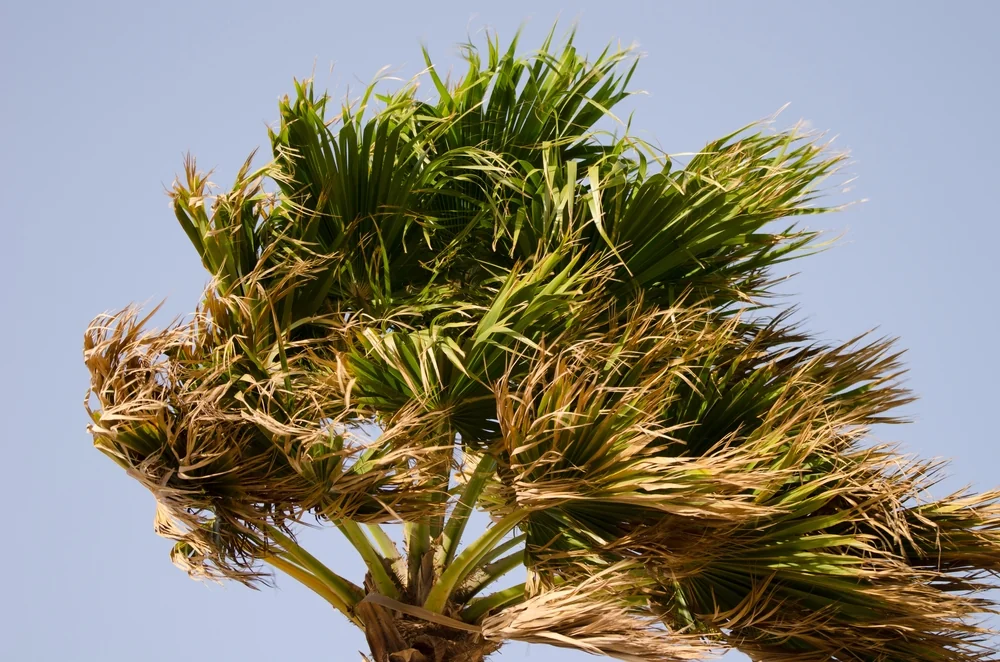
Professional palm tree pruning is best arranged when fronds become a safety risk, look untidy or begin to affect the health of the tree. Timing is not only about the calendar. It should also be based on visible signs such as brown or hanging fronds, heavy seed clusters, falling debris and difficult access.
For most established palms, pruning is typically needed every one to two years. Fast-growing or heavily fruiting species may need annual attention, while young palms and slow-growing varieties usually need less frequent work.
The ideal time for professional pruning is often late spring to early summer. By this stage, any winter damage is visible and the tree is actively growing. This can make it easier to assess which fronds are genuinely dead, damaged or declining.
Heavy pruning should generally be avoided during the coldest part of winter, when some palms may already be under stress. Extreme heat can also increase water stress, so unnecessary pruning during severe hot weather should be avoided where possible.
Storm season is another consideration. If the property is exposed to strong coastal winds or seasonal storms, pruning may be worth arranging before the highest-risk period so weak, dead or hanging fronds do not become airborne hazards.
Distinct visual clues can indicate it is time to arrange pruning by a qualified arborist. These include:
If green fronds are drooping, crossing or declining rapidly, this can also signal a health issue that needs professional assessment rather than simple trimming. Removing too many green fronds without understanding the cause can weaken the palm further.
Depending on the property, species and local council rules, pruning or removing certain vegetation may require a council permit, particularly where protected trees or vegetation controls apply.
Professional pruning becomes essential once a palm reaches a height where domestic ladders are unsafe or where access is complicated by slopes, pools, fences, roofs or nearby buildings. Tall palms require appropriate equipment, rigging and safe work methods to remove heavy fronds without damaging surrounding property.
Spiked climbing should be avoided on most palms used in residential and commercial landscapes, as it can damage the trunk and invite disease. A professional crew can use suitable non-spiking methods or access equipment that protects both the tree and the surrounding area.
Pruning palm trees comes down to understanding the needs of the individual tree rather than following a fixed maintenance schedule. Most palms require only occasional pruning to remove dead, damaged, messy or hazardous fronds, while excessive trimming can increase susceptibility to pests and disease and permanently alter the tree’s appearance.
Paying attention to species characteristics, environmental conditions and visible signs of decline allows pruning to be carried out only when it genuinely benefits the tree. Where height, access difficulties or safety concerns are involved, professional arborists can ensure the work is completed safely and without unnecessary damage.